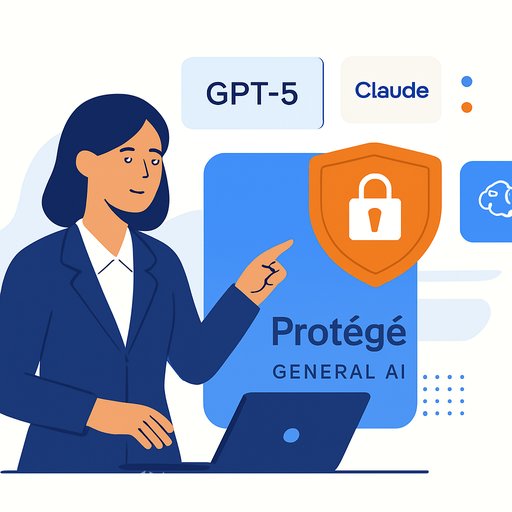
Protégé General AI gives NZ lawyers safe, unified access to leading general AI models
Law firms want the flexibility of multiple AI models without scattering sensitive files across the internet. Protégé General AI, launched 25 November, brings enterprise versions of GPT-5, GPT-4o, OpenAI o3 and Claude Sonnet 4 into the same secure environment as Lexis+ AI. One tab. One policy. No copy-paste treadmill.
The goal is simple: keep client data in a controlled system while giving lawyers the practical range they already expect from general AI. The feature standardises privacy, reduces context switching, and adds guardrails for legal work-without forcing teams to hop between tools with different settings and unknown storage rules.
The hidden risk in platform hopping
Many teams research on one app, analyse on another, and draft on a third. Every handoff creates a weak point for confidential information and breaks focus. It also increases the chance a well-meaning junior uploads privileged material into a tool the firm hasn't vetted.
"We realised customers were using a lot of different open-source AI models while handling sensitive client data," said Alastair Fernandes, product manager at LexisNexis New Zealand. Protégé General AI keeps that work in one place so lawyers can move from research to drafting without exporting or re-uploading files.
One dropdown, the right model for the task
- Claude Sonnet 4 (Natural Fluency): Clear, well-structured writing. Useful for client updates, marketing copy, and brainstorming with a diplomatic tone.
- GPT-5 (Unified Reasoning): Deep reasoning and synthesis with live web results. Effective for strategic exploration and refining complex arguments.
- GPT-4o (General Exploration): Fast, conversational drafting for emails, document summaries, and everyday tasks when speed matters.
- OpenAI o3 (Advanced Reasoning): Deliberate analysis using Deep Research. Strong at issue spotting, hypotheticals, and multi-step strategy work.
Example: a corporate lawyer assesses merger risk with GPT-5's web results, flips to Legal AI for Companies Act 1993 analysis, then uses Claude Sonnet 4 to explain the deal structure in plain English-all inside Lexis+ AI.
Security without compromise
The platform applies the same encryption standards across legal and general AI features. Prompts and content are encrypted, and customer data is not used to train AI models. The result: flexibility without sacrificing confidentiality rules that matter to your clients and your practising certificate.
To reduce bad citations from public web results, Protégé General AI checks case references against the LexisNexis database via CaseBase® Case Citator. If a citation can't be verified, it's flagged for review before anything goes to a partner or a client.
Beyond legal research: the work that surrounds the work
Not every task needs case law. Lawyers can draft compliance risk assessments, build client meeting agendas, or create internal presentations, all within the same protected workspace.
LexisNexis has also expanded Legal AI features that pair well with General AI. Transactional document Drafting can generate full agreements from precedent templates. Timeline Visualisation builds chronologies from multiple uploads. And Vaults provide a secure private workspace for large document sets with issue summaries, argument extraction, and compare-and-contrast analysis.
Speed of rollout and cost
General AI reached New Zealand three months after the US preview-a fast follow for LexisNexis locally. Adoption is moving quickly because AI is becoming daily infrastructure for legal work.
All existing Lexis+ AI with Protégé users get access to General AI at no extra cost, including enterprise-level access to models that would otherwise require separate subscriptions. The aim is to reduce tool sprawl and keep teams productive inside one system.
How firms can start using it this week
- Set simple defaults: pick a primary model for research, another for drafting, and one for client-facing plain-English summaries.
- Create a short policy: what can be uploaded, who can export, and when to use CaseBase to verify citations from web searches.
- Pilot two workflows: e.g., board paper summaries and transaction checklists. Measure time saved and quality improvements.
- Run a 45-minute team session: show the dropdown, demo Vaults, and walk through a real matter from research to client update.
See it in action
Learn more about Protégé General AI and request a demo from LexisNexis: lexisnexis.com.
If your firm is building AI fluency by role, these curated resources can help: AI courses by job.
Notes
- [1] AI models are subject to change.
- [2] General AI models are hosted outside of Australia based on availability of latest models.
Your membership also unlocks: