
AI news ·
Psychologists push for leadership roles in AI development as tech industry grapples with human behavior blind spots
Résumé-screening AI failed to remove bias even after stripping names, because college affiliations and word choices still revealed demographics. Psychologists had predicted this decades ago-and teams that exclude them early pay for it later.
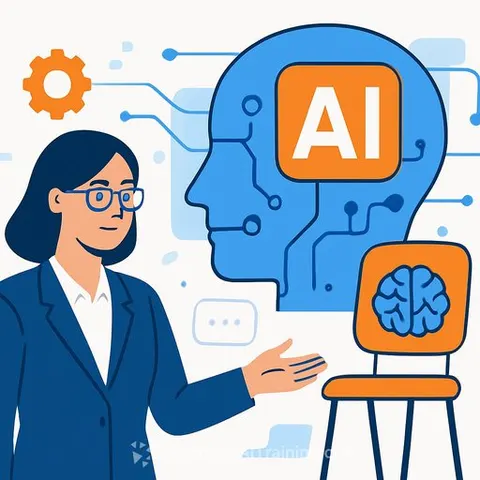
Psychologists Need Seats at the AI Development Table
A tech company built an AI system to screen résumés by removing obvious demographic markers like names. The approach failed. Information embedded in college affiliations, word choices, and formatting preferences was enough to perpetuate discriminatory hiring patterns.
The company spent significant time and money trying to fix the models. It never worked.
Industrial and organizational psychologists had predicted this outcome decades earlier. A century of research on hiring practices shows that bias in selection doesn't disappear when you strip surface-level identifiers-it shifts to subtler signals.
This scenario illustrates a core problem: psychological expertise is being brought into AI projects too late, after fundamental design decisions are already locked in. The result is expensive failures, wasted resources, and potential harm to users.
For development teams, the implication is straightforward. Psychologists aren't nice-to-have consultants who review work after it's done. They're essential contributors who should shape AI systems from conception.
What Psychologists Actually Bring to Development
AI development is fundamentally about understanding and predicting human behavior. That makes psychology expertise central, not peripheral.
Understanding what engineers miss
Engineers identify specific problems, define metrics, and optimize toward those metrics. If something can't be measured, the engineering mindset treats it as irrelevant.
Psychologists see differently. They recognize webs of complexity that can erupt from a design decision before the system goes live.
On a project developing an AI coaching chatbot for the U.S. Naval Academy, a computer scientist suggested training the model on recordings of coaching conversations. A psychologist on the team pushed back. Coaching conversations are rarely recorded because they're private and sensitive. Even with transcripts, the variability is so high that thousands of examples would be needed to create a representative dataset. The engineer hadn't considered these human factors.
Catching risks before they become crises
Psychologists are trained in ethics and harm prevention. They spot dangers that technologists might dismiss as edge cases or future problems.
On the Naval Academy project, the psychology team proactively built a separate AI model to detect moderate risk scenarios, including signs of potential self-harm. This allowed trained professionals to intervene before harm occurred.
The technical team's initial response was predictable: "That sounds expensive. Let's wait until it's actually a problem." That approach creates reactive firefighting instead of prevention.
Notably, the psychologists designed this safety component themselves using an AI coding tool. Modern AI tools are accessible enough that psychology experts can prototype faster than waiting for an engineering team to prioritize the work.
Better assessment and evaluation
Psychologists understand how to measure what actually matters. They can embed assessments into everyday interactions instead of requiring infrequent clinical visits.
Social psychologists know how humans make biased decisions and operate under bounded rationality. Without this knowledge, AI models will replicate those same biases in hiring, medical treatment recommendations, and product decisions.
Psychologists also understand how AI should respond to assessment results. An AI chatbot might detect negative emotions and encourage suppression. Cognitive psychologists know this replicates a human bias toward focusing on negative information. Clinical psychologists understand that negative emotions are normal and that sometimes people benefit from sitting with those feelings rather than suppressing them.
Where Psychologists Fit in Development Workflows
Initial design
At the start, teams decide what a project should accomplish. Psychologists should be in these conversations from day one.
For a project involving mental health prediction from wearable data, researchers consulted psychologists during study design. The questions: What constructs should we measure? Which assessment tools are appropriate? How do we avoid overburdening users? These details require expertise from the beginning.
Data processing
Once data collection starts, psychologists guide which information to extract. For wearable devices, which variables matter-sleep, activity level, something else? A purely data-driven approach misses domain knowledge grounded in established theory.
Model interpretation
When AI systems generate predictions, psychologists evaluate whether results align with scientific understanding. They can flag results that contradict existing literature or identify unexpected findings worth exploring further.
Implementation
This is when research becomes a product. One company working on AI conversation safety has developed over 200 detection capabilities for monitoring AI interactions-from clinical risk identification to assessing therapeutic rapport. They work with about 100 psychologists with different specialties to create training data, evaluation rubrics, and safety tools that handle the full range of human experience.
Ongoing monitoring
A psychologist's role doesn't end at launch. They should monitor how users interact with AI tools over time, checking whether systems maintain long-term user well-being, prevent dependency, and avoid developing biases or privacy violations.
Specific Roles for Psychologists on Development Teams
Psychological auditing: Evaluate AI systems against established psychological and ethical standards.
Human benchmarking: Compare AI outputs to expert human judgment rather than other AI systems. On the Naval Academy coaching project, clinical psychologists and professional coaches rated chatbot transcripts, providing feedback that technical metrics alone cannot capture.
Red teaming: Deliberately simulate problematic or dangerous conversations to find where AI fails. This requires someone with the expertise and authority to pause development and demand that the system handle edge cases safely. A psychologist red-teaming the Naval Academy chatbot identified danger signs that led to creating a second AI model specifically for monitoring moderate risk scenarios.
Getting Started: Practical Steps for Development Teams
If you're building AI systems, here's how to integrate psychological expertise:
- Recruit psychologists early, not as post-launch reviewers. Include them in design conversations before decisions are final.
- Insist on human-centered evaluation. Ask: What's meaningful to the end user? Don't let shipping schedules override safety concerns.
- Use human benchmarking. Compare your AI outputs to expert human judgment, not just to technical metrics or other AI systems.
- Document limitations clearly. Be explicit about what psychological knowledge can and cannot determine about your system's behavior.
- Balance rigor with pragmatism. Respect human complexity without treating every possible edge case as equally important.
For Psychologists Entering AI Development
If you're a psychologist considering work in AI, several universities now offer training programs-from microcredentials to master's degrees to continuing education courses. Options exist at Northwestern, Tilburg, Oregon State, Pennsylvania, Johns Hopkins, Brown, Harvard, and Zurich.
Before jumping in, learn basic AI concepts. You don't need to code, but understanding fundamental ideas helps communication with engineers. Free resources abound on LinkedIn, YouTube, and Coursera.
Work with flexibility and curiosity. Engineers tend toward rapid iteration and tinkering rather than formal theory. Ask questions when terminology is unfamiliar.
Network strategically. Ask colleagues for connections, search departmental websites for specialists, attend conferences. Consider various roles: academic collaborations, consulting, or full-time positions at tech companies.
Find applications that match your expertise. Retail chatbots, educational tools, digital assistants, and talent platforms all need psychological input. You can contribute across conception, development, deployment, and evaluation.
For development professionals, this means recognizing that psychology expertise isn't a compliance checkbox. It's a core competency that shapes whether your AI systems work as intended and whether they cause harm.
As one researcher noted: If psychologists had been on the original social media development teams asking how people would benefit and what risks existed, "the road we're on would be quite different." The same applies to AI. The stakes are equally high, and the time to act is now.
For development professionals looking to deepen their understanding of how psychology applies to AI systems, consider exploring AI Learning Path for Software Developers to understand the full development lifecycle and where human factors matter most.