
AI news ·
Readers are learning to spot AI-written prose and companies that ignore the pattern risk losing trust
Customers now routinely spot AI-generated support responses-and interpret them as a sign the company didn't think their problem warranted a human. That perception erodes trust even when the answer itself is accurate.
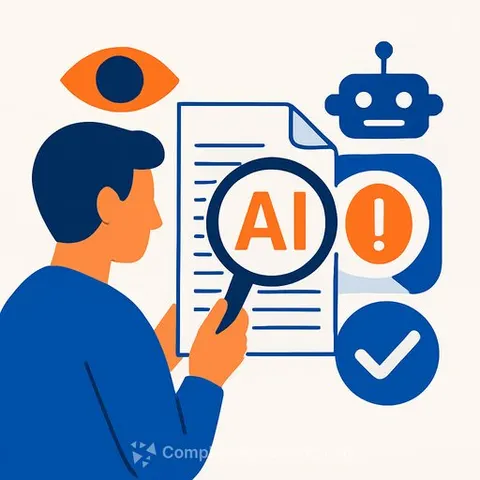
Customers Now Recognize AI-Generated Support Responses-and It's Damaging Trust
A recognizable pattern in ChatGPT-generated language has become visible enough that ordinary readers spot it without disclosure labels. Balanced sentence structures. Overly smooth transitions. Phrases like "it is worth noting" and conclusions that land on cautious optimism. The pattern is now so familiar that people notice it in work emails, social media, marketing copy, and even text messages.
For customer support teams, this recognition problem creates a real business risk. When a customer with an urgent problem receives a response that reads as machine-generated, the functional quality of the answer matters less than the message the tone sends: the company did not think this interaction deserved a human's attention.
The Trust Deficit Shows Up in Churn
Efficiency gains from automating support responses are measurable and real. Trust erosion from those responses reading as synthetic is harder to quantify but equally real. It accumulates over time in ways quarterly metrics miss.
A customer who perceives they received a templated, AI-generated response experiences it as dismissal. That emotional signal persists even when the underlying issue gets resolved competently. Companies optimizing support operations around AI generation without investing in voice calibration and authentic editing are running a trust deficit that eventually shows up in churn data.
The problem is most acute in high-stakes interactions. A customer contacting support about a billing error, a service failure, or a refund request wants to know a human understood their specific situation. Generic AI-generated language signals the opposite.
What Actually Works in Support
The teams pulling ahead are using AI as a tool to make human communicators faster, not to replace human communication. They use AI for Customer Support to draft initial responses, structure thinking, and handle routine inquiries-then edit heavily for voice and specificity before sending.
The distinction matters in competitive markets. A support response that sounds like it came from a real person on the team builds trust. One that reads like a generic model output erodes it.
The Market Opportunity Shifted
The original AI content market was built on generation: produce more words faster for less money. That market is compressing as every competitor gains access to the same tools.
The actual opportunity is in what happens after generation. Voice calibration. Authenticity editing. Brand consistency enforcement. Systems that let companies disclose credibly what was generated and what was written by humans.
A company whose AI-assisted support content sounds like its actual team has a differentiator competitors running generic outputs cannot replicate cheaply. The infrastructure for building that kind of voice consistency is underdeveloped relative to demand for it.
The Practical Implication
If your support operation depends on AI-generated responses being indistinguishable from human writing, that assumption has an expiration date. Readers are developing pattern recognition that makes the substitution increasingly visible.
The more durable approach is one where AI tools make your support team more effective rather than replacing them. That means drafting, structuring, and handling volume-then investing in the human review and voice work that keeps trust intact.