
AI news ·
RebuilderAI debuts design-to-manufacturing AI agent at VivaTech 2026 and outlines humanoid-run dark factory plan
RebuilderAI's VRING:ON agent already automates design through to manufacturable 3D data for hard goods, trained solely on each brand's private data. The startup plans a humanoid-run dark factory starting with footwear, aiming to fully automate the design-to-production chain.
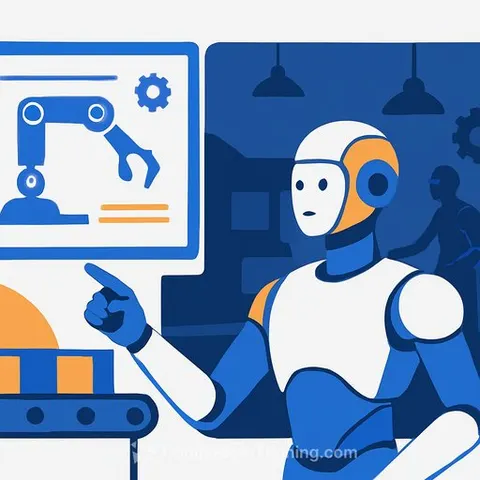
A Seoul-based startup called RebuilderAI used VivaTech 2026 in Paris to announce two things at once: a design-to-manufacturing AI agent named VRING:ON that is already in production use, and a longer-term plan to build what it calls a humanoid-powered "dark factory" - a facility where AI designs products and robots build them without human intervention.
The company, which has drawn investment from Korea's Naver and Japan's ASICS Ventures, isn't pitching a generic creative tool. It delivers a private model trained exclusively on each brand's own data - its style, materials, production conditions, and manufacturing know-how. Both the training data and the outputs stay with the brand. At the Paris conference, held June 17-20, RebuilderAI also detailed how ASICS is using its software in real product development.
What VRING:ON actually does
VRING:ON automates the full chain from design concept through 3D modeling to CAD and engineering data. It doesn't stop at generating images. It carries an AI-created design through moldability checks, simulation, and into manufacturing-ready data - producing results a factory can actually make. The system is built for 3D-based hardline goods like eyewear, footwear, and jewelry.
"We tune the model to each brand to protect that brand's data and preserve the distinctiveness of its style," said Jeonghyeon Kim, RebuilderAI's CEO. "With ISO certification, we deliver a stable, enterprise-grade model for every client."
The startup has also completed a Samsung accelerator program and joined NVIDIA's Inception program. Its approach sets it apart from general-purpose web tools that hand every user the same output. A built-in feedback loop lets brands spin up new agents and refine them over time, sharpening a design assistant that belongs only to them.
The dark factory vision
RebuilderAI doesn't see software as the endpoint. The company is developing AI that extracts motion data from a product's 3D files to generate the manufacturing paths and movements a humanoid robot needs to build that product as designed. The goal is a pipeline that automates manufacturing, not just design.
Starting with footwear, RebuilderAI plans to prove out a factory that both designs and makes products with AI, then expand category by category. The concept - a lights-out, humanoid-run facility - moves the conversation from AI Agents & Automation in design straight into physical production.
Why this matters for product development teams
For product developers working on hard goods, VRING:ON represents a concrete, brand-specific alternative to generic generative tools. Instead of producing concepts that need to be re-engineered for manufacturing, it outputs data that can go directly to production. The AI for Product Development shift here isn't about inspiration - it's about compressing the time between a design and a manufacturable 3D file.
The dark factory plan, while still early-stage, signals where the company believes the logic leads: if an AI can design something and generate the robot motion data to build it, the entire product development-to-manufacturing chain becomes a single automated workflow. Teams evaluating make-or-buy decisions for design automation should watch whether RebuilderAI delivers on its footwear proof-of-concept - that will determine if the model scales beyond a single category.