Remote Work's Next Chapter: Why AI Could Shrink Fully Online Roles
If working from home is part of your company's routine, pay attention. Shane Legg, co-founder and Chief AGI Scientist at Google DeepMind, is blunt: as AI closes in on human-level capabilities, many remote-only, computer-based jobs may be the first to go.
His point is simple and hard to ignore. "Jobs that are purely cognitive and done remotely via a computer are particularly vulnerable." As AI systems improve, companies may not need large, distributed teams for knowledge work the way they do today.
What This Means for HR
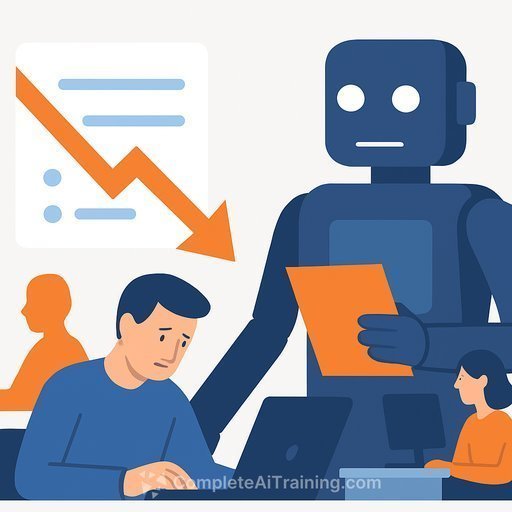
Expect pressure on roles that are fully online, especially those heavy on language, knowledge work, coding, math and complex problem-solving. In several of these areas, AI already beats humans and is improving fast in reasoning, visual understanding and continuous learning.
Hands-on jobs like plumbing or construction are safer for longer. Automating physical work at scale is still hard, and coordination in the real world remains a bottleneck.
The Team-Size Reset
Legg suggests functions like software engineering could see dramatic compression. Work that once took 100 people could be done by 20 paired with advanced AI. That shift flips hiring plans, pay bands and job ladders-especially at the entry level.
Geographically scattered teams become harder to justify if smaller, high-leverage, co-located groups paired with AI deliver faster cycles and tighter control.
Why Remote-First Cognitive Roles Are Exposed
- Tasks are digital, repeatable and easy to instrument-perfect for automation and AI copilots.
- Output can be measured precisely, enabling aggressive productivity targets.
- Communication overhead in large distributed teams is a cost AI can reduce.
- Junior work is easiest to automate, putting early-career remote roles at risk first.
Timing: Gradual, Then Fast
The shift won't be overnight. But once AI crosses professional-level thresholds in key knowledge roles, adoption speeds up. Expect step-changes tied to concrete capability jumps, not a smooth line.
HR Playbook: Practical Moves to Start Now
1) Workforce planning
- Model 12-24 month scenarios where AI lifts output per FTE by 2x-5x in target functions (engineering, support, operations, content).
- Set "AI leverage ratios" per team (e.g., headcount per product line, tickets per agent) and track quarterly.
- Plan for fewer junior hires; expand apprenticeships and rotational programs to preserve a talent pipeline.
2) Job architecture and org design
- Redesign roles around AI-augmented workflows (prompting, review, judgment, escalation).
- Split work into "generate, verify, decide, act." Keep humans on judgment, context and edge cases.
- Consolidate fragmented remote tasks into higher-scope roles with clear accountability.
3) Skills and enablement
- Stand up AI literacy for all knowledge workers: safe use, tool selection, prompt patterns, verification, privacy.
- Offer depth tracks by job family (e.g., coding copilots for engineers, retrieval and summarization for ops, data-to-insight for analysts).
- Measure impact with before/after time studies on representative tasks.
4) Hiring, assessment and performance
- Screen for problem framing, tool fluency and critical thinking over rote production.
- Use work samples that require collaborating with AI tools, not avoiding them.
- Shift performance metrics to outcomes and QA pass rates, not effort hours.
5) Policy and compliance
- Update AI use policies: data security, confidentiality, IP, bias checks, human-in-the-loop review.
- Refresh remote/hybrid policies if fewer, higher-leverage roles benefit from in-person collaboration.
- Add clear approval paths for tools and model providers.
6) Equity, morale and mobility
- Ensure equal access to AI tools and training, including for remote staff.
- Publish transparent career paths that reflect AI-augmented work.
- Pilot gain-sharing or bonus pools tied to AI-driven productivity wins.
7) Transitions and risk management
- Stand up reskilling tracks for at-risk roles; set thresholds for redeploy vs. exit.
- Pre-negotiate severance and outplacement support frameworks.
- Run change-management plans with frequent, honest updates.
90-Day Action List
- Pick two functions and run controlled AI pilots with clear baselines and success metrics.
- Launch company-wide AI basics training plus one role-specific module per major job family. See curated courses by job for quick starts.
- Rewrite three priority job descriptions to reflect AI-augmented workflows and revised skill stacks.
- Draft or refresh your AI use policy and tool approval process; brief managers.
What Doesn't Change
Physical work holds longer. Roles that anchor on relationships, context and real-world judgment stay valuable. And while some jobs shrink, Productivity can surge-potentially funding better benefits, learning budgets and shorter workweeks if leaders choose to share the gains.
The Bigger Economic Signal
Legg's warning goes beyond remote work. If machines outperform human cognitive labor at lower cost, the classic "sell your brainpower" model weakens. That pushes employers and policymakers to rethink how income, purpose and security are sustained.
He still sees a path to a golden age: major productivity gains, scientific breakthroughs and broader growth. The test is whether that wealth is distributed well enough to keep people engaged and stable as work evolves.
Keep Your Finger on the Pulse
- Track capability reports like the Stanford AI Index for performance benchmarks.
- Watch macro job impact analyses from firms such as McKinsey to calibrate workforce scenarios.
- Build internal dashboards on AI adoption, productivity deltas and hiring mix by level.
Bottom Line for HR
Plan for fewer, more capable teams in digital-heavy functions and a steeper skill curve across the board. Protect early-career pathways, upskill fast and rewrite roles around AI-augmented work. The companies that move first will set the standards-and the labor market will follow.
If you need a quick way to align training with roles, explore our curated latest AI courses.
Your membership also unlocks: