
AI news ·
Researchers recommend using AI as a learning coach to support self-regulated learning
A Nature Human Behaviour commentary warns classroom AI risks weakening independent thought. Researchers urge using AI as a coach that prompts reflection instead of giving answers.
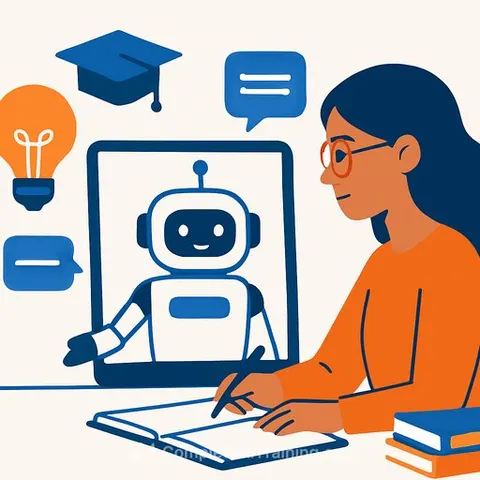
A new commentary in Nature Human Behaviour warns that AI tools in classrooms risk weakening students' ability to think independently, and calls for a shift from adaptive teaching to using AI as a learning coach. Published 13 July 2026, the piece by researchers from the University of Tübingen and the University of North Carolina at Chapel Hill argues that self-regulated learning must anchor AI integration in schools and universities.
The risk of offloading thinking to AI
Adaptive AI systems promise personalized education, but the authors caution that they can encourage students to bypass the mental effort required for deep learning. When AI provides instant answers, learners may stop setting goals, monitoring their own understanding, or reflecting on strategies. This deskilling mirrors broader concerns: research shows that self-control and self-regulated learning predict academic and life outcomes more strongly than intelligence.
The commentary draws on evidence that the ability to plan, execute, and evaluate one's own learning is a trainable skill - and one that atrophies when technology does the heavy lifting. Without deliberate design, AI tools risk becoming a crutch rather than a coach.
How AI as a coach works
Instead of delivering completed solutions, a coaching AI prompts students to articulate their approach, assess their progress, and adjust their methods. The system asks questions, provides feedback on learning strategies, and fades support as competence grows. This approach aligns with decades of research on self-regulated learning, where learners take ownership of cognition, metacognition, and motivation.
The authors highlight that AI can act as a metacognitive prompt - reminding students to check their work, consider alternative strategies, or set specific sub-goals. Such prompts are low-cost to implement and can be embedded in existing digital tools without overhauling curriculum.
Putting the coaching model into practice
Schools and universities should select AI tools that scaffold rather than automate, the authors write. They point to emerging frameworks like hybrid human-AI regulation, where the teacher, student, and AI share responsibility for learning. The goal is not to replace instructors but to amplify their ability to develop self-directed learners.
For educators looking to adopt this model, the AI Learning Path for Teachers offers structured guidance on integrating AI in ways that build student autonomy. The commentary notes that effective implementation requires professional development and a clear vision of AI's role as a supporter, not a substitute, for human judgment.
Why this matters for educators
The takeaway is pragmatic: vet AI tools for how they engage students in thinking, not just for how they simplify tasks. A tutoring bot that solves problems for a student may boost short-term performance but erode the habit of wrestling with challenging material. Choosing systems that ask questions, prompt reflection, and gradually withdraw help can preserve and strengthen the skills that matter most for lifelong learning.