
AI news ·
Retail media evolves from ad channel into AI-driven commerce operating system
Major retailers are merging ads, payments, loyalty, and pricing into one AI-driven commerce platform. Operations and analytics teams must rebuild KPIs and data systems to keep pace.
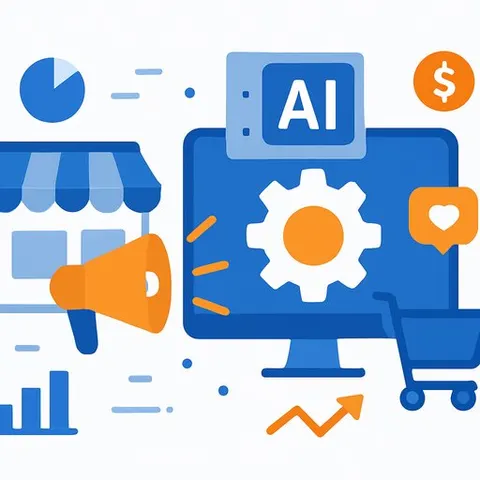
Retail Media Becomes an Operating System, Not Just an Ad Channel
Retail media has stopped being a narrow advertising product. In 2026, major retailers are consolidating sponsored listings, payment systems, loyalty programs, and merchandising into a single AI-driven operating system that continuously optimizes pricing, discovery, and conversion.
The shift moves beyond incremental ad-tech improvements. Retailers including Target and Meta are now treating retail media as a core commerce platform that connects media, purchase behavior, payments, financing, and loyalty into one feedback loop.
What Operations Teams Need to Know
This restructuring has direct consequences for how operations, data, and analytics functions work. The technical foundation rests on three components:
- Unified first-party data ingestion across web, in-store, payments, and loyalty systems with real-time identity resolution
- Real-time decisioning layers that apply predictive models to pricing, promotion, and personalization
- Attribution frameworks that measure lifetime value and incremental sales, not just last-click return on ad spend
Data engineering teams will need to build low-latency feature stores and model-serving pipelines that act on payment and loyalty events in near real time. Analytics teams must embed uplift modeling and counterfactual estimation into campaign evaluation.
Budget and Organizational Shifts
The move from isolated media buys to an integrated operating system requires budget reallocation. Spending shifts from traditional ad channels to data infrastructure, first-party signal collection, model deployment, and cross-functional orchestration.
CMOs, CROs, and Chief Digital Officers need to reclassify retail media as a core commerce platform, not a marketing expense. This changes how KPIs are structured and how data science teams are trained and measured.
Immediate Operational Changes
Operations teams should expect to re-scope KPIs and retrain staff on causal measurement rather than correlation-based metrics. Privacy-aware identity graphs become a priority as regulations tighten around first-party data use.
Engineering and analytics must design systems that can handle real-time optimization across multiple business functions. This requires closer collaboration between teams that historically operated independently.
For practitioners implementing these systems, success depends on rearchitecting around first-party signals and continuous optimization rather than treating retail media as a rebranded ad channel. Those who invest in data analysis capabilities and cross-functional coordination will outpace competitors who treat the shift as a technical upgrade.
Operations managers overseeing these transitions should consider understanding the broader AI context. An AI Learning Path for Operations Managers covers the strategic and technical implications of platform-level thinking in commerce systems.