AI Is Becoming the New Sales Associate on Retail Floors
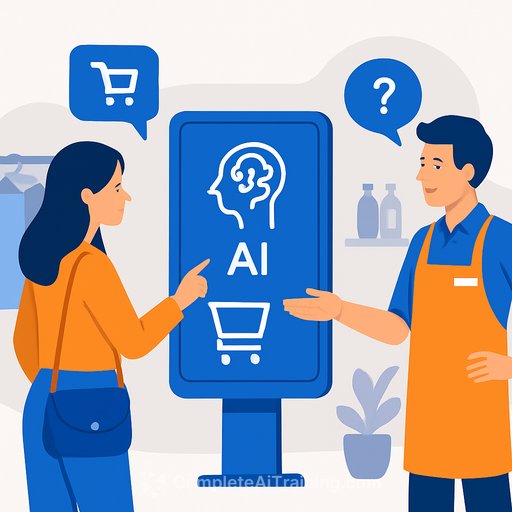
Walk into a Guitar Center on a busy Saturday, and the pattern is clear: associates are stretched thin. Customers face a choice-wait for help or scan a QR code for instant answers. Across physical retail, AI is filling that gap.
Guitar Center's Rig Advisor, an AI-powered shopping assistant, delivers product guidance on demand. It replicates what a human associate does, but on a mobile device. "This is basically everything an associate can do, on your app or on your mobile device," Guitar Center CEO Gabe Dalporto said.
The trend extends far beyond guitars. Vitamin Shoppe's new innovation store in New York uses a "Shoppe Advisor" touch screen for product information and inventory data. Crave Retail installed smart fitting room screens at Victoria's Secret, Under Armour and Foot Locker, where customers request sizes and styling suggestions without flagging down staff. Nike's flagship stores use RFID technology to pull personalized recommendations from customer profiles before they reach a shelf.
Walmart added AI-generated audio summaries to product pages for over 1,000 beauty items. Shoppers using AI tools spent 25% more on average, the retailer reported.
The Work Behind the Scenes
While customer-facing tools draw attention, deeper investments often remain invisible. Starbucks has run its Deep Brew AI platform since 2019, handling labor scheduling, inventory levels and cold brew prep timing. The system connects to point-of-sale systems so baristas can anticipate orders before customers place them. Deep Brew serves 17 million app users and processes about a quarter of all Starbucks transactions.
Much in-store AI still operates out of view. RFID scanners at Uniqlo self-checkout areas may use AI on the back end to process scan data and flag replenishment needs. Customers never see it.
What Customers Want
Capgemini found that 71% of consumers want generative AI integrated into shopping experiences. Gen Z and millennial shoppers reported the strongest interest. Thirty-three percent of consumers who have used AI for shopping discovery say it has replaced their previous methods, signaling a shift toward conversational interfaces.
Retailers remain cautious. Greg Carlucci, a senior director analyst at Gartner, said hesitation persists on the brand side. "There's this first-mover hesitation right now to understand what will be positively received and also what creates a value add," he said.
Some AI applications still lag behind human expertise. AI color-matching in beauty hasn't yet matched what a trained associate can do. The technology improves with more data, but it needs time to mature.
The Hybrid Store
AI is becoming a permanent layer in physical retail, much like it already is online. Stores are no longer purely physical spaces. They are hybrid environments where digital intelligence shapes how customers browse, decide and buy.
For sales professionals, understanding how AI tools work in these spaces-and how they complement or replace traditional roles-matters. Learn more about AI's role in sales roles and explore resources on AI for Sales.
Your membership also unlocks: