
AI news ·
Retailers use AI agents to automate merchandising, vendor negotiations and demand forecasting
Retailers are deploying AI agents to negotiate with suppliers and predict demand across thousands of SKUs, shifting human buyers toward strategy. Walmart, Target, and others are already using or building these tools to automate inventory management and vendor communications.
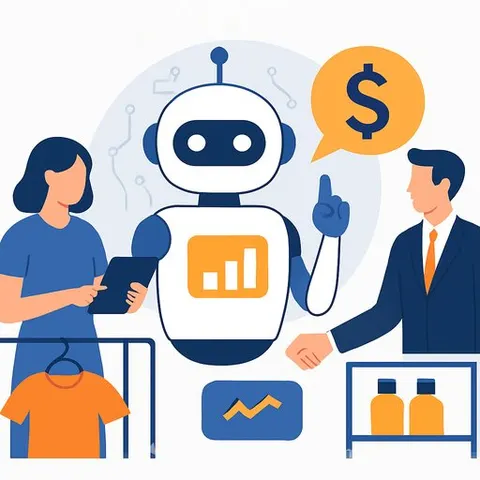
Retailers are deploying AI agents to handle core merchandising tasks - from negotiating with suppliers to predicting demand for thousands of SKUs - shifting the role of human buyers toward strategy and oversight. A wave of technology providers including Duvo.ai, Relex Solutions, Gain, and Crisp have introduced or expanded AI capabilities that automate inventory management, vendor communications, and assortment planning, with major retailers like Walmart and Target already building their own in-house tools.
"When we think about category planning and merchandising, it's personal, local and human," a Walmart spokesperson said. "Applying AI is really to help serve customers and associates better so they can spend more time on the human aspects of their day-to-day lives instead of tactical, manual work." Walmart launched Wally, a GenAI-powered assistant for merchants, and uses a negotiation agent from Pactum to extend payment terms across thousands of suppliers.
Agents are now negotiating with suppliers
Gain, based in Tel Aviv, creates AI-powered "digital co-workers" that operate through Teams and Outlook. One agent, Natalie, develops category strategy and negotiates with suppliers. Another, Ben, manages retail operations like telecom or facilities partnerships. Jason Busch, co-founder and head of strategy for Gain, said the company works with large companies in North America and Europe, including a major U.S. retailer it cannot yet name.
Busch said many retailers focus on top-selling products, leaving gaps that AI can fill. "That could involve a price negotiation, it can involve contract-terms negotiation, it could involve promotions," he said. He recommends keeping a human in the loop until trust is built, then determining the right cadence for check-ins. European and Middle Eastern employers, he noted, are more willing to experiment with AI employees due to smaller labor pools and stricter labor laws that make virtual workers more attractive.
Czech-based Duvo.ai reads supplier emails about price changes and proposals, automating processes like out-of-stock prevention, invoice reconciliation, and freight audits. It analyzes commodity costs, manufacturing costs, labor rates, transport, packaging, and the supplier's acceptable margin to determine a buying range for each SKU, then responds to the supplier on the retailer's behalf. "You cannot expect this to be fully autonomous," said CEO Tomas Cupr. Retailers "just don't have enough people to spend one hour of research per SKU."
Data platforms shift merchants toward strategy
Relex Solutions, whose clients include Whole Foods and Sprouts, uses AI agents to automate weekly planning meetings, planogram development, price updates, and promotions. "The merchant's job is even elevated now," said Patrick O'Mara, director of Solutions Principles. "It's focusing much more on the strategic aspects of the role and the vendor negotiations."
Crisp, an Arkansas-based data analytics platform, helps retailers predict demand and automate ordering - particularly for fresh produce, where grocers manage hundreds of items weekly to reduce waste and spoilage. General manager Dirk Herdes said the platform works with small-format stores and distributors in the U.S. and regional grocers in Northern Europe. "It's really democratizing the use of information, so operators can see exactly what's happening," he said. "They don't have to wait on a report or some internal team to design the analysis; they can take advantage of the data there and make decisions on the fly."
Zenline AI, a category management platform, plans to offer its agents to U.S. retailers this fall after working with European companies including Conrad, Otto, and Futterhaus. CEO Arber Sejdiji said the agents do "the grunt work in the background - they read external and internal data, clean it and build a deep understanding of each category." A planner then sees "concrete, margin-tied recommendations for the next actions - ready to review and pass on to the head of assortment."
Adolfo Rodriguez, chief technology and information officer for Guitar Center, said the company sees meaningful opportunities for AI in assortment planning, demand forecasting, vendor collaboration, and supply chain execution. The goal, he said, is "not simply to automate existing processes, but also to help our teams make better decisions and create more value for customers and associates." Guitar Center currently uses traditional purchase orders and advance shipping notices, but Rodriguez sees AI enabling richer data exchange - more precise delivery timing, better order visibility, and connected inventory tracking from manufacturer to store.
Why this matters for management
The shift underway is not about eliminating merchandising roles but reshaping them. AI agents are taking over the high-volume, repetitive work - parsing supplier emails, analyzing cost breakdowns, reconciling invoices - that currently consumes the majority of a planner's month. This frees managers to focus on category strategy, supplier relationships, and decisions that require judgment. For retail leaders, the immediate question is where to apply these tools first: vendor negotiations, demand forecasting, or assortment planning. The technology exists. The competitive advantage will go to organizations that build the internal trust and processes to deploy it effectively. For those managing retail teams, understanding how to integrate AI agents into existing workflows is becoming a core competency - something focused training for retail managers can address.