
AI news ·
Rosemary DiCarlo calls for responsible use of artificial intelligence to strengthen trust in elections
The UN released an AI election guide on July 1, 2026, to help officials manage artificial intelligence in voting. The framework prioritizes human oversight and public trust.
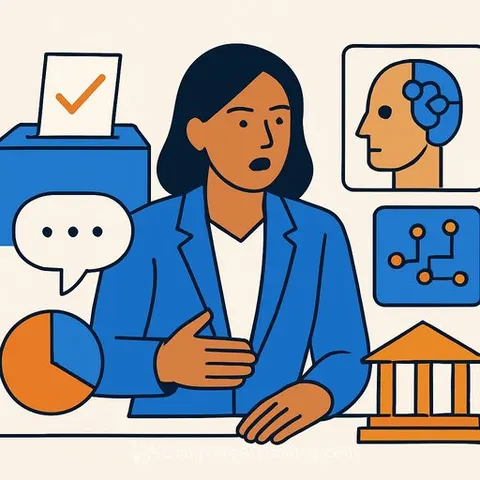
The United Nations launched a new publication on July 1, 2026, to help electoral authorities navigate the growing presence of artificial intelligence in voting processes. The guide, From Promise to Practice: AI in Electoral Administration, arrives as AI already shapes how voters receive information and how institutions manage elections, making concrete guidance essential for preserving public trust.
Under-Secretary-General for Political and Peacebuilding Affairs Rosemary DiCarlo introduced the resource at UN headquarters in New York. She described it as a joint effort between the UN Development Programme (UNDP) and the Department of Political and Peacebuilding Affairs (DPPA) Electoral Assistance Division. The document is not a universal endorsement of AI, but a decision-making tool for electoral management bodies weighing whether, where, and how to use the technology responsibly.
"The question is not whether elections will be affected by AI. They already are," DiCarlo said. "The question is how we respond together."
Principles for AI in elections
DiCarlo outlined the UN's core approach: human rights must come first, privacy and data protection must be upheld, and inclusion must remain central. Transparency and accountability should guide every decision, and human oversight cannot be removed from the process. "Elections remain vital expressions of sovereignty, legitimacy and public trust," she said.
The publication connects to broader UN governance work, including the Global Digital Compact and its vision of an inclusive, safe, and secure digital future. It moves the conversation from high-level principles to the practical choices election administrators face daily.
Practical choices for electoral bodies
The guide offers a structured way to assess AI tools without pushing adoption for its own sake. It helps electoral authorities identify specific functions-such as voter list management, communication, or security-where AI might be applied, and what safeguards would be needed in each case. The resource is meant to strengthen the ability of institutions to deliver credible, inclusive elections as the information environment evolves.
For government officials and policy advisors, the launch underscores the need to build internal expertise on AI governance. AI Learning Path for Policy Makers provides a structured way to develop that knowledge, covering the regulatory and operational questions that arise when public institutions adopt AI.
Why this matters for government professionals
Elections depend on trust-trust in information, institutions, procedures, and outcomes. As AI tools become more common in electoral administration and the broader information landscape, government professionals are the ones who must ensure that trust is not broken. The UN's guide and the principles behind it give electoral managers a clear framework, but implementing them requires staff who understand both the technology and the legal and ethical boundaries. Building that capacity now is a practical step toward protecting electoral integrity before the next election cycle.