
AI news ·
Saint Michael's professor teaches future teachers to think critically about AI in the classroom
Saint Michael's College professor Claudine Bedell trains future teachers to question when-and whether-to use AI, not just how. Her method starts with a simple test: identify your learning objective before reaching for any tool.
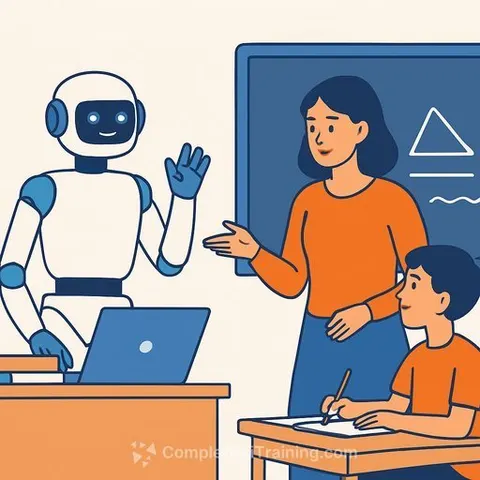
How to Train Future Teachers to Use AI Critically
Claudine Bedell teaches her education students not just how to use AI tools, but when to use them, when to avoid them, and how to recognize their limitations. The Saint Michael's College professor and Associate Dean of the School of Society and Culture began experimenting with AI alongside students in 2023 to develop curriculum units.
Her approach now centers on critical thinking skills specific to classroom contexts. Before reaching for an AI tool, Bedell tells future teachers to answer a basic question: What is your learning objective?
"You have to be a critical consumer," Bedell said. "How will you teach that objective to your students? Using what instructional strategies? And then, how will you assess the learning of that objective?"
Where AI Easily Misses the Mark
AI-generated rubrics and texts at different reading levels can seem helpful. But they often fall short because they lack the teacher's expertise in assessment and evaluation within their subject area.
Bedell uses flawed AI-generated rubrics as teaching tools in her own classes, asking students to critique them and identify improvements. She applies the same method to performance tasks designed to measure student learning-work that cannot be replicated by AI.
She regularly discusses with future teachers how to design assessments that require authentically human work and creative ways to evaluate classroom performance.
Personalization Requires Teacher Judgment
Bedell sees real potential for AI to support personalized learning. One of her students created individualized math workbooks for every student based on their assessment results.
But personalization only works if teachers actively monitor it. "If you don't read those workbooks, and you don't monitor students' progress," the personalization loses its value, Bedell said.
Privacy and Ethical Concerns
Bedell and her colleagues in the Education Department are concerned about the impact AI could have on student privacy under the Family Educational Rights and Privacy Act (FERPA).
Bedell's core message to future teachers is straightforward: your field expertise is non-negotiable. "We educate you to be an expert in your field," she said, "and you have to use that expertise to be a critical consumer of what you take from AI, and what you ask AI to do."
For educators looking to build these skills, explore AI Learning Path for Teachers and AI for Education resources.