SAMAI passes 1 million trained: what HR leaders in Saudi Arabia should do next
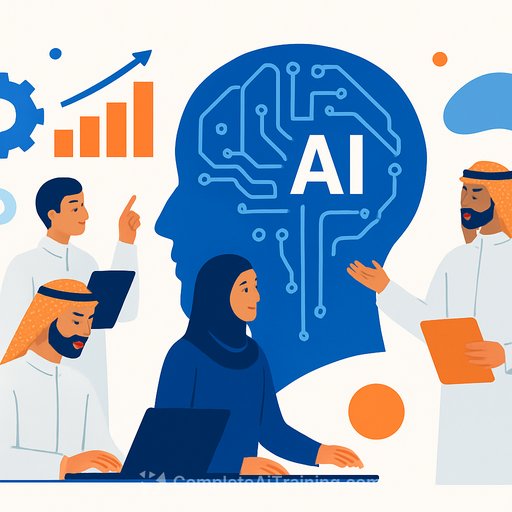
SAMAI - the national One Million Saudis in AI Initiative - has exceeded its goal, training more than 1 million citizens in artificial intelligence skills. More than 1.2 million people enrolled in under a year, hitting a three-year target in record time. Of these, 9 percent are working-age Saudis who have earned AI skills certificates.
Built by the Saudi Data and Artificial Intelligence Authority with the Ministry of Education and the Ministry of Human Resources and Social Development, SAMAI advances Saudi Vision 2030 by building practical AI capability at scale. The program is free, taught in Arabic, and offers official certification from SDAIA, giving HR teams a credible signal of skills for hiring and internal mobility.
Why SAMAI matters for talent strategy
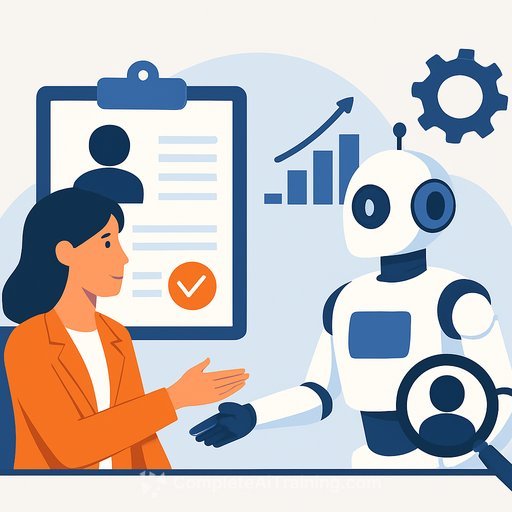
For HR, this is a ready-made pipeline of entry-level to intermediate AI literacy across the country. Accessibility and scale stand out: simple language, visual explanations, and remote, flexible learning opened the door to students, employees, and job seekers across regions.
Compared with many regional and international efforts, SAMAI's national reach and formal certification add academic and market value. The content spans concepts, applications, ethics, and practical tools - a useful baseline to standardize AI skills across teams.
Actions HR can take now
- Add AI competencies to job architectures across functions (HR, finance, operations, marketing, customer service).
- Recognize SDAIA-issued SAMAI certificates in hiring, promotion, and internal mobility criteria.
- Launch cohort-based upskilling for priority roles; mix SAMAI modules with role-specific projects.
- Set learning time policies (for example, 2-4 hours per week) and track completion by department.
- Create a community of practice with mentors to review use cases, prompt libraries, and ethical guidelines.
- Update policies for AI use, data privacy, and model safety; include an ethics module as required training.
- Partner with business leaders to identify 3-5 high-impact workflows per function for AI adoption.
Certification and skills signals HR can trust
SAMAI certificates carry weight because they are issued by SDAIA. Treat them as a validated baseline for AI literacy and safety. In job posts, list "SAMAI AI Certificate (SDAIA)" under preferred qualifications to widen qualified applicant pools.
Map SAMAI learning outcomes to your competency framework: foundations, prompt quality, tool usage, ethics, and simple automation. Give employees credit toward internal skill badges or progression steps when they complete the program.
Implementation checklist for HR and L&D
- Policy: Publish AI usage and data handling rules; require annual refresh.
- Roles: Update job descriptions with clear AI expectations and example tasks.
- Learning paths: Blend SAMAI with function-specific tool training and capstone projects.
- Enablement: Provide approved tools, templates, and secure data access.
- Support: Set up office hours, internal forums, and manager guides.
- Recognition: Tie completions to badges, performance goals, or stipends.
Measure what matters
- Participation: enrollment and completion rates by business unit and role.
- Skill validation: share of workforce with SAMAI or equivalent certification.
- Time-to-productivity: onboarding time for AI-enabled roles before vs. after SAMAI adoption.
- Use cases: number of documented AI-supported workflows and their cycle-time reduction.
- Risk controls: compliance incidents, data privacy breaches, and ethics training pass rates.
What makes SAMAI useful for workforce planning
It is national in scope, free to access, and suited to Saudi society's needs while staying current with global trends. That combination helps HR scale a common baseline quickly, then layer role-specific depth where it matters.
Because the content is practical and remote-first, participation extends beyond major cities. That widens talent pools for employers and supports equitable access to career growth.
Beyond SAMAI: complementary options
Use SAMAI as the foundation, then add role-based specialization to meet business goals. If you need curated tracks by role, explore job-focused course libraries here: Complete AI Training - courses by job.
Bottom line for HR: formalize SAMAI recognition, set clear AI expectations in roles, provide time and tools to learn, and measure impact. The result is a workforce ready for safer, smarter work - and a talent pipeline that keeps pace with Saudi Vision 2030.
Your membership also unlocks: