
AI news ·
Sanders proposes bill forcing largest AI companies to hand 50% of equity to the federal government
Sen. Bernie Sanders proposed forcing the largest AI companies to transfer 50% of their equity to a federal sovereign wealth fund. OpenAI, Anthropic, and xAI are named targets.
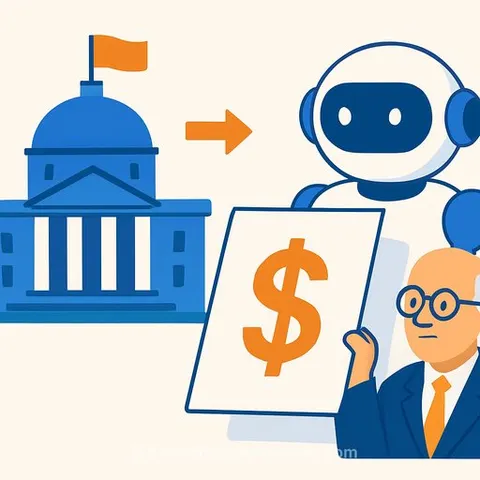
Sanders Proposes Forcing AI Companies to Hand Half Their Equity to Federal Fund
Senator Bernie Sanders announced legislation this week that would require the largest AI companies to transfer 50 percent of their equity to the American public through a newly created sovereign wealth fund. He named OpenAI, Anthropic, and xAI as primary targets in the proposal, which he published as a New York Times op-ed on June 1. The timing proved pointed: that same day, Anthropic confidentially filed for an initial public offering.
The American A.I. Sovereign Wealth Fund Act would impose a one-time 50 percent tax paid in stock rather than cash on the country's biggest AI companies. The federal government would hold those shares, seat equal representation on each company's board, and retain voting power to block corporate decisions deemed harmful to the public. Sanders argues the proceeds should eventually flow back to Americans as direct payments and expanded benefits.
The Argument: Training Data as Public Asset
Sanders grounds the proposal in a straightforward claim: AI systems are trained on text, code, images, and creative work that humanity collectively produced. The productivity gains those systems unlock belong to the people whose labor generated the training data, not exclusively to venture firms and founders who assembled the compute and wrote the architectures.
That argument itself is not new. What distinguishes Sanders's proposal is the level of specificity attached to a federal ownership transfer, and the fact that he is converting language the AI industry has used as rhetorical cover into a legal obligation.
Industry Has Already Floated Similar Ideas
OpenAI had previously proposed creating a public wealth fund that gives every citizen a stake in AI-driven economic growth. Anthropic CEO Dario Amodei similarly endorsed the concept of national sovereign wealth funds holding AI stakes. President Trump's executive orders have gestured toward an American sovereign wealth fund. Sanders is not working from the fringe.
Legislative Odds Are Long, But Risk Is No Longer Zero
With Democrats in the minority in both the Senate and the House, the proposal is unlikely to pass in its current form. But venture capital firms can no longer model legislative risk as zero. Senators Elizabeth Warren and Representative Greg Casar separately floated proposals last week to tax AI productivity gains for jobs programs and universal healthcare. The policy pressure is accumulating.
Each new proposal raises the probability that some version of AI profit-sharing, even a diluted one, survives eventual negotiations.
Term Sheets May Already Reflect the Risk
For founders raising Series B or C funding right now, the practical effect may already be showing up in investor term sheets. Venture firms pricing a 50 percent forced equity transfer into a downside scenario do not need the proposal to pass to adjust their return models. They need only believe the conversation is real.
When a sitting senator names your company in a New York Times op-ed and outlines board seats and voting blocks, the conversation is real.
Anthropic's IPO Timing Creates Disclosure Risk
Going public while a prominent Senate proposal argues for public ownership of half your equity is not a comfortable situation for underwriters or institutional investors. Anthropic may need to address the risk in future public filings if the legislation is formally introduced and considered material.
That kind of disclosure, buried in an S-1 registration statement, would be the first time many mainstream investors encounter the Sanders framework. They would encounter it not in an op-ed but in a legal document warning them that Congress could compel a 50 percent stock transfer to the federal government.
Definition Questions Could Reshape Impact
The xAI situation adds structural complexity. Following SpaceX's reported $1.25 trillion combination with xAI earlier this year, the entity Sanders named in his proposal may no longer be simple to define as a standalone startup. The AI landscape is moving faster than the legislative drafting process.
Whether coverage is determined by valuation, revenue, compute spend, or market influence will determine which companies actually fall under the law. Precise threshold definitions in any final bill text would matter enormously.
The Broader Shift: Public Ownership Is Now Mainstream
This specific proposal will almost certainly not pass in its current form. The broader implication is different: public ownership of AI infrastructure is now a mainstream policy debate, not a fringe position.
The venture industry has not yet built consensus on how to respond. The firms that model this seriously, think through the structural scenarios, and engage with policymakers rather than dismissing the conversation will be better positioned than those waiting for the proposal to die in committee.
The proposal may die. But the argument behind it is not going anywhere.
For government officials: Understanding how this proposal works-and how similar ones might evolve-requires familiarity with AI corporate structures, valuation methods, and the policy levers available to Congress. See AI for Government and AI for Executives & Strategy for deeper context on governance and corporate strategy in the AI sector.