AI-Driven Performance Management Heads to $6.33B by 2030 - What Managers Should Do Next
December 17, 2025
The employee performance management (EPM) market is set to grow from $3.52 billion in 2025 to $6.33 billion by 2030, a 12.4% CAGR, according to MarketsandMarkets. The force behind that growth: a clear move from annual reviews to continuous, analytics-led performance cycles.
Companies like Adobe, Accenture, Deloitte, and Microsoft already run continuous feedback models. They're seeing faster development and higher engagement than traditional reviews-and setting the bar for everyone else.
Why the shift is sticking
- Real-time data beats memory-based reviews. Continuous feedback gives managers a live picture of performance, not a year-old snapshot.
- Skills are the new currency. Linking performance to learning paths and internal mobility creates visible growth paths and better retention.
- AI cuts manual work. Predictive analytics flags coaching needs, aligns goals, and helps reduce evaluation bias across teams.
Who's leading-and what they're bringing
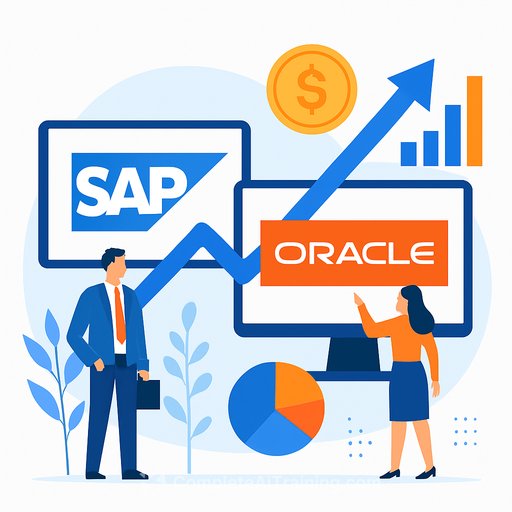
- SAP: "People Intelligence" upgrades (Oct 2025) bring an AI copilot and a Performance and Goals Agent into SuccessFactors. Managers get unified skills and performance analytics, continuous feedback, and goal tracking inside one suite.
- Oracle: New role-based AI agents (Feb 2025) inside Oracle Cloud HCM streamline workflows, feedback, and talent reviews. An updated Redwood-based UX with Activity Centers ties performance, skills, and learning together.
- Microsoft: Enters via Viva and Microsoft 365, integrating goals, feedback, and insights into everyday tools used by knowledge workers. See Microsoft Viva.
- Workday: Leans on a skills-first architecture and strong Fortune 500 presence to drive continuous, data-backed performance practices.
- ADP: Extends from payroll into integrated HR and performance modules, popular with mid-market and large organizations seeking unified workflows.
These five hold an estimated 40%-55% of global share. Their data models and APIs will set expectations for how performance and skills data flow across HR, finance, learning, and planning.
What this means for your operating model
Performance data is moving into the heart of HCM-and, by extension, your ERP stack. As SAP and Oracle embed copilots, agents, and unified skills analytics, standalone performance tools lose ground.
For managers, this is good and demanding at the same time. You'll get better insights and automation, but you'll also need stronger integration, data governance, and change management to avoid locking intelligence inside a single platform.
A practical 90-day playbook
- Define the use cases you'll fund: Continuous check-ins, OKRs, skills-linked development, internal mobility, or all of the above. Prioritize two you can measure.
- Map data flows: List where goals, feedback, skills, learning, and talent reviews live today. Identify the system of record for each and how they sync.
- Run a pilot with one business unit: 12-week cycle with clear goals, weekly check-ins, and an agreed scorecard (see below). Train managers first.
- Instrument fairness: Track rating distribution by role, location, and tenure. Require comments for outliers. Review AI explanations when available.
- Close the loop with learning: Every feedback item should point to a learning action, mentor, or project. No dead ends.
- Prep the integration layer: Align on APIs, identity, and skills ontology. Avoid custom one-offs that trap data in one suite.
Scorecard: metrics that actually move
- Quality of goals: % of goals measurable and aligned to business outcomes.
- Feedback cadence: % of employees with monthly check-ins and documented coaching.
- Time to development action: Avg. days from flagged skill gap to assigned learning or project.
- Internal mobility: % of roles filled internally and median time-in-role before a move.
- Rating fairness: Variance across teams and managers; monitor for skew.
- Manager load: Time spent on reviews vs. AI-assisted drafting and calibration.
Vendor snapshot for decision speed
- SAP SuccessFactors: Strong for large enterprises and regulated sectors; AI copilot, People Intelligence, and goal/performance modules are tightly connected.
- Oracle Cloud HCM: AI agents, Redwood UX, unified skills and analytics; fits global estates wanting performance, talent, and HR in one place.
- Microsoft + Viva: Best if you want performance practices embedded in Microsoft 365 workflows used daily.
- Workday: Skills-led architecture with strong analytics and adoption in complex enterprises.
- ADP: Practical for organizations anchored on ADP payroll seeking integrated HR and performance.
Risks to manage early
- Data silos: If performance data can't flow into learning and workforce planning, you'll stall. Push vendors on open APIs and export options.
- Bias and explainability: Require visibility into AI suggestions and rating rationales. Establish audit criteria before go-live.
- Change fatigue: Keep the process simple. Weekly check-ins, quarterly calibrations, and one source of truth for goals.
- Over-customization: Configure, don't build from scratch. Stay close to standard features to keep upgrades smooth.
Bottom line
AI-native performance is becoming the standard, not a nice-to-have. If your performance data isn't linked to skills, learning, and mobility, you'll lag on productivity and retention.
Pick a pilot, wire up the data, and hold managers accountable for a steady feedback rhythm. The compounding effect over 12 months will beat any big-bang annual review.
Where to go deeper
- MarketsandMarkets for market sizing and EPM research.
- AI Learning Path for Training & Development Managers to upskill managers on AI-assisted performance practices.
- AI Productivity Courses for practical training on AI-native workflows and efficiency gains.
Your membership also unlocks: