
AI news ·
Saudi Arabia tops ITU Digital Readiness Framework 2025 with a score of 94 out of 100
Saudi Arabia ranked first in the ITU Digital Readiness Framework 2025, scoring 94 out of 100 across 117 indicators covering regulatory maturity and cross-agency governance. Finland and the UK placed second and third.
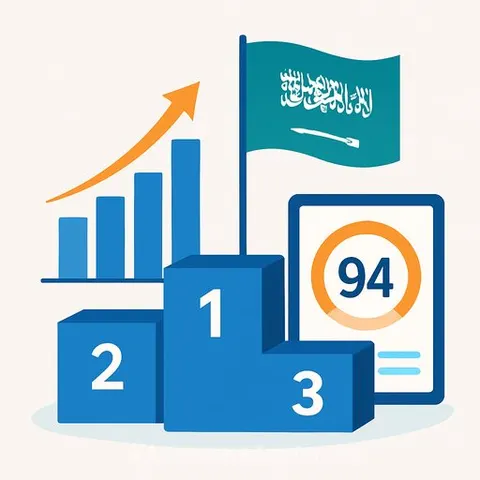
Saudi Arabia Tops Global Digital Readiness Ranking, Signaling Shift in Government Tech Governance
Saudi Arabia has secured first place in the ITU Digital Readiness Framework 2025 with a score of 94 out of 100, climbing from fourth place the previous year. The ranking measures whether a country has the regulatory capacity and institutional coordination to run reliable digital government services and artificial intelligence infrastructure at scale.
The framework evaluates 117 distinct indicators across nine core pillars, including regulatory maturity, digital policy, and cross-agency governance. The score reflects structural preparedness, not internet speed or direct service quality.
Finland and the United Kingdom follow in second and third place. The top ranking aligns with Saudi Arabia's Vision 2030 strategy, which aims to diversify the economy by expanding digital services and knowledge-based industries.
What the Score Actually Measures
Digital readiness assesses whether government agencies can share data safely, whether procurement rules align with security policies, and whether clear accountability exists when systems fail. It answers a basic question: Is the country structurally prepared for digital transformation?
A practical example: A city launching digital identity and e-payment systems simultaneously succeeds only if agencies can coordinate without conflicting policies. When rules exist on paper but enforcement is uneven, businesses build expensive workarounds and the public loses trust.
The ranking does not guarantee every service is fast or that every neighborhood has identical access. It signals that the behind-the-scenes rules are in place to help digital systems scale reliably.
Economic Scale and Market Growth
Saudi Arabia's digital economy reached approximately 495 billion Saudi riyals, contributing 15 percent to national GDP. The ICT market exceeded 180 billion riyals, with mobile subscriptions surpassing the total population.
Data usage intensity now sits significantly above the global average. These figures show how structural readiness translates into actual market growth and user engagement.
How Vision 2030 Shapes Digital Government
The national digital government roadmap establishes four high-priority pillars: National Digital Identity for secure access, unified data governance frameworks, digital-by-design services for streamlined user journeys, and the "Once-Only" Principle to eliminate redundant paperwork.
This approach moves beyond simple applications into deep process redesign. A permit that updates automatically across agencies, or a service that remembers verified information so residents do not re-enter the same details, is the difference between "digital" and "actually convenient."
AI Infrastructure and Data Governance
Securing AI infrastructure starts with a stable digital foundation. Saudi Arabia's HUMAIN initiative outlines AI infrastructure scope across data centers, cloud capabilities, AI models, and applications.
As AI infrastructure grows, practical constraints matter as much as policy. Electricity supply, cooling, and water use shape where new capacity gets built. A city that wants more AI services but also needs stable power for homes and hospitals must balance competing demands.
Smart city systems turn high-level digital policy into tangible street-level infrastructure. Clearer procurement rules and safer data-sharing standards help ensure systems remain stable during demand spikes.
The Gap Between Readiness and Results
A high readiness score establishes the foundation. It does not guarantee every portal remains fast or that every service works perfectly on the first try.
Digital readiness becomes real when essential services work smoothly in everyday moments. Residents renewing official documents during a break or parents checking school records via smartphone benefit from invisible governance systems that make modern life more predictable and trustworthy.
The next phase focuses on ensuring digital identity and e-payment systems remain frictionless. If regulatory maturity continues to evolve, the Kingdom should see increased trust in its digital ecosystem, saving time for every resident.
What This Means for Government Officials
The ranking suggests several developments for the coming years: accelerated delivery of digital government services, increased regulatory confidence for international cloud and AI investment, enhanced coordination between ministries, wider adoption of emerging technologies in the public sector, and stronger focus on digital inclusion.
For officials implementing digital transformation, the lesson is clear: policy environment matters as much as technology. Rules that align across agencies, clear accountability when systems fail, and consistent enforcement build the trust that makes digital adoption stick.
Learn more about AI for Government or explore the AI Learning Path for Policy Makers to understand how governance frameworks enable effective digital transformation.