
AI news ·
Schools must teach critical thinking and AI literacy to prepare students for an automated workforce
Most schools still teach industrial-era skills while AI handles routine tasks across nearly every industry. Experts say curricula must shift toward critical thinking, creativity, and digital literacy before today's students enter the workforce.
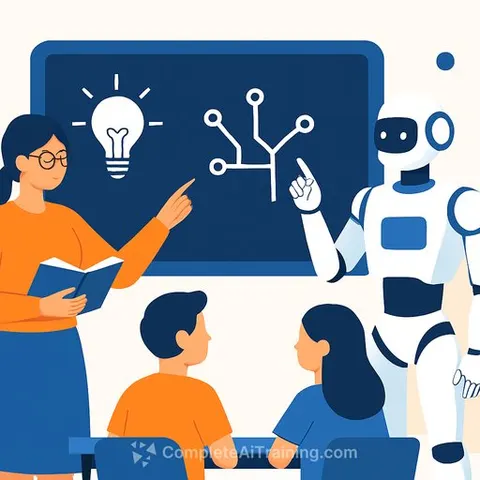
Schools Face Pressure to Overhaul Curricula Before AI Reshapes the Job Market
Educational institutions are falling behind the pace of AI adoption across industries. While healthcare, business, engineering, and entertainment sectors integrate AI into daily operations, most schools still teach methods designed for the industrial era.
The gap matters. Students entering the workforce in 10 to 20 years will compete in a job market where AI handles routine tasks. Schools that don't adapt risk leaving graduates unprepared for that reality.
Why the Traditional Model Is Failing
Industrial-age education prioritized memorization, standardized testing, and repetitive assignments. That system made sense when factory work demanded compliance and rote knowledge.
AI has made that approach obsolete. Machines retrieve information instantly, solve math problems, write essays, and generate code. If schools continue teaching students to memorize, they're training them for jobs that won't exist.
Five Skills Schools Must Prioritize Now
Critical Thinking Over Memorization
AI provides answers in seconds. Humans still need to evaluate accuracy, detect bias, and understand context. Schools should teach problem-solving, logical reasoning, and media literacy instead of fact recall.
Creativity and Innovation
Automation handles repetitive work. Original thinking doesn't. Classrooms should shift toward project-based learning, design challenges, and collaboration on real-world problems.
Emotional Intelligence and Communication
AI processes data efficiently but cannot replicate empathy, leadership, or human connection. Schools must emphasize teamwork, public speaking, and emotional awareness as technology becomes more dominant.
AI and Digital Literacy
Students need to understand how AI systems work, how data is collected, and how algorithms influence decisions. Basic AI concepts, digital ethics, and cybersecurity awareness should become standard curriculum.
Lifelong Learning Mindset
Many students today will work in careers that don't yet exist. Schools should teach adaptability, independent learning, and continuous skill development rather than treating education as a finite endpoint.
How AI Can Actually Help Classrooms
AI isn't only a threat to education-it's a tool that can improve it. AI-powered systems can personalize lessons for individual students, flag learning gaps early, and provide instant feedback.
Teachers benefit too. AI can handle administrative tasks, freeing educators to focus on mentoring and coaching rather than grading papers and tracking attendance.
The role of teachers will shift from information providers to guides who help students think critically about complex problems.
The Cost of Inaction
Schools that resist modernization will produce graduates unprepared for AI-driven industries. The mismatch between education and employer needs will only widen.
Countries and institutions investing in AI education now are positioning their students as future innovators and leaders. Those that don't will fall behind.
What the Classroom Will Look Like
Future classrooms may include:
- AI tutors working with individual students
- Virtual and augmented reality learning environments
- Project-based collaborative work
- Personalized education paths based on student progress
- Global digital classrooms connecting students across regions
These changes require investment, teacher training, and curriculum redesign. Schools can explore resources on AI for education and find AI learning paths for teachers to begin the transition.
The Timeline Is Now
AI is already changing industries. Education systems must evolve at the same speed or leave students behind.
Schools that prioritize critical thinking, creativity, emotional intelligence, digital literacy, and adaptability will prepare students for an AI-driven world. Those that cling to memorization and standardized testing will not.