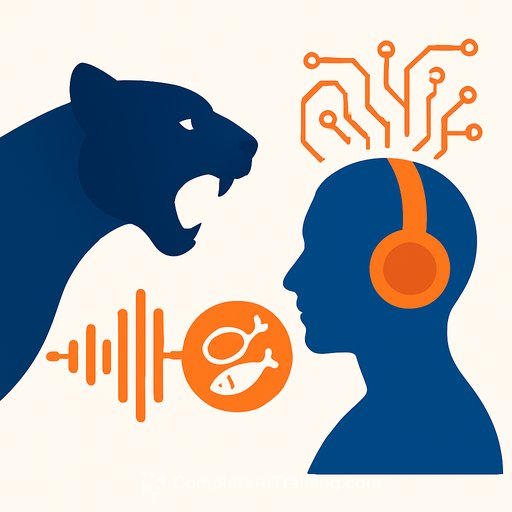
AI helps scientists decode how animals communicate
Researchers are using artificial intelligence to analyze animal sounds and behavior across multiple species, potentially opening pathways for limited human-animal interaction in the future. Scientists in France, South Africa, Côte d'Ivoire and the Democratic Republic of the Congo are processing vast datasets of vocalizations from chimpanzees, mice, bonobos, dolphins and birds.
A study led by the University of Saint-Etienne examined 122,000 vocalizations from African striped mice in South Africa's Karoo region. The researchers found that each mouse colony had its own vocal signature, and individual mice possessed distinct acoustic identities.
AI accelerates this work by processing datasets that would take years to analyze manually. Similar projects involving chimpanzees, dolphins, zebras, bonobos and birds are revealing patterns in how animals exchange information.
Practical applications and concerns
The research could advance wildlife conservation, animal welfare and biological science. Understanding animal communication systems may eventually allow humans to interpret basic messages from other species, though scientists describe such a breakthrough as distant.
Experts warn that direct animal communication raises ethical questions. Excessive human interaction could alter animals' natural behavior or compromise their well-being, researchers said.
For professionals working in research, understanding how AI processes biological data at scale offers practical insights. AI for Science & Research covers data modeling and laboratory optimization techniques relevant to these applications.
Your membership also unlocks: