
AI news ·
Scientists warn artificial intelligence could lower barriers to biological weapons development
A new Nature assessment warns AI could lower barriers to developing biological weapons. Experts caution these tools may help malicious actors design undetectable pathogens.
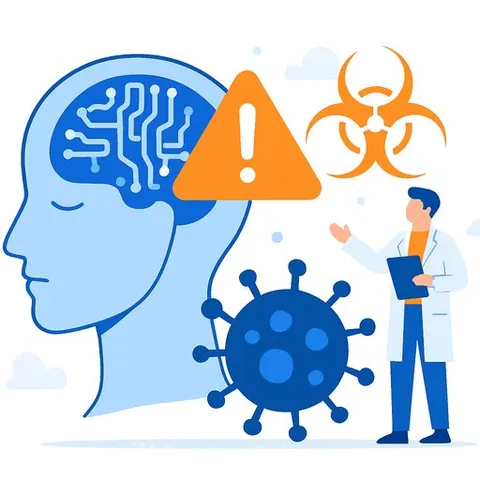
A new assessment published in the journal Nature warns that advances in artificial intelligence could lower barriers to developing biological weapons. As AI-powered biotechnology tools grow more capable of designing and analyzing complex biological systems, experts warn these technologies could be misused to create dangerous pathogens and toxins.
Shrinking knowledge barriers
Prof. Dr. Muhsin Konuk, a faculty member in Molecular Biology and Genetics and adviser to the rector, said the potential use of artificial intelligence in developing biological weapons is now a pressing global security challenge. He pointed to the erosion of traditional knowledge barriers that historically restricted access to advanced biological research.
"Developing biological weapons once required extensive expertise in virology, laboratory techniques and specialized scientific knowledge," Konuk said. "As AI systems become more capable of analyzing scientific literature and generating technical guidance, access to complex biological information is becoming easier."
Dual-use capabilities in biological design
Recent advances in artificial intelligence have transformed fields such as protein structure prediction, genomic analysis and molecular engineering. While scientists increasingly use these tools to accelerate drug discovery and improve vaccine development, experts caution they could be exploited for harmful purposes.
Professionals working in protein structure prediction and molecular engineering can explore the intersection of these disciplines and machine learning through the AI Learning Path for Biochemists.
Konuk noted that AI systems capable of analyzing biological data and predicting molecular behavior may eventually assist in designing biological agents that do not exist in nature. This could make such agents more difficult to detect, treat or counter. Researchers now classify advanced biological AI systems as dual-use technologies, capable of delivering both scientific benefits and serious security risks.
Focus on biosecurity and regulation
Security experts warn that AI could reduce logistical and technical barriers associated with advanced biological research. While developing biological weapons still requires significant infrastructure, specialized equipment and laboratory expertise, AI may simplify research planning, data analysis and experimental design.
Governments, technology companies and scientific institutions are examining ways to strengthen biosecurity safeguards. One proposal receiving broad support involves stricter screening of synthetic DNA and RNA orders to prevent dangerous genetic sequences from reaching malicious actors.
Policymakers in several countries are reviewing regulatory frameworks to address the security implications of advanced biotechnology. Technology developers are also incorporating safety mechanisms into AI systems, including monitoring tools, audit trails and safeguards designed to prevent models from generating information that could facilitate the creation of biological threats.
Why this matters for science and research professionals
Despite these security concerns, artificial intelligence remains highly promising for modern biotechnology. The same tools that could be misused are actively helping researchers accelerate vaccine development, improve disease surveillance and advance biomedical science.
For those focused on pathogen detection and virology, understanding safe AI deployment is increasingly necessary. The AI Learning Path for Microbiologists offers targeted training on applying these technologies responsibly within life sciences.
Konuk said the challenge facing governments and researchers is ensuring that innovation continues while effective safeguards prevent misuse. International cooperation, stronger oversight and responsible technology development will be essential to managing emerging biological weapons risks while preserving the technology's benefits for public health.