
AI news ·
Scorsese joins AI firm as adviser, sparking debate over technology's role in filmmaking
Martin Scorsese, 83, has joined AI firm Black Forest Labs as an adviser and is using its image-generation tool to build storyboards. Artists and filmmakers say the move threatens creative jobs and ignores ethical concerns over training data.
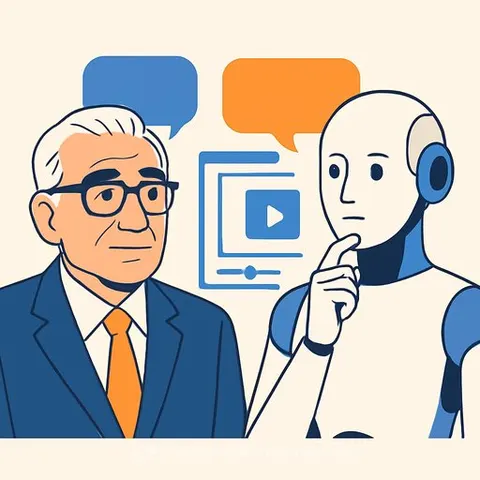
Scorsese's AI endorsement splits Hollywood over creative risks
Martin Scorsese, the 83-year-old Oscar winner, has joined German AI company Black Forest Labs as an adviser and publicly backed the use of artificial intelligence in filmmaking. The move has triggered sharp criticism from artists, filmmakers and industry professionals who worry the technology threatens creative jobs and the filmmaking process itself.
Scorsese is using Black Forest Labs' image-generation technology to create storyboards during pre-production. He said the tool helps him translate ideas from his imagination into visual forms he can share with collaborators more clearly and efficiently than before.
"For 70 years, I've been creating my own storyboards," Scorsese said when announcing the partnership. He framed AI as "creatively freeing" and argued it allows production teams to work faster without sacrificing quality or artistic standards.
The director positioned the move as part of cinema's long history of technological adoption. He cited his use of 3D in 'Hugo' and digital de-ageing in 'The Irishman' as precedent. "Cinema is a young medium," he said. "We have to be open to how it can evolve."
Critics cite training data and job concerns
Storyboard artist Karla Ortiz pushed back hard. She said AI systems are often trained on work created by human artists without consent, and accused Scorsese of undermining the professionals who have shaped his films for decades.
Animation director Samuel Deats questioned whether AI was necessary for storyboarding at all. Experienced artists can sketch visual concepts in seconds, he argued. For many opponents, the issue goes beyond efficiency to questions of ethics, ownership and respect for creative labour.
Other filmmakers have raised similar objections. Guillermo del Toro has repeatedly rejected AI in creative work. Many cite animation master Hayao Miyazaki's description of AI-generated art as "an insult to life itself."
Supporters see another tool in cinema's toolkit
Defenders argue AI should be viewed as another technological advancement, not an existential threat. They compare it to earlier innovations like CGI, digital editing and motion-capture technology, all of which faced initial scepticism before becoming standard.
Some fans noted that Scorsese is not replacing the creative process but using AI to visualize ideas faster. Technology can assist artists without replacing artistic judgment, they argue.
Scorsese is not alone. Directors including James Cameron and Darren Aronofsky have expressed interest in AI tools. Steven Spielberg suggested the technology could save filmmakers time on practical production tasks.
The broader question for creative industries
The dispute highlights a central question for entertainment: will AI become a valuable creative assistant or a disruptive force that reshapes artistic professions? The answer will likely depend on how the industry decides to train, deploy and regulate these systems-and whether the voices of working artists shape those decisions.
For AI for Creatives, understanding both the opportunities and risks matters. The debate Scorsese has sparked will define how tools are built and adopted across film, design and visual storytelling for years to come.