CISO Playbook for Securing AI in the Enterprise
Published: 30 Jun 2025
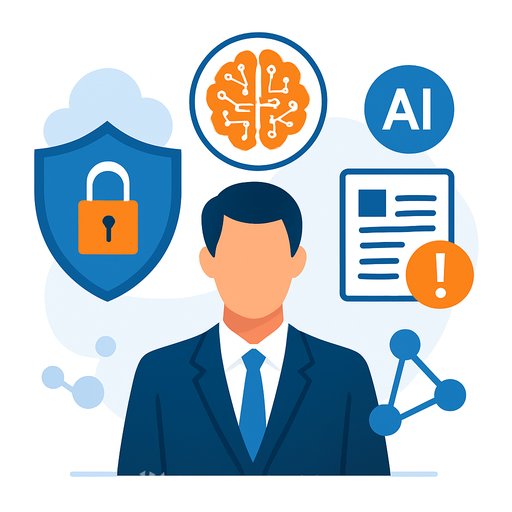
Artificial intelligence (AI) is deeply embedded in daily life and enterprise operations. From driver assistance systems to ambient scribing in healthcare, AI influences critical decisions. While AI can boost innovation and productivity, it also introduces security, compliance, and reputational risks. As AI becomes part of more software, platforms, and processes, chief information security officers (CISOs) must evolve cybersecurity programs to manage AI-related risks without hindering business growth.
CISOs should collaborate closely with executive leadership to adopt a business-aligned AI security strategy. Rather than banning AI use, organizations need a risk framework for safely adopting AI. Addressing shadow AI—the unapproved use of AI by employees—is essential, especially when sensitive data might be shared inadvertently. Secure and ethical AI deployments help avoid regulatory penalties, lawsuits, data breaches, and damage to brand value. Early investments in AI governance and transparency position organizations to innovate confidently and build trust with stakeholders.
Enterprise AI Security Risks
As AI drives enterprise innovation and efficiency, it also brings unique security challenges. Variability in AI decision-making affects accuracy, while data permanence raises privacy concerns. AI software supply chains often lack thorough auditing, increasing vulnerability to attacks. The absence of universal standards and complex copyright issues around AI-generated content add further risk.
IBM’s risk atlas categorizes AI risks into three main types:
- Input Risks: Data privacy, intellectual property, poor data quality, data reclassification.
- Output Risks: AI hallucinations, copyright infringement, biased outputs or decisions.
- Non-Technical Risks: Regulatory compliance, reputational damage, intellectual property and ownership of generated content.
CISOs must identify and prioritize AI risks relevant to their industry and organization. This ensures mitigation efforts focus on the most impactful threats rather than costly, low-value initiatives.
AI Security Tools and Frameworks
Several frameworks and tools help organizations manage AI risks effectively. The NIST AI Risk Management Framework guides identifying, assessing, and mitigating AI-related risks, focusing on explainability, bias detection, and model performance.
Technical tools like model monitoring platforms and adversarial testing suites ensure AI systems resist attacks and operate as intended. Automated data validation and model transparency tools maintain AI integrity and security.
Regulations around AI vary by state and industry and continue to evolve. Currently, no comprehensive federal AI regulation exists, with shifts in executive policies adding uncertainty. CISOs must work with legal teams to ensure AI initiatives comply with all applicable laws and standards.
Model Context Protocol (MCPs)
Model Context Protocols (MCPs) are structured methods to regulate and monitor AI systems, ensuring alignment with risk mitigation and security standards.
Core Features of MCPs
- Access Control: Restricts AI functions and data access to authorized personnel.
- Audit Trails: Logs AI activities for transparency and accountability.
- Model Validation: Regular checks of AI models against performance and ethical benchmarks.
- Incident Response: Defined steps to address threats or anomalies promptly.
Benefits of MCPs
- Enhanced Security: Limits unauthorized use and reduces breach risks.
- Operational Consistency: Ensures reliable AI system performance.
- Risk Mitigation: Identifies and safeguards against vulnerabilities.
Artificial Intelligence Security Platforms (AISPs)
AISPs are comprehensive tools that monitor, analyze, and secure AI systems in real time, addressing threat detection, transparency, and compliance.
Core Features of AISPs
- Threat Detection: Uses advanced algorithms to identify attacks like adversarial manipulation.
- Model Explainability: Provides insight into AI decisions to ensure ethical use.
- Compliance Monitoring: Verifies adherence to relevant regulations.
- Integration Capabilities: Seamlessly works with existing IT security infrastructure.
Benefits of AISPs
- Real-Time Protection: Continuous monitoring defends against emerging threats.
- Improved Trust: Transparency fosters stakeholder confidence.
- Regulatory Compliance: Simplifies meeting complex legal requirements.
Best Practices for Securing AI in the Enterprise
Mature cybersecurity programs, measured against frameworks like the NIST Cybersecurity Framework, form the foundation for AI security. Core practices such as asset management, patching, vulnerability management, and data classification remain essential.
Understanding the business goals behind AI use and the specific models and data involved is critical. Data quality and classification help prevent accidental disclosure of sensitive information such as protected health data.
Identifying security gaps is a key first step. Addressing existing weaknesses should be part of the AI security strategy. Establishing an AI governance board with representatives from business, IT, cybersecurity, and legal teams ensures ethical and secure AI adoption.
Key Takeaways for CISOs
- Adopt Established Risk Frameworks: Use frameworks like NIST AI RMF to assess and manage AI risks systematically.
- Monitor Regulatory Changes: Stay updated on laws such as the EU AI Act and state-specific rules. Use compliance teams or AI monitoring tools to maintain adherence.
- Implement Model Governance Protocols: Apply MCPs to govern AI model development, deployment, and monitoring, reinforcing accountability.
- Enhance Security with Platforms: Deploy AISPs for real-time threat detection, compliance support, and explainability.
- Prioritize Explainability and Trust: Ensure AI transparency for users and stakeholders. Communicate approved AI tools and risks clearly to employees.
- Establish an AI Oversight Committee: Form a cross-functional group including legal, HR, IT security, data, and compliance to regularly report AI risks and mitigations to leadership.
For those interested in expanding knowledge on AI security and governance, exploring targeted courses and certifications can be valuable. Resources such as Complete AI Training offer up-to-date materials to support strategy development and implementation.
Your membership also unlocks: