Seismic and Highspot to merge: what product and sales teams should plan for now
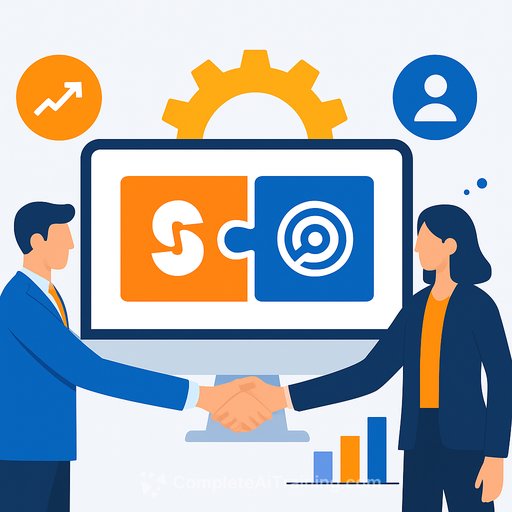
Seismic has agreed to merge with Highspot in a deal that unites two major sales enablement platforms under the Seismic name. Seismic CEO Rob Tarkoff will lead the combined company, and Highspot Founder and CEO Robert Wahbe will join the board. Permira will remain the controlling shareholder. The deal is subject to regulatory approvals and closing conditions; both companies will operate independently until then and say they'll support both platforms after close.
What the combined platform aims to cover
Both companies sit squarely in revenue operations, serving sales, AI for Marketing, and customer success teams. They've each put AI at the core of their roadmaps. Post-close, the plan is a platform spanning enablement, content, learning, coaching, analytics, and insights across the full revenue lifecycle, with increased investment in AI to improve Productivity and execution across revenue-generating teams.
"There is a growing demand for technologies that help organisations connect sales strategy to execution and drive consistent revenue performance at scale. This proposed merger is about meeting that increasing demand and raising the bar for how technology can enable revenue organisations to plan, execute, perform, and scale," said Rob Tarkoff, Chief Executive Officer, Seismic. "I'm excited to continue partnering with both Seismic and Highspot customers as we build the platform that advances the future of AI-driven revenue performance and operations."
"Highspot and Seismic share a belief that enablement sits at the center of how modern revenue teams operate," said Robert Wahbe, Founder and Chief Executive Officer, Highspot. "Following closing, we will have the opportunity to move the revenue enablement space forward by giving customers more innovation, more insights leading to actions, and more confidence in how they drive performance across their GTM teams."
Highspot also highlighted its unified AI and analytics engine, Nexus, which it positions as the connective tissue between strategy, execution, and outcomes.
Why this matters to product and sales leaders
Tool sprawl has been a tax on both sellers and enablement ops. A unified platform could reduce swivel-chair work and make insights more actionable. That said, there's overlap across content management, training, coaching, and analytics-so roadmap clarity and migration paths will matter.
- Platform strategy: Expect a push toward a single AI layer across content, guidance, and coaching. Map where your current workflows sit today (content lifecycle, sales plays, LMS, call coaching) and where a consolidated model helps or hurts.
- Data and governance: Inventory what data lives in each tool-content metadata, engagement, call recordings, and learner progress. Confirm data residency options, retention policies, and role/permission models that meet security and compliance needs (e.g., GDPR/CCPA).
- Integrations: Stress-test dependencies with your CRM, marketing automation, meeting platforms, and content repositories. Document required sync directions, field mappings, and failure handling before migration planning begins.
- Migration and coexistence: The companies say both platforms will be supported post-close. Ask for feature parity maps, migration tooling, contract flexibility, and SLAs to avoid surprises.
- AI usage: Clarify how models are trained, what customer data is used, opt-out options, hallucination guardrails, human-in-the-loop review, and audit trails for content and recommendations.
- Pricing and packaging: Expect bundling shifts. Negotiate price locks, co-terming, and upgrade rights now; get clarity on SKUs that may be consolidated.
- Enablement operations: Standardize playbooks, content lifecycle, and coaching KPIs. Anchor on measurable outcomes: ramp time, win rate, content adoption, deal velocity, and forecast accuracy.
- Change management: Plan training waves for sellers, managers, SEs, and CSMs. Nominate champions and draft comms early to reduce friction.
Timeline, ownership, and advisers
The transaction awaits customary approvals. Permira will remain the controlling shareholder and reaffirmed its commitment to an AI-first product roadmap. "This transaction brings together two highly complementary, customer-centric platforms with a shared ambition to invest heavily behind an AI-first product roadmap and serve customers with best-in-class solutions," said Jason Thorn, Managing Director, Permira.
Advisers named include Latham & Watkins and Skadden as counsel, with Fried Frank providing tax advice. Qatalyst Partners, Wells Fargo, and J.P. Morgan are listed as financial advisers.
Company snapshots
Seismic is headquartered in San Diego with offices across North America, Europe, Asia, and Australia, and says it's trusted by about 2,000 organisations. Highspot highlights Nexus, its unified AI and analytics engine, and positions its product as a go-to-market performance platform connecting strategy, execution, and outcomes.
Action checklist for the next 90 days
- Inventory current usage across Seismic and/or Highspot: users, core workflows, and mission-critical content.
- Run a taxonomy review so content structures, tagging, and governance survive consolidation.
- Define non-negotiable integrations and document technical constraints and SLAs.
- Baseline metrics (ramp time, win rate, cycle time, content adoption) to measure impact post-migration.
- Send a security and privacy questionnaire covering data usage, retention, and model governance.
- Review contract terms for merger clauses, termination rights, and price protection.
- Pilot with a small, representative field segment to test content, guidance, and coaching workflows.
- Publish an internal FAQ for sellers and managers to reduce uncertainty.
- Meet your account teams now to understand migration tooling, timelines, and support.
Helpful resources
If you need a quick primer on revenue operations fundamentals, this overview is useful: What is Revenue Operations.
Building AI skills for sales, enablement, and product roles? See curated options by role here: AI courses by job.
Bottom line: this deal signals stronger consolidation around AI-enabled revenue execution. Keep your teams focused on data hygiene, integration priorities, and contract flexibility so you're ready the moment the combined roadmap lands.
Your membership also unlocks: