Semantic Firewall: cut AI support costs and keep chats emotionally safe
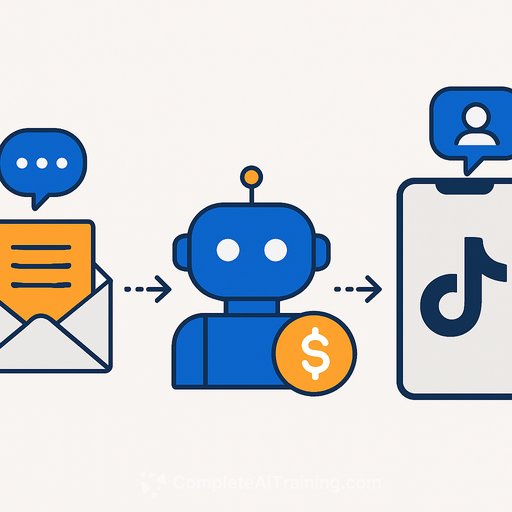
A new architecture called the Semantic Firewall promises lower inference bills and safer conversations. It sits between your users and the model, cleaning and routing language before it hits GPUs. Think of it as governance for words, not just tokens.
What it is
The Semantic Firewall adds a deterministic semantic layer in front of large language models. It filters filler, stabilizes tone, and enforces policies so the model spends cycles on answers, not chatter. It works with any model or retrieval-augmented generation (RAG) stack.
Why support leaders should care
Support teams feel the cost of GPU minutes and surprise token bills. The company behind Semantic Firewall says a large slice of that spend is linguistic waste-tone padding, redundant reasoning, and self-revision. Cut the noise and you get predictable costs, faster resolutions, and fewer escalations.
The claim
According to Shen-Yao 888π, founder of Silent School Studio, "AI today is not collapsing at reasoning, it is collapsing at the linguistic layer... Fix the language layer first, and 70-88% of compute cost disappears before it ever hits the GPU."
Reported impact (from pilots)
- Removes 25-40% of filler language before the model runs
- Eliminates up to 30% of redundant reasoning
- Cuts 10-20% of self-contradictory output
- Delivered without hurting response quality or speed, per the company
Emotional safety you can operationalize
Support chats often carry emotional weight. Most systems rely on keyword filters and a default "seek professional help" response. The Semantic Firewall operates at the level of meaning, detecting when a conversation loops into harmful patterns and redirecting the flow.
As Shen-Yao 888π puts it: "Most safety systems avoid direct answers, avoid dissecting the real problem, and avoid deep emotional logic… From a liability perspective that makes sense, but from a human perspective it often leaves people alone with a very expensive mirror."
Where it fits in your stack
- As a microservice: pre-process user input and post-process model output
- As a policy layer: enforce tone, brevity, escalation, and compliance rules
- As audit logging: capture semantic decisions for QA and regulatory checks
- With existing infra: drop-in for current models, RAG pipelines, and helpdesk tools
How to pilot this in a contact center
- Pick two flows: password/account recovery and billing disputes (high volume, clear intents)
- Define policies: max tokens per turn, allowed tones, required steps, escalation triggers
- Pre-clean prompts: strip apologies and fluff; enforce a response template (intent → answer → next step)
- Add emotional guards: detect negative loops; switch to supportive, bounded replies plus safe handoff
- Run A/B: baseline model vs. model with Semantic Firewall, for two weeks
KPIs to track
- Tokens per resolved case and per deflected contact
- First-contact resolution and average handle time (chat)
- Escalation rate to human agents
- Contradiction rate and policy violations per 100 chats
- Customer sentiment delta from first to final turn
Sample policy rules you can start with
- Cap responses at 120 words unless the user asks for detail
- One empathy line max; move to action immediately
- For sensitive cues (self-harm, harassment): acknowledge, provide bounded support, offer resources, and escalate
- Disallow self-critique or multiple "rethinks" in a single turn
- Force a three-part structure: answer → verification step → clear next action
Budget and vendor implications
Usage-based pricing rewards longer chats and token-heavy answers. If semantic waste drops, so do bills-and some pricing models may need a rethink. That is the tension: efficient language means fewer tokens burned.
Deployment notes
- Offered as microservice, policy-driven governance, or audit layer
- Partner focus: cloud providers, AI vendors, MSPs, and resellers
- Pilots under discussion across Asia-Pacific and North America for customer support, document QA, and mental health scenarios
Questions to ask your vendor
- How do you measure and report filler, redundancy, and contradiction removal?
- What policies are deterministic vs. model-dependent?
- Where is audit data stored, and for how long?
- What happens during model outages-does the firewall degrade gracefully?
- Can we tune rules per queue, language, and brand voice?
Compliance angle
A semantic layer gives you policy enforcement and auditable logs, which can support governance programs. If you're formalizing risk controls, review the NIST AI Risk Management Framework and map firewall policies to your risk register.
Bottom line for support teams
If your chatbot feels chatty, you're paying for it. A Semantic Firewall promises fewer tokens, tighter answers, and safer handling of emotionally charged tickets-without ripping out your current stack. Worth a controlled pilot.
Next steps
- Train your team on prompt frameworks and policy design: AI courses by job
- If you use RAG today, validate how pre-processing affects retrieval and grounding: RAG overview
Your membership also unlocks: