
AI news ·
Shake Shack launches Project Catalyst to connect POS, loyalty and AI systems ahead of major expansion
Shake Shack is rolling out Project Catalyst, connecting POS, kitchen displays, loyalty, and AI tools into one platform as it pushes toward 1,500 locations. The initiative also marks the chain's first loyalty program.
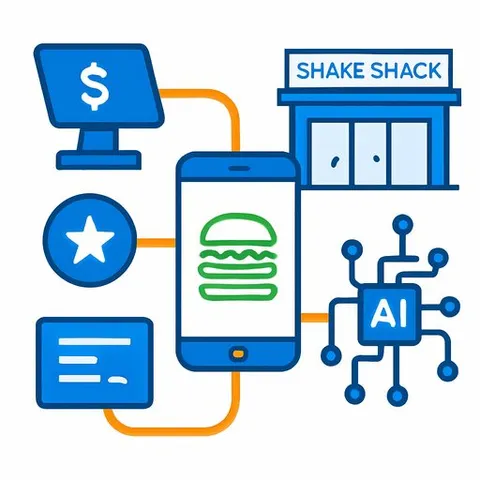
Shake Shack Modernizes Restaurant Operations With Integrated Technology Platform
Shake Shack is rolling out Project Catalyst, a broad technology initiative designed to modernize its digital, data, and operational infrastructure as it targets growth to 1,500 company-operated locations. The initiative connects point-of-sale systems, kitchen displays, guest engagement platforms, and data capabilities into a single ecosystem.
The shift reflects a broader industry trend: technology is moving from a support function to a strategic foundation for growth. For operations teams managing multiple locations, this means fewer disconnected systems and faster access to performance data.
Unified Commerce and Kitchen Operations
Shake Shack partnered with Qu, a cloud-native unified commerce platform, to upgrade its POS and kitchen orchestration capabilities. The goal is to improve throughput, accuracy, and consistency across both digital and in-store channels.
Orders now originate from mobile apps, kiosks, third-party platforms, and in-person interactions. Coordinating those inputs in real time requires integrated systems that can process transactions closer to the point of service, reducing delays during peak demand.
Edge computing infrastructure like Qu's Qube processes workflows at the restaurant level rather than routing everything through centralized systems. For operators, this translates into faster service times and more consistent performance in high-traffic environments.
First Loyalty Platform and Guest Data
The company is developing its first loyalty platform, integrated across POS and digital channels. The objective is to create direct relationships with guests and move beyond one-off transactions toward ongoing engagement.
This reflects a shift toward first-party data strategies. As third-party platforms continue to dominate ordering and discovery, brands are building direct connections with customers. Loyalty programs provide insights into behavior and preferences while driving frequency and retention.
Embedded AI for Daily Operations
Shake Shack is building proprietary AI capabilities aimed at delivering real-time operational insights and supporting decision-making at both the restaurant and enterprise level. These tools surface actionable recommendations, identify performance trends, and help operators respond quickly to changing conditions.
Rather than treating AI as a standalone innovation, the company is positioning it as an operating layer that sits across systems and processes. This reflects how AI is being deployed in restaurant environments today: practical applications embedded in daily workflows, not experimental pilots.
Data as a Foundation for Scale
Project Catalyst includes investments in data platforms that bring together operational metrics, guest behavior, and analytics into a unified view. This allows faster and more consistent access to insights across the organization.
As locations increase, so does operational complexity. A fragmented data environment quickly becomes a bottleneck. A unified platform provides the visibility needed to operate effectively at scale and maintain consistency across dozens or hundreds of restaurants.
What This Means for Operations Teams
For operations professionals, Project Catalyst demonstrates how integrated technology reduces manual work and improves decision-making. Instead of pulling data from multiple systems, operators access a single source of truth. Instead of managing separate POS, loyalty, and analytics platforms, teams work within one connected ecosystem.
This approach also standardizes operations without losing differentiation. Technology enables consistency while preserving the qualities that define the brand experience.
The financial investment is significant, but technology of this scale is increasingly viewed as necessary for long-term growth. Improved operational efficiency, higher guest engagement, and better data-driven decision-making contribute to stronger performance over time.
For the broader industry, the trend is clear: restaurant technology is moving toward integrated platforms that combine multiple capabilities. Data is being treated as a strategic asset rather than a byproduct of transactions.
Learn more about AI for Operations or explore an AI Learning Path for Operations Managers to understand how these capabilities apply to your role.