
AI news ·
Singapore targets record $32.5 billion in tourism receipts by 2026 as AI tools reshape visitor experience
Singapore projects tourism receipts of up to 32.5 billion Singapore dollars in 2026, a record high. The city is using AI to personalise visitor experiences rather than simply increase arrivals.
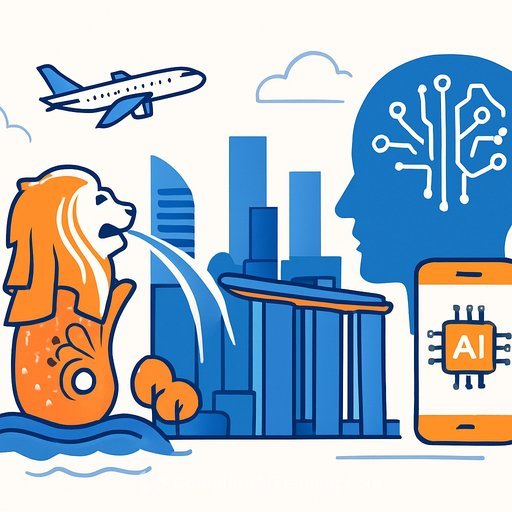
Singapore bets on AI to lift tourism spending to record highs by 2026
Singapore's tourism authorities project receipts of 31 to 32.5 billion Singapore dollars in 2026, a record high. The city-state is steering toward higher-value visitors and richer experiences rather than chasing volume, banking on AI tools to personalise every touchpoint of a traveller's stay.
Visitors arriving at Changi Airport may encounter AI-powered concierges before clearing immigration. Hotels will offer personalised itineraries based on preference data. Check-ins will run on algorithms rather than guesswork. For repeat visitors, Singapore's hawker centres and waterfront skylines remain unchanged, but how travellers discover and book experiences will look markedly different.
Government backing AI adoption across tourism
Singapore has committed more than 1 billion Singapore dollars to AI development. The Singapore Tourism Board signed a memorandum of understanding with a leading AI company to help tourism businesses adopt AI at scale and responsibly.
Under the partnership, hospitality brands, attractions, and event venues gain access to tools for revenue management, demand forecasting, and guest journey design. National AI programmes offer financial incentives, cloud credits, and technical support to companies building AI-driven services.
Where AI touches the visitor experience
Hotels and attractions now use AI to anticipate service requests before guests make them. Chatbots handle routine questions and bookings around the clock, freeing staff for complex needs and personal interactions.
For MICE and event travellers, venues use data and AI to optimise layouts, manage crowd flows, and personalise networking and content discovery. This combination supports Singapore's position as a regional hub for conferences and incentive travel.
Visitors may not notice the algorithms guiding their journeys. They will notice when the hotel understands their preferences, when the museum app highlights galleries they love, and when city walks flow naturally.
Spending pressure drives quality focus
Visitor arrivals continue to climb, but spending patterns are shifting. Some travellers are cutting outlays due to global uncertainty and higher living costs, pushing authorities to focus on longer stays and more distinctive experiences rather than visitor volume.
Singapore's strategy may signal how other mature destinations adapt to weaker discretionary budgets and geopolitical volatility. If AI tools succeed in lifting productivity and guest satisfaction, they could help offset softer spending.
Broader city strategy ties tourism to innovation
Tourism 2040 frames visitor growth as part of Singapore's plan to remain competitive as a smart, liveable global city. The vision emphasises greener infrastructure, neighbourhood experiences, and cultural storytelling - all supported by data and advanced analytics.
Policymakers highlight Singapore's emergence as a leading AI hub, ranking just behind the biggest global players in some international indices. For tourism operators, this framework aligns investment in AI with national goals for innovation, job creation, and sustainable growth.
The government targets tourism receipts of 47 to 50 billion Singapore dollars by 2040. That growth depends on digital tools and physical spaces working together to offer personalised, sustainable stays.
For those working in hospitality and events, understanding how AI reshapes operations and guest expectations is now essential. AI for Hospitality & Events and AI for Customer Support offer practical grounding in the tools and strategies driving this shift.