
AI news ·
United Kingdom hospitality sector adopts technology to protect margins amid rising costs
UK hospitality's 176,685 businesses now need technology to protect margins against rising costs. This shift follows a £147 billion sector GDP impact in 2024.
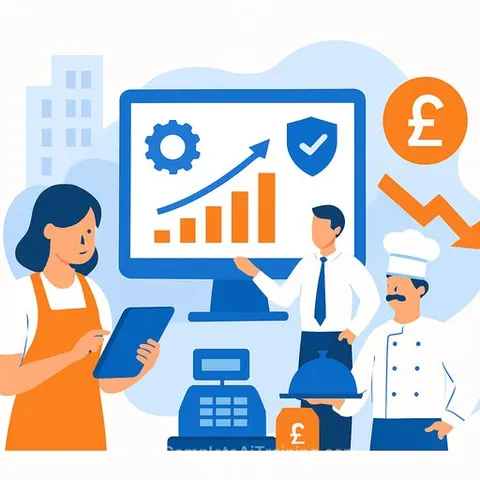
The United Kingdom's 176,685 hospitality businesses - almost all of them small or medium-sized enterprises - are now operating in a cost environment where technology has shifted from an optional upgrade to a margin-protection necessity. With labour, energy and property costs climbing, and inbound tourism demand forecast to reach 45.5 million visits by 2026, the sector faces a hard equation: demand is present, but profitability remains fragile.
Tourism's GDP impact in the UK reached £147 billion in 2024, spread across all nations and regions. VisitBritain expects inbound travel to rise again in 2026, with £35.7 billion in visitor spending forecast. Yet for the pubs, hotels, restaurants, cafés, bars, visitor attractions, catering firms and accommodation providers that make up the sector, the pressure is measurable. Higher labour costs, energy bills, business-rate exposure and skills gaps are squeezing margins, while uneven regional demand adds another layer of complexity.
Why technology became a boardroom issue
Technology is no longer a back-office upgrade. It is becoming a survival layer for businesses that usually have less cash headroom, weaker procurement power and fewer staff to absorb administrative tasks. As the sector analysis observed: "Technology will not single-handedly save British hospitality, but it is becoming a decisive survival layer across England, Scotland, Wales and Northern Ireland." For these operators, the practical value of technology is not glamour - it is fewer wasted ingredients, faster reservations, smarter rota planning, tighter energy use and better guest conversion.
The tools now shifting from optional to essential include AI-driven stock control, dynamic booking engines, staff scheduling software, payment analytics and broadband-enabled guest systems. Each addresses a specific cost line that, in tight-margin businesses, can mean the difference between a viable month and a loss.
Connecting technology to workforce and operations
The businesses that will gain the most are those that connect technology with workforce training, transport access, destination demand and disciplined cost control. Software alone cannot fix a broken cost structure. As one industry analysis put it: "The winners will be businesses that connect technology with workforce training, transport access, destination demand and disciplined cost control rather than treating software as a miracle cure."
For hospitality and events professionals, this means practical AI skills are moving from a peripheral interest to a core operational requirement. AI for Hospitality & Events now covers areas such as dynamic pricing, guest personalisation and inventory management. At the same time, AI for Operations is reshaping how businesses handle energy monitoring, procurement and rota planning - the back-of-house functions that directly affect the bottom line.
The national picture
The UK hospitality sector's scale makes its technology adoption a national economic issue. With 176,685 businesses in March 2025, nearly all SMEs, the sector's ability to absorb cost pressures affects employment, regional economies and the wider visitor economy. Domestic tourism and inbound travel remain strong, but the profitability gap means that without operational change, many businesses will struggle to convert demand into sustainable revenue.
Why this matters for hospitality and events professionals
The current cycle rewards operators who treat technology as an integrated layer - not a standalone fix. That means pairing digital tools with staff training, using data to inform pricing and stock decisions, and choosing systems that reduce administrative burden rather than adding to it. For professionals in the sector, the message is clear: the margin protection that technology offers is now too material to ignore, but it works best when it is embedded in daily operations rather than treated as a one-time upgrade.