
AI news ·
SingHealth redesigns patient workflows to scale AI across care pathways
SingHealth is embedding AI across entire care pathways to move beyond isolated pilots. Note Buddy, an ambient AI scribe, saves doctors 15% in documentation time.
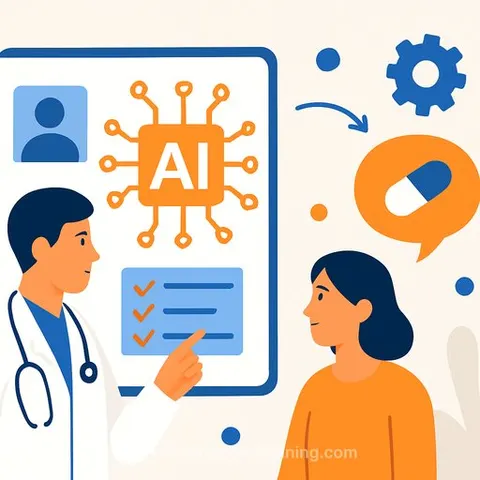
SingHealth is redesigning patient care workflows as it transitions to a hybrid physical and digital - or "phygital" - public healthcare cluster in Singapore, according to Benedict Tan, the group's chief digital strategy and data officer. Tan, who will open the HIMSS26 APAC Conference in Singapore, said many healthcare organisations remain stuck in AI pilots because they deploy the technology in isolated spots rather than weaving it across full care pathways.
"Many healthcare organisations are already seeing gains in operational efficiency and workforce productivity from AI adoption. However, much of this progress remains in the form of 'spot deployments', where AI is applied to a specific task or use case," Tan said. "While these initiatives can be valuable, productivity gains do not always translate directly into measurable return on investment."
Embedding AI across care pathways
To deliver stronger ROI, Tan said healthcare leaders should look beyond individual use cases and consider how AI for Healthcare can be embedded across end-to-end care pathways and work processes. This could include integrating AI across triage, virtual care, remote monitoring, diagnostics, and clinical decision support. Achieving this requires a fundamental review and redesign of existing workflows from the patient's perspective. If done well, AI-enabled transformation can help improve capacity, clinical outcomes, and patient experience.
Another area of focus is helping patients manage their own health and chronic conditions. Wearables, Internet of Medical Things devices, smartphones, and AI-enabled tools are becoming more accessible. Together, they can support continuous, real-time collection and interpretation of patient-generated data, enabling timely guidance, personalised recommendations, and more proactive care beyond traditional healthcare settings.
SingHealth's phygital roadmap
At SingHealth, the group is documenting the patient pathway from start to end - from emergency care to inpatient care, ambulatory care, discharge and post-discharge care - and then reimagining these workflows using AI and digital technologies. This includes incorporating telehealth, wearables, mobile biomedical devices and data from electronic health records. "Our focus will remain firmly on improving care outcomes and the experiences of both patients and staff," Tan said.
What separates organisations that scale AI from those stuck in pilots
Tan identified several common characteristics of organisations that successfully scale AI initiatives. These include strong, trusted, and visionary leadership that aligns the organisation around a clear direction; a culture that encourages learning, adaptability, and continuous improvement; simple, practical AI governance that enables safe and responsible adoption; a critical mass of AI informaticians and domain experts who can bridge clinical, operational and technical needs; a capable digital team; and sustainable funding and investment models that support scaling beyond pilots.
AI in action at SingHealth
One example is Note Buddy, an ambient AI tool developed with Microsoft and Synapxe that listens to clinic consultations and converts them into structured clinical notes. It understands English, Mandarin, Tamil, Malay, and Cantonese. Since its rollout in May 2026, it has scaled beyond SingHealth to two other public healthcare clusters, with over 8,500 users collectively generating more than 133,000 clinical notes. Studies show it saves doctors around 15% in documentation time and allows them to spend more time engaging with patients during consultations.
Another is SELENA+, a deep-learning AI system developed by the Singapore National Eye Centre, Singapore Eye Research Institute and National University of Singapore. It detects potentially sight-threatening eye conditions, including diabetic retinopathy, and can reduce workload by up to 50% when used to augment the Singapore Integrated Diabetic Retinopathy Programme. Patient results are made available in minutes instead of a day.
SingHealth also runs generative AI platforms PAIR and Tandem. Through a Citizen Development Programme, business colleagues trained in genAI and prompt engineering have built more than 4,000 bots to support individual, team and departmental work. One bot, Chatty Charlie, developed by frontline staff at Singapore General Hospital, gives patient service associates instant access to SOPs and workflows, helping them manage patient arrivals and visitors efficiently. It is the most widely adopted custom bot at the hospital.
A call for deeper collaboration
Looking ahead to HIMSS26 APAC, Tan said his hope is that the conference will catalyse deeper collaboration across the region's healthcare ecosystem. "Providers, technology partners, and policymakers from within and beyond APAC have an important opportunity to share experiences, learn from one another and work together to implement digital solutions that make healthcare more accessible, affordable, and sustainable," he said. These efforts, he added, should improve health and care quality while also supporting the well-being of the healthcare workforce.
Why this matters for Healthcare professionals
For clinicians, IT leaders and healthcare administrators, Tan's message is clear: the era of isolated AI pilots is giving way to a more integrated, pathway-wide approach. The SingHealth examples show that when AI is embedded into clinical workflows - from ambient scribes to diagnostic support - it can reduce administrative burden and free up time for patient care. But achieving this at scale demands more than technology; it requires leadership, governance, and a willingness to redesign processes that have remained unchanged for decades. Healthcare professionals who understand both the clinical and operational sides of this transformation will be best positioned to drive it forward.