Singlife rolls out Salesforce Agentforce: what support leaders can copy today
Singlife, a Singapore-based insurer, is rolling out Salesforce Agentforce to support its customer service team. The AI agents parse complex insurance docs and supply real-time, cited answers to human agents. This is the company's first large-scale move into AI agents after earlier experiments with generative AI for code.
Why Salesforce? Speed, scale, resiliency, and cost. A SaaS model beat building custom agents on PaaS. Selection wrapped in August 2025, contracts in September, and the system is now with about 30 agents. The target is 100 agents by January 2026.
What's live inside the contact center
- Knowledge base: ~150 documents loaded into Salesforce Data 360 (formerly Data Cloud)-product manuals, FAQs, and training guides.
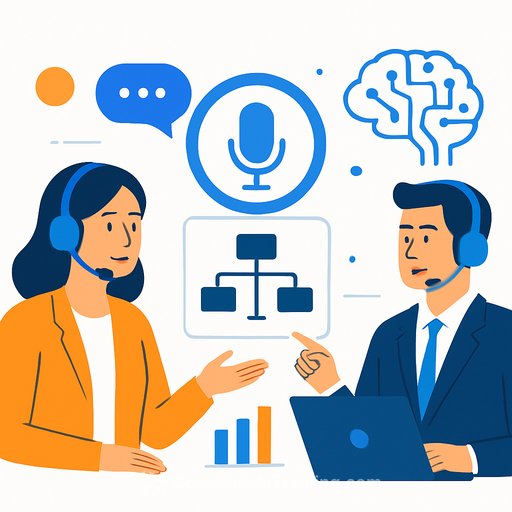
- Agent assist: AI pulls answers with citations so reps don't dig through outdated versions.
- Accuracy goals: 80% target. Early rollout saw accuracy dip to ~60-70% as more agents and diverse prompts came in, then rebound with better context handling and feedback loops.
- Governance: The risk team evaluates outputs. The goal is better service quality and throughput-not headcount cuts.
The practical upside of SaaS over building your own
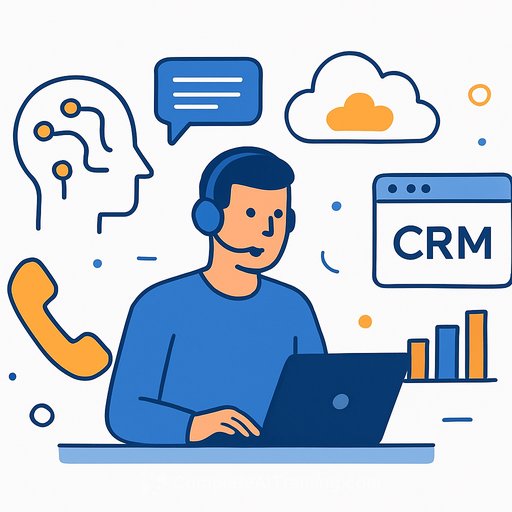
SaaS lets teams move faster and standardize deployment without heavy engineering overhead. Resiliency and predictable cost were deciding factors. This matters when you're scaling AI assist to hundreds of agents and need tight integration with your CRM stack.
A playbook you can apply in your support org
- Start with low-risk intents: Limit AI to informational queries first. Gradually allow policy-specific or high-stakes interactions once accuracy consistently hits your threshold.
- Curate one source of truth: Clean and version your manuals, FAQs, and training guides. Outdated docs are the fastest way to tank trust in AI answers.
- Set accuracy and guardrails: Define an acceptance target (e.g., 80%), require citations, and route uncertain cases to humans by default.
- Close the loop: Use thumbs-up/down or quick tags on answers. Feed this back into prompts, retrieval rules, and content fixes weekly.
- Tune for context: Track which prompts confuse the agent. Add clarifying instructions, better document chunking, and intent detection so queries map to the right sources.
- Measure what matters: Handle time, first contact resolution, deflection rate, and supervisor escalations. Share wins with frontline teams to build trust.
- Plan the agent lifecycle: Treat AI agents like teammates-onboarding, ongoing training, versioning, access control, decommissioning. Many firms skip this and pay for it later.
- Keep humans in the loop: Require agent approval for final responses at the start. Expand autonomy only after consistent performance.
- Reskill your team: Train reps on prompt clarity, citation checks, and exception handling so throughput rises without quality loss.
Governance and accuracy: the real work
As Singlife widened access, accuracy dipped before improving-common when prompts vary and edge cases surface. The fix was better context handling and structured human feedback. A formal lifecycle for AI agents is still in progress, with vendor guidance on governance practices.
For now, Singlife keeps AI on lower-risk questions and will expand to more complex interactions as confidence grows. Direct customer use will come later, after internal results hold up under scale.
Beyond customer service: where this goes next
Singlife plans to extend AI agents to financial advisers for fast, reliable product information. Longer term, customers may interact with AI agents on the website once internal performance is proven. The company runs a multi-cloud setup (Oracle, Microsoft Azure, AWS) and is testing Amazon Bedrock and IBM watsonx for underwriting and code generation use cases.
Key tools mentioned
What this means for support leaders
This is a clear path to scale quality without hiring freezes or risky automation. Start small, pick measurable goals, and let your risk and support teams co-own guardrails. The combination of clean content, human review, and steady iteration beats flashy demos every time.
Level up your team's AI skills
If you're planning a similar rollout, training helps. Explore role-based learning paths such as the AI Learning Path for Training & Development Managers.
Your membership also unlocks: