
AI news ·
SiteCapture releases AI tool to automate solar quality control and financing documentation
SiteCapture released an AI tool that checks job site photos for errors before crews leave. The update raised first-time financing approval rates from 30% to 90%.
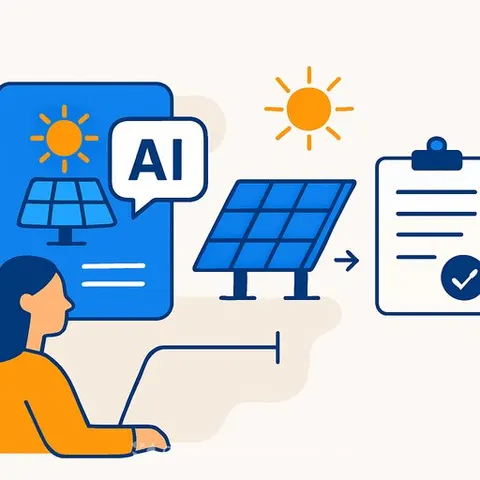
Solar field operations platform SiteCapture released SiteCaptureAI, a new tool that analyzes job site photos instantly and flags quality control issues before installers leave the roof. The move targets one of solar's most expensive operational problems: rolling trucks back to fix documentation errors caught hours after the crew has gone.
Kamal Shah, who leads SiteCapture, said the company started in solar in 2015 and built its platform around a single friction point. "Solar has a lot of needs for capturing really good documentation and photos on the job site," Shah said, "whether it's site surveys on the front end, documentation of the installation for quality control or solar financing, or operations and maintenance work like inspections and work orders."
Where AI fits in a hands-on industry
Shah draws a clear line between digital work and physical installation. AI is reshaping coding, accounting, and legal work. Solar still demands people on roofs with specialized skills. But the processes that wrap around the installation - design verification, permitting plan sets, quality control - are a different story.
"In solar, you look at the tedious, time-consuming processes that surround the installation," Shah said. "That's where AI will have the biggest impact." SiteCaptureAI focuses on the quality control and compliance piece. Installers already use the platform to complete forms and capture photos. The new AI layer analyzes those photos on the spot, runs a first-pass QC review, and gives feedback while the crew is still on site. Without it, that review often happens hours later - after the installer has left, and after someone has to schedule another truck roll to fix the problem.
TPO financing and the push for faster approvals
The One Big Beautiful Bill Act removed tax incentives for homeowners but left them in place for third-party ownership (TPO) providers, pushing more residential installs under the TPO model. TPO providers, however, require extensive photo documentation before releasing payment. That overhead can slow down EPCs and installers who are already managing tight margins.
SiteCapture partnered with solar finance companies to build tailored forms that ensure installers capture every required photo correctly on the first attempt. The platform then submits the documentation with one click instead of requiring manual uploads to a portal. With its first partner, Palmetto LightReach, the results after one year are measurable: first-time approval rates on financing documentation climbed from roughly 30% to 90%. Truck rolls for missed photos dropped by up to 80%. Back-office overhead fell by about 70%.
For operations teams, these numbers translate directly to faster payment cycles and fewer wasted dispatches. The AI for Operations approach - automating the review steps that sit between field work and financing approval - removes a bottleneck that has plagued residential solar for years.
Adapting now, scaling later
Shah described the current market as another ride on the "solar coaster" - installers are absorbing the impacts of the tax incentive changes, dealing with volatility, and recalibrating. But he said most installers see it as a short-term adjustment. Electricity prices and demand keep rising, and solar remains the most direct way to meet that demand.
"The starting point is adapting to the current reality this year," Shah said. "The second part is preparing for the growth curve that's coming and is inevitable." He said the companies that will pull ahead are those adopting tools and more efficient processes now, so they can grow without costs climbing at the same rate.
Why this matters for operations
SiteCapture's results point to a pattern that operations leaders should track: AI is not replacing field workers. It is cutting the time between work completion and work verification. When a first-pass QC review happens on site instead of hours later, truck rolls drop. When documentation is verified against finance partner requirements before submission, approval rates jump from 30% to 90%. For an operations team, that means fewer rescheduled visits, lower fuel and labor costs, and faster revenue recognition. The technology exists now. The companies testing it are publishing their numbers.