AI Is Rewriting Job Design: What HR Needs to Do Next
Senior HR leaders see what's coming. Nearly 9 out of 10 expect AI to change jobs in 2026, with a clear shift toward skill-based, AI-enabled hiring over degree-first screening.
AI is changing how work gets done. Tasks are being redistributed across roles, and the daily workflow for many employees is different than it was a year ago.
What HR Leaders Report Right Now
- 67% say AI already affects jobs at their company (automation of tasks or daily workflow changes).
- About half say fewer than 50% of roles are affected; 17% say nearly half or more are affected; 22% say no effect yet.
- 89% expect AI to affect jobs next year. Nearly half expect it to touch half or more of all roles.
- 61% report higher efficiency, and 78% see more innovation from AI adoption.
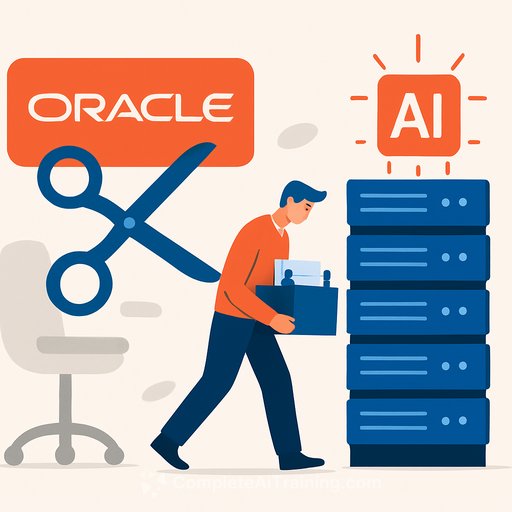
- Headcount plans: 38% hold steady, 29% increase, 29% decrease. Reductions are driven by cost controls, not AI efficiencies.
Why This Matters
Work isn't vanishing. Tasks are moving. Some get automated, others become more strategic, creative, or customer-facing. The companies that win will update job architecture, hiring, and development around skills and AI fluency-fast.
A Practical HR Playbook for 2025-2026
1) Move to Skill-Based, AI-Enabled Hiring
- Rewrite job posts with skills, outcomes, and tools rather than degrees and years of experience.
- Assess for problem-solving, data literacy, prompt quality, and workflow design alongside role-specific skills.
- Pilot work-sample tests that include AI use (e.g., summarize, draft, analyze, QA), then evaluate output quality and decision-making.
2) Redesign Roles Around Tasks, Not Titles
- Map each role by tasks: automate, co-pilot with AI, or keep human-led.
- Combine low-value tasks into AI workflows; expand human time for client impact, creativity, and complex decisions.
- Create AI addendums to job descriptions: tools used, expected outputs, quality standards, and review points.
3) Upskill for Immediate Productivity Gains
- Train for three essentials: prompt structure, tool proficiency, and data-aware judgment.
- Focus first on high-frequency workflows: research, document drafting, meeting notes, candidate screening, and knowledge retrieval.
- Set coaching cycles: short workshops, live practice, and weekly office hours to lock in habits.
Want a structured path by role and skill? Explore AI courses by job and popular AI certifications.
4) Measure What AI Actually Changes
- Track output quality, cycle time, error rates, and customer/candidate satisfaction per workflow.
- Benchmark time saved. One study suggests AI can save ~7.5 hours per week for employees using it for work tasks.
- Add a simple "with vs. without AI" field to project tickets to capture deltas at the task level.
5) Headcount: Redeploy Before You Reduce
- If costs must come down, protect capability. Redeploy people from automated tasks into revenue, service, or process-improvement roles.
- Build internal mobility paths with microlearning and stretch projects tied to AI-enabled workflows.
- Use contingent talent for specialized AI build-outs; cross-train core staff to own the steady state.
6) Policy, Risk, and Guardrails
- Publish an AI use policy: approved tools, data boundaries, disclosure rules, and human-in-the-loop checks.
- Set review gates for regulated content, legal, and brand-sensitive outputs.
- Adopt a lightweight framework for risk and controls. The NIST AI Risk Management Framework is a solid reference.
7) Talent Intelligence and Internal Marketplaces
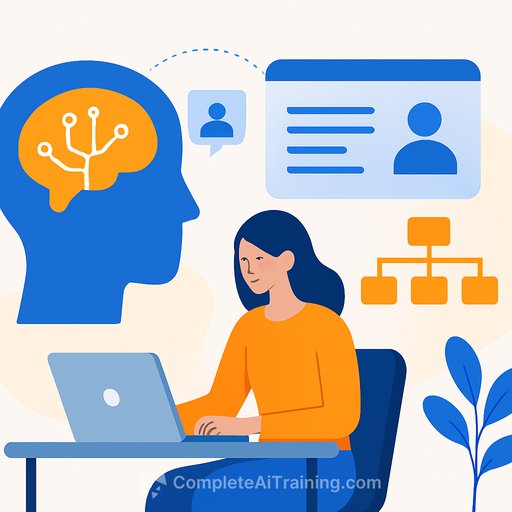
- Build a skills inventory: capture current skills, proficiency, and AI tool comfort across teams.
- Stand up a simple internal gig board for AI-related projects to surface hidden talent and accelerate learning.
- Set incentives for managers who move talent across teams to support AI-enabled work.
What's Changing in the Job Market
- Roughly 26% of jobs posted over the past year are poised to undergo major change due to AI, per Indeed Hiring Lab.
- Expect more hybrid roles: operations + analytics, HRBP + AI co-pilot skills, recruiter + automation workflows.
90-Day Action Plan
- Weeks 1-2: Pick 3 high-volume workflows per function. Baseline time and quality. Write AI use policies and training goals.
- Weeks 3-6: Run pilots with clear KPIs. Train prompt and review techniques. Stand up weekly coaching.
- Weeks 7-10: Update job descriptions and hiring rubrics to highlight skills and AI expectations.
- Weeks 11-13: Expand pilots, publish results, and launch an internal gig board for AI projects.
Bottom Line
AI isn't replacing the human experience; it's reorganizing it. Shift hiring to skills, redesign roles around tasks, upskill fast, and measure outcomes. The sooner you make these moves, the smoother 2026 will be.
Need curated learning tracks for your team? Browse the latest options at Complete AI Training.
Your membership also unlocks: