Beyond the "Jobpocalypse": How HR Builds a Coherent AI Workforce
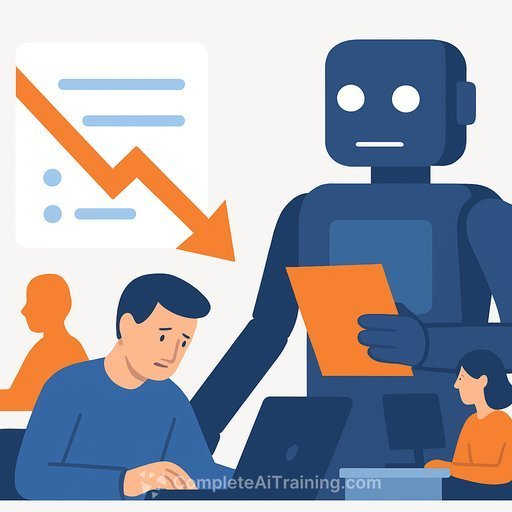
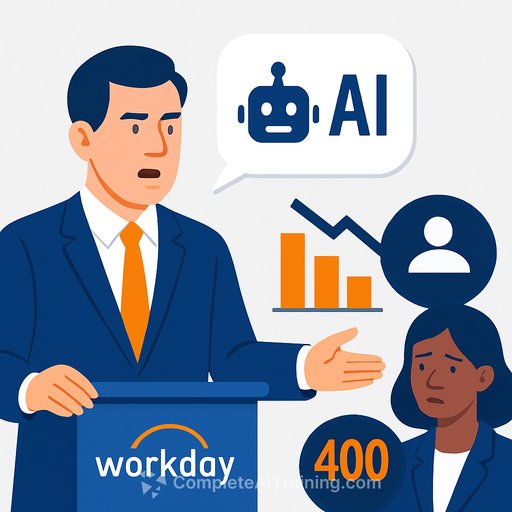
Headlines sell doom. HR teams live with the details. The UK data is clear: AI isn't wiping out jobs across the board. It is reallocating tasks, changing roles, and redrawing entry routes.
The real threat isn't mass redundancy. It's drift. Tools, pilots, and personal automations are everywhere but unaligned. Your edge will come from coherence: a workforce that uses AI the same way, speaks the same language, and can adapt under pressure.
The AI Fragmentation Crisis
Most organisations have AI pilots. Few have an operating model. Adoption is high, integration is low, and that gap is where quality breaks and value leaks. McKinsey has called out this stall at the "early stages of scaling."
- Symptoms: Tool sprawl, shadow workflows, inconsistent prompts, no shared guardrails, duplicated effort.
- Risks: Compliance gaps, uneven output quality, brittle processes, confused hiring signals.
- Goal: A single AI baseline across functions - principles, tools, prompts, reviews, and metrics.
McKinsey's research points to the adoption/integration gap. Closing it is an HR problem as much as a tech one.
Dual Fluency: The New Baseline for Every Role
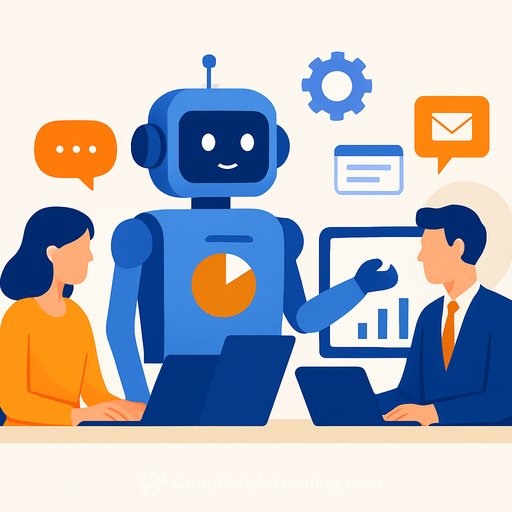
Winning teams don't just "use AI." They use it coherently. That requires Dual Fluency: technical fluency plus adaptive human fluency.
- AI tool fluency: Choose the right tool, set guardrails, craft prompts, debug outputs, and build workflows that don't break downstream.
- Adaptive human fluency: Learn fast, think in systems, frame problems clearly, and translate new capabilities into operations.
Most teams have fragments of both. Very few have a shared baseline across roles and levels. That's the workforce risk - and the opportunity.
The Old Signalling System Collapsed
Degrees, titles, and polished applications once hinted at effort and competence. Generative AI made those signals cheap and hard to trust. A perfect cover letter no longer proves much.
Meanwhile, the work has changed faster than static credentials can keep up. Learning speed, systems thinking, and AI literacy matter more than a five-year-old syllabus. HR needs to trust demonstrations, not declarations.
Build a Skills-First Hiring System
- Define the scorecard: List the 5-7 skills that drive outcomes for the role. Separate hard and human skills. Weight them.
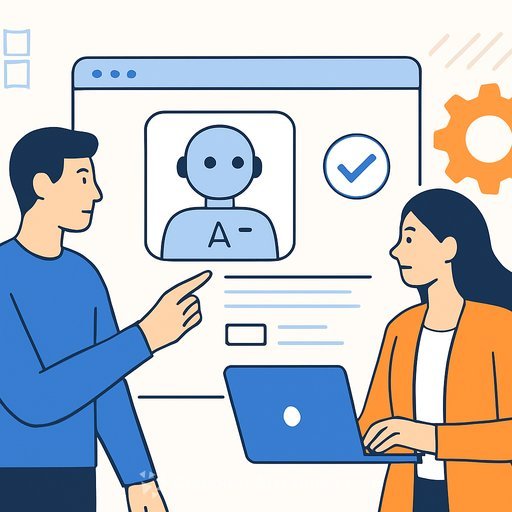
- Work samples: Give a short, realistic task (e.g., "Draft a spec with an LLM and show your review process"). Score with a rubric.
- Objective hard-skill tests: Verify AI literacy and domain skills. No "prompt guru" self-claims - show evidence.
- Human skills assessments: Measure problem-solving, judgment, EQ, and motivation with validated tools.
- Structured interviews: Standard questions, anchored scoring. Probe how they set guardrails, check correctness, and adapt workflows.
- Decision rule: Combine scores across methods. No single proxy can carry the decision.
The Barbell Workforce Is Here
Work is polarising: growth at the high-skill end, growth at the automation-compatible end, and a thinner middle. AI is absorbing routine cognitive tasks that used to define mid-level roles.
The World Economic Forum reported that many employers will reduce roles whose skills no longer fit and hire for more advanced skill sets. That's the split HR must plan for - and it won't fix itself.
Rethink Progression: If the Middle Hollows, Build New Paths
- Early judgment tracks: Replace "junior→mid→senior" with "apprentice→operator→owner." Move decision-making practice earlier.
- Cross-functional rotations: Short rotations build systems thinking and context - essential for safe AI use.
- Portfolio over tenure: Collect work samples, automations built, and before/after metrics. That becomes the new internal signal.
Don't Freeze Out Junior Talent
Hiring will skew to "dual-fluent" talent, but that doesn't mean shut the door on juniors. Gen Z is wired for self-directed learning and tool-first problem solving. Give them a fair shot through evidence, not pedigree.
- Skills tests level the field: A candidate with a zigzag résumé can outperform a prestige degree when you test the right skills.
- Apprentice cohorts: 90-day cycles: ship small projects, show their review process, and present results to stakeholders.
- Mentor on judgment: The biggest gap is not tool use, it's knowing when to trust or escalate.
A 90-Day Plan to Get to AI Coherence
- Weeks 0-2: Baseline
- Inventory tools, prompts, and shadow workflows across teams.
- Define your AI principles: safety, accuracy, attribution, privacy, escalation.
- Pick a small, shared stack for pilots (chat, summarisation, data assist, content assist).
- Weeks 3-6: Standards
- Create prompt templates, review checklists, and red-team procedures.
- Roll out "LLM 101" plus role-specific playbooks for 2-3 high-leverage tasks per function.
- Introduce a simple skill verification for new hires and internal moves.
- Weeks 7-12: Scale
- Codify an AI change request (ACR) process for new automations.
- Measure impact with before/after metrics and quality audits.
- Publish a living "AI Operating Manual" and set a monthly update cadence.
Upskill for Real: Train to a Shared Standard
- Common curriculum: Data sensitivity, prompt patterns, verification, feedback loops, and bias awareness.
- Role modules: Sales (research and outreach), Marketing (briefs and drafts), Ops (SOPs and QA), Finance (reconciliations and memos).
- Guardrails: Approved tools, no-go use cases, human-in-the-loop points, and incident reporting.
- Proof of learning: Ship a workflow improvement with metrics, not just a certificate.
If you need a ready set of AI courses by role and skill, see this resource: Complete AI Training - Courses by Job.
Design the Tech Stack Around People, Not the Other Way Around
- Tool policy: Fewer tools, deeper use. Every new tool must beat an existing one or fill a clear gap.
- Workflow-first: Start with the process, then slot tools in. Write down handoffs, checks, and owners.
- Data and privacy: Clear guidance on inputs, redaction, and storage. Train it. Test it. Audit it.
What to Measure (So You Don't FLY Blind)
- Adoption with quality: % of team using the standard prompts and checklists - paired with error rates.
- Time-to-output: Cycle time before vs. after AI, by workflow.
- Rework and escalation: Where quality fails and where human checks catch issues.
- Skills verified: % of roles with hard and human skills validated against your scorecard.
- Internal mobility: Moves enabled by skills evidence, not titles.
Practical Guardrails HR Can Ship This Quarter
- Standard prompts: For summarising, research, planning, and QA - with "verify" steps included.
- Review checklist: Source check, data sensitivity, hallucination bait, logic test, tone fit.
- Incident log: A simple form for misfires and learnings; review it monthly and update the manual.
- Offer letter addendum: Outline acceptable AI use, data rules, and IP expectations.
How to Communicate This Shift Internally
- Simple narrative: "We are standardising how we use AI so quality goes up and risk goes down."
- Show, don't tell: Demo before/after workflows from credible peers, not just AI champions.
- Reward what matters: Recognise shipped improvements with metrics, not just experimentation.
Hire for Coherence, Grow for Potential
There's no bloodbath. There is transformation. Your job is to build a workforce that can move in the same direction as the tech curve.
Stop hiring for the past. Test for Dual Fluency - technical capability and human adaptability. Build shared standards, verify skills, and create new paths for juniors to build judgment fast.
Do that and your teams stay flexible, your quality rises, and your org moves with confidence as credentials give way to evidence.
Your membership also unlocks: