
AI news ·
SOCOM seeks smaller, offline AI tools that reduce cognitive load on special operators
SOCOM needs AI that works without internet access in remote locations where cloud-connected systems fail. Officials say smaller startups are the likely source for compact, voice-controlled models built for field use.
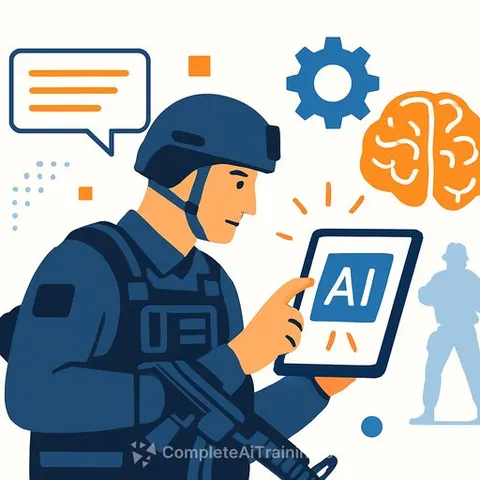
Special Operations Command Hunts for AI That Works Without a Network
U.S. special operations forces need AI tools that function in remote locations where cloud connections don't exist. Officials at the Global SOF Foundation's SOF Week event in Tampa this week outlined the challenge: today's most powerful AI systems run in distant data centers, but operators in the field need that same capability at the tactical edge.
SOF units already use generative AI for resource allocation and force deployment. They're now testing it for tactical operations, said Rob McClintock, program manager for intelligence at the program executive office for digital applications.
The gap between what exists and what operators need is significant. Faster access to mission-critical data means faster decisions. That's why Special Operations Command is pursuing "fog computing" frameworks-systems that bring data processing closer to where information is collected and used, rather than routing everything through centralized servers.
Smaller Models, Voice Commands, Fewer Instructions
SOCOM is looking for AI agents that can plan, revise, and execute strategies without requiring operators to provide extensive instructions. The goal is reducing cognitive load on personnel who already manage complex missions.
"In that conversation about managing the cognitive load on operators, voice command is a logical step," said Col. Robert "Ramsey" Oliver, program executive officer of SOCOM's SOF Warrior.
Smaller language models that understand human intent with less guidance could fit into field packs and run on less powerful hardware. This differs sharply from today's consumer AI products, which assume reliable internet and substantial computing resources.
Why Startups May Win This Contract
The biggest tech companies don't typically build for niche tactical requirements. Melissa Johnson, SOCOM's acquisition executive, said the solution will likely come from smaller startups with the flexibility to address military-specific needs.
"From an acquisition perspective, we're not just limited to the bigger companies with their own mindset, because AI is very dynamic," Johnson said. "Sometimes the smaller organizations, smaller businesses bring those solution sets."
Making Operators More Effective
The core mission is straightforward: make it easier for operators to do what they already do. That means getting different types of drones to coordinate with minimal input, or executing complex missions with just a few spoken or gestured commands.
Lt. Col. Aaron Davidson, program manager for the unmanned systems autonomy and interoperability portfolio, emphasized that AI for operations should reduce friction, not add complexity. The technology succeeds only if it removes obstacles between operators and mission execution.