
AI news ·
Some Hudson Valley counties adopt AI for daily government work while others take a cautious approach
Orange County is training all 2,500 employees on Microsoft Copilot this year, while Ulster County is pushing to pause AI data center permits. Hudson Valley governments are split on how far-and how fast-to go.
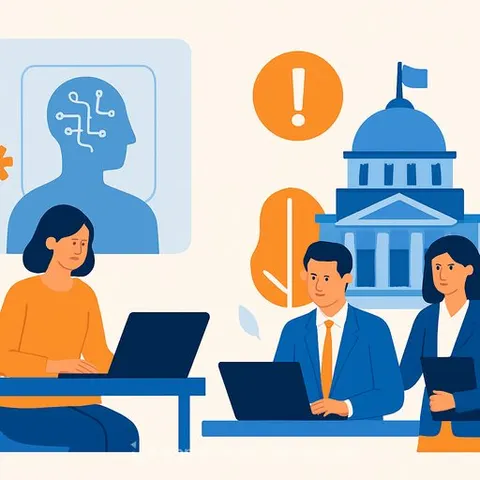
Hudson Valley counties split on AI adoption for government operations
Orange County is training all 2,500 employees to use Microsoft Copilot, while Ulster County's executive has called for a pause on data centers. The Hudson Valley's approach to artificial intelligence in government ranges from aggressive deployment to cautious skepticism.
Orange County's Commissioner-chief information officer Glenn Marchi said the county will run four quarterly training sessions this year, starting with Copilot basics and advancing through intermediate and advanced modules. The goal: make the workforce "AI ready."
Marchi said the most common use is writing. Employees create templates for processes, policies, and plans, then customize them after AI generates the framework. Email management also saves time-workers dump long email chains into the chat and get executive summaries.
Dutchess County is taking a narrower approach. Jacob Morrison, deputy commissioner for the Office of Central and Information Services, said the county focuses on document review and proofreading to improve public communications. The county plans to create an AI committee to develop a countywide policy, and the Department of Community and Family Services will eventually use an AI-powered call system for temporary assistance benefits.
Morrison emphasized ethics. "We want to make sure that any use of it is being used to benefit the public and not add risk," he said.
Other counties are holding back. Sullivan County is taking a "measured and deliberate approach" and is not broadly deploying AI in core government operations or decision-making, according to Commissioner Lorne Green. Rockland County is also exploring limited, carefully controlled use.
Ulster County Executive Jen Metzger expressed skepticism about AI data centers specifically, citing energy consumption and job creation concerns. She urged state leaders to support legislation that would pause data center permits until regulations protect against "harmful impacts of these energy-guzzling facilities."
Mark Levigne, deputy director at the New York State Association of Counties, said counties are at the beginning of evaluating AI for back-office operations and public interactions. Many should develop their own policies to guide the work.
Levigne compared AI to the internet two decades ago-it's not disappearing. But he stressed a human-centered approach. "AI should be used to supplement or enhance or support the work of the humans that are doing the work of county governance," he said. "It should not replace the human."
Marchi is collaborating with other Mid-Hudson Valley counties to share best practices. He encouraged government workers to experiment with free tools like ChatGPT to understand the technology firsthand.
For government employees: Familiarize yourself with AI for Government applications and how these tools affect productivity in your workplace. Understanding your county's AI policy-or lack of one-matters for how you'll use these tools in your role.