SoundHound AI Expands Into Retail: What Sales Teams Need to Know
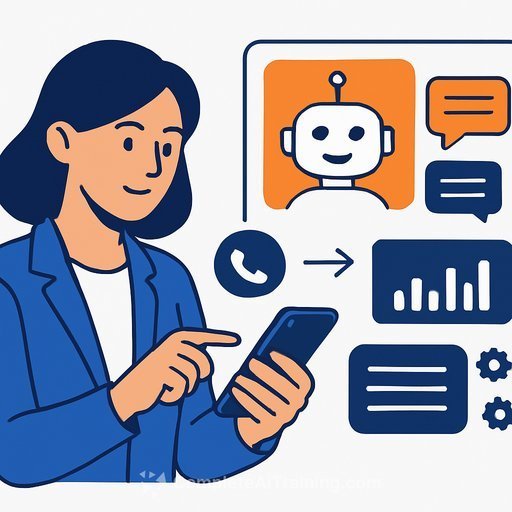
SoundHound AI has launched Sales Assist, a voice-driven agent for in-store retail, with a clear focus on telecom shops where plans, promos, and compliance rules change often. The company also opened a new innovation hub in Bengaluru, India, signaling a push to scale engineering and product velocity globally.
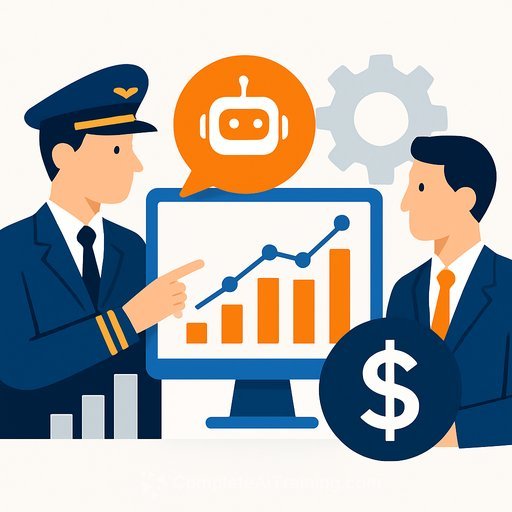
For sales leaders, this isn't just another kiosk. It's a move to bring agentic AI from cars and quick-service restaurants onto the sales floor-where speed, accuracy, and attach rate determine whether you hit quota or miss it.
Why this matters for sales leaders
- Handle complex plans in real time: Surface contract-specific options, promos, and eligibility without putting customers on hold.
- Shorten ramp time: New associates can lean on guided steps and compliant talk tracks instead of memorizing rate cards.
- Increase AOV and attach: Prompt timely upsells (accessories, insurance, add-a-line) based on the customer's profile and current offers.
- Reduce queue pressure: Offload FAQs and plan comparisons so reps spend more time closing, less time searching systems.
- Tighten compliance: Keep pitch language and disclosures consistent across stores and shifts.
What the headline misses
One thing going right: Sales Assist turns SoundHound's agentic platform into a general revenue tool, not just an auto or restaurant use case. For telecom and big-box retail, that means real-time guidance across tariffs, device financing, trade-ins, and regional rules-where mistakes are expensive and slow.
Where it fits in the platform race
Enterprise AI for sales and service already has strong players. Expect comparisons with Nuance (Microsoft), Google Cloud's Contact Center AI, and AWS tooling around in-store and contact center workflows. See how each handles on-prem devices, latency, multilingual support, and policy control.
How to pilot this in your stores
- Pick one revenue moment: plan upgrades, device trade-ins, or add-on attachments. Prove lift before you scale.
- Connect the data pipes: POS, CRM, catalog/PIM, promotions engine, eligibility APIs, and device financing partners.
- Define guardrails: approved scripts, disclosures, escalation triggers, and what the agent must never say or do.
- Cover the edge cases: multi-line discounts, regional promos, employee plans, and out-of-stock substitutions.
- Test speech in the wild: accents, noise levels, and store acoustics. Validate wake words and privacy cues.
- Train the floor: who owns handoffs, how to override, and how to log feedback that improves the agent.
- Plan fallback: offline mode, manual flow, and a clear "agent not sure" path to a human within seconds.
- Privacy and compliance: consent prompts, data retention, call/screen recording policies, and audit trails.
KPIs that actually move the needle
- Conversion rate on targeted flows (e.g., upgrade, trade-in)
- Average order value and accessory/insurance attach rate
- Time-to-quote and time-to-close per interaction
- First-time-right rate (fewer post-sale fixes and returns)
- Queue time and walk-outs during peak hours
- New rep ramp time and coaching interventions required
- Opt-in rate for AI assistance and CSAT/NPS deltas vs. control
Operational checklist
- Hardware: mic placement, ambient noise control, and shared vs. personal devices.
- Security: role-based access, PII handling, and store-level device management.
- Content ops: who updates promos, disclosures, and regional rules-daily, not quarterly.
- Localization: languages, dialects, and regulatory variations by market.
- Incentives: credit the AI assist in comp plans so reps embrace, not avoid, the tool.
Risks to factor in
- Vendor durability: the company is unprofitable and scaling globally, which could mean shifting priorities or pricing over the next few years.
- Complexity creep: retail adds variability (stores, regions, promos). Without tight content ops, your guidance can drift out of date fast.
- Hidden costs: integration, change management, and store hardware can outweigh license savings if you don't scope tightly.
What to watch next
- Live deployments beyond demos: look for signed pilots and references in telecom and multi-store retail.
- Proof points: measurable lift in conversion, AOV, and queue time in the first 60-90 days.
- Velocity from the Bengaluru hub: shipping cadence, language coverage, and feature updates that matter on the sales floor.
- Roadmap clarity: integrations with your POS/CRM, analytics exports, and admin tools for store managers.
Bottom line for sales teams
Sales Assist targets the messiest part of in-store selling: fast, accurate decisions under policy constraints. If you sell plans, bundles, or regulated products, put this on your pilot list-just keep scope tight, measure hard, and make store teams owners, not spectators.
Want to explore practical playbooks and tools? Start here: AI for Sales
Your membership also unlocks: