
AI news ·
South Korea embeds AI tools in $529 billion 2027 budget framework
South Korea approved fiscal guidelines placing AI among its top investment priorities for 2027, with a $529 billion budget framework. The government will embed AI tools directly into budget preparation and fund management workflows.
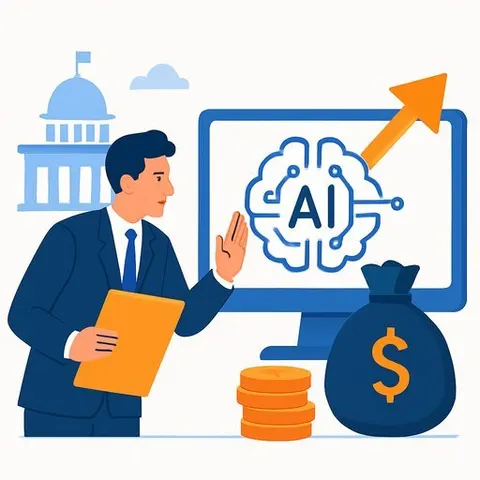
South Korea Embeds AI Into National Budget Planning for 2027
South Korea's Ministry of Planning and Budget approved new fiscal guidelines on March 30 that place artificial intelligence transition alongside regional growth, inclusive policies, and public safety as priority investment areas for 2027. The government is incorporating AI-driven tools directly into budget preparation and fund management workflows, with the Ministry of Economy and Finance outlining principles for using AI to enhance efficiency, accountability, and transparency in fiscal decisions.
The 2027 fiscal framework is projected to reach approximately $529 billion. The approval signals institutional acceptance of machine learning tools in macro policy work, not just narrow forecasting tasks.
What the government plans to do with AI
The Ministry of Economy and Finance has published principles for AI use in fiscal management. Public materials describe the approach as focused on efficiency, accountability, and transparency rather than full automation of budget decisions.
The ministry also plans to expand a citizen participation budget platform at www.mybudget.go.kr, allowing public input into spending priorities.
Technical requirements and governance questions
Governments that embed AI into budgeting typically use it for historical data analysis, demand forecasting, and scenario simulation. That pattern creates demand for reproducible data pipelines, explainable models suitable for audit, and versioned scenario outputs.
Public-sector AI projects frequently require integration with legacy databases and careful access controls to preserve confidentiality while enabling model training. These technical constraints often receive less attention than policy announcements but shape implementation timelines and costs.
What to monitor
Track published technical annexes or methodology notes from the Ministry of Planning and Budget that define model inputs, evaluation metrics, and governance frameworks. Procurement notices will clarify whether solutions are domestically developed, sourced from global vendors, or hybrid.
Watch also for published reproducibility audits or independent validations that detail how AI outputs feed into final budget decisions. These documents typically reveal how seriously a government treats model transparency and accountability.
Broader context
Comparable initiatives in other OECD countries use AI to improve tax revenue forecasts, cost-benefit sensitivity analysis, and identify program inefficiencies. South Korea's move signals growing institutional confidence in ML tools for policy work and drives demand for tools that offer traceability, model governance, and training data provenance.
For government professionals, this trend means increased familiarity with AI governance frameworks, data documentation standards, and audit practices will become part of fiscal management work. Learn more about AI for Government and Data Analysis to understand how these tools function in policy contexts.