
AI news ·
Trump drops AI safety review after tech billionaires lobby against it
Trump dropped a planned AI safety review hours before signing it Thursday, after Elon Musk and Mark Zuckerberg lobbied against it. The order would have been voluntary with no legal force to compel compliance.
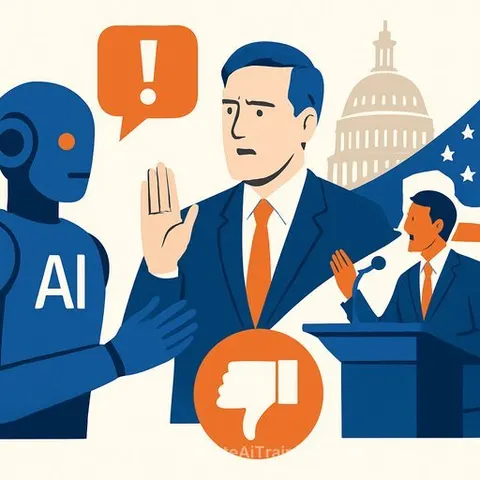
Tech Leaders Killed Trump's AI Safety Review Before It Started
Donald Trump postponed an executive order calling for government safety reviews of new artificial intelligence models hours before signing it Thursday, reversing course after pressure from tech executives including Elon Musk and Mark Zuckerberg. The decision signals the end of a brief window when the White House considered restraints on frontier AI development.
Trump cited American competitiveness and competition with China. "We're leading China, we're leaving everybody, and I don't want to do anything that's gonna get in the way of that lead," he said in the Oval Office.
How a Cybersecurity Scare Prompted Regulation Talk
White House discussions about the order began after Anthropic announced Claude Mythos last month and withheld its public release due to safety concerns. The model could identify vulnerabilities in computer code at scale - a capability governments from the UK to India flagged as a threat to financial systems and critical infrastructure.
The concern prompted Vice President JD Vance to call AI company leaders urging cooperation. A year earlier, Vance had said at an international summit that "the AI future is not going to be won by hand-wringing about safety." Mythos appeared to change that calculation.
OpenAI announced a competing cybersecurity product shortly after Mythos debuted. Historical patterns show that capabilities developed by one company are typically matched by competitors within months, sometimes becoming available in open-source models with fewer deployment restrictions.
Industry Lobbying Killed a Toothless Order
The proposed executive order would have created a voluntary government review process for new AI models - carrying no legal force to compel compliance. Even this minimal oversight triggered a last-minute industry push to kill it.
Microsoft and Google had already struck a deal to allow voluntary, non-binding reviews by the government's AI standards agency on national security grounds. When discussions turned to a broader executive order, industry officials lobbied in private meetings to weaken it further.
David Sacks, a billionaire tech investor and former White House adviser, told Trump the order would benefit China in the AI race, according to Politico. Musk and Zuckerberg warned the president it would hurt the economy and U.S. AI advantage, the Washington Post reported. Musk denied the report on X, saying he only spoke to Trump after the president decided to cancel.
A draft of the proposed order obtained by Politico included explicit language stating it would not "stifle this innovation with overly burdensome regulation." It explicitly prohibited "mandatory governmental licensing, preclearance, or permitting requirement for the development, publication, release, or distribution of new AI models."
Tech's Political Leverage Keeps Growing
The tech industry has closely aligned itself with the Trump administration, collectively donating hundreds of millions to Republican political causes. Trump has publicly embraced OpenAI CEO Sam Altman and appointed Musk and Sacks to prominent government positions.
In December, Trump signed an executive order blocking state attempts to regulate AI, using industry talking points about opposing bureaucracy and competing with China. Tech leaders have benefited substantially from the administration's anti-regulation stance.
That influence is set to expand as midterm elections approach. Super PACs backed by tech leaders, including one with over $125 million in funding from OpenAI President Greg Brockman, plan to spend heavily on anti-regulation candidates and policies. Musk, who claimed last year he would step back from political donations, is pouring tens of millions into Republican pro-tech causes.
Many of these executives have made AI central to their companies and financial interests. OpenAI and SpaceX are pursuing trillion-dollar public offerings this year with AI as a core component. Even minimal regulation represents a threat to those valuations.
What Gets Left Behind
The collapse of the executive order removes the last near-term prospect for federal AI oversight. Concerns about cybersecurity breakdowns, disinformation, mass surveillance, autonomous weapons, labor disruption, child exploitation material, nonconsensual images, and environmental damage have not produced cohesive White House plans to address them.
For government officials responsible for policy in these areas, the message is clear: tech industry preferences now override safety considerations in White House decision-making. The window for voluntary industry cooperation has closed before it opened.
Learn more about AI for Government and how policy decisions shape technology development. Government professionals can also explore the AI Learning Path for Policy Makers to understand governance frameworks and policy analysis.