
AI news ·
South Korea forms student advisory group to refine AI language tool
South Korea formed a 22-team student panel to refine its AI language platform. The 60 members will guide updates for the software, which already serves 29,000 students.
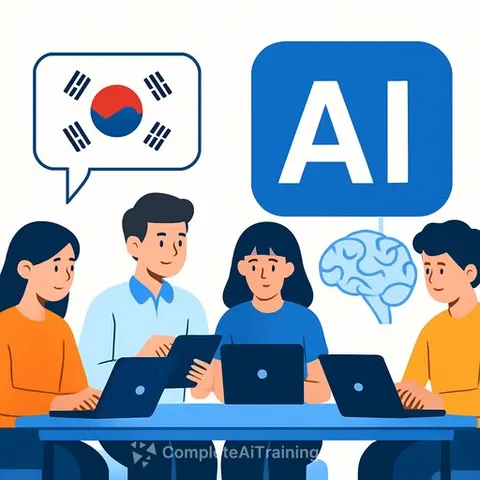
South Korea's Ministry of Education and the Korea Education and Research Information Service (KERIS) have formed a 22-team student advisory panel to refine the government's AI-powered Korean language platform, Everyone's Korean. The initiative, announced Tuesday, will channel monthly feedback from roughly 60 immigrant-background students and their teachers directly into the platform's development, targeting a user base that already spans more than 29,000 students across 7,200 schools.
Direct feedback from the classroom
The advisory panel, which runs through December, includes students from 15 countries including Vietnam, China, Russia, Nigeria and Brazil. Each of the 22 teams pairs students with a guiding teacher to evaluate usability and suggest improvements. The ministry conceived the group to bridge the gap between software development and actual classroom realities.
Planned upgrades based on this feedback include:
- A dedicated mobile application by 2027
- Expanded educational vocabulary for middle school science and math courses
- Interactive typing games
How the AI platform personalizes learning
The Everyone's Korean platform uses AI to assess language proficiency, track individual progress and recommend tailored content. The platform's approach reflects a growing use of AI for Education to tailor instruction to individual needs. As of June, it was actively used by over 29,000 students, teachers and administrators nationwide.
One student participant said, "I was frustrated because it was hard to objectively gauge my Korean skills, but Everyone's Korean allowed me to pinpoint exactly where I was falling short in speaking and writing." A guiding teacher added, "It allows for highly personalized lessons. A newly arrived student can focus on basic vocabulary, while longer-term students expand on their grammar - all studying the same topic simultaneously."
Part of a national strategy to narrow learning gaps
The initiative fits into South Korea's broader education policy aimed at reducing achievement disparities. Noh Jin-young, director general of the Student Support Bureau, said the ministry will keep refining the system based on student feedback to make Korean learning easier and more enjoyable.
Why this matters for education professionals
For educators and administrators working with multilingual learners, the South Korean model offers a concrete example of how student advisory panels can shape edtech tools. The platform's ability to let teachers differentiate instruction within a single class - while gathering real-time proficiency data - may inform similar efforts in other countries. Direct, ongoing student input helps ensure that language-learning software addresses actual classroom challenges rather than developer assumptions.