
AI news ·
South Korea government warns of strict punishment for AI deepfake videos ahead of June local elections
South Korea will prosecute AI deepfake election content under a 2023 law banning such material 90 days before the June 3 vote. Election violations are up 50 percent from previous local elections.
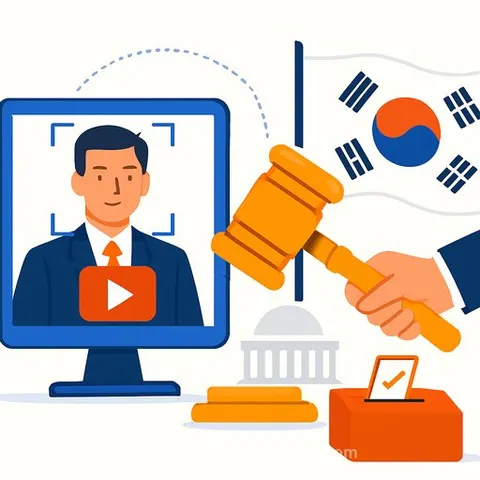
South Korea to Crack Down on Election Deepfakes Ahead of June Vote
South Korea's government announced plans to severely punish the creation and spread of deepfake videos during the June 3 local elections. Prime Minister Kim Min-seok made the announcement during a ministerial meeting and public address on April 14.
The government will enforce a ban on AI-generated deepfake election content that took effect under amendments to election law in late 2023. The prohibition applies from 90 days before the election. Officials said they will prosecute violations "to the fullest extent allowed by law, on the principle of making an example."
Election Violations Up 50 Percent
Minister of the Interior and Safety Yun Ho-jung said election law violations including false information have increased roughly 50 percent compared to previous local elections. Eight simultaneous elections-seven local races and one National Assembly by-election-have intensified campaign activity.
Minister of Justice Jung Sung-ho reported multiple cases of deepfake videos under investigation. Smear campaigns have also risen about 50 percent, partly because ruling and opposition party primaries are more competitive than in the past.
Why Government Officials Should Care
Deepfakes pose direct operational challenges for election administrators. False videos spread rapidly through social media and one-person media channels, creating verification burdens and eroding public confidence in electoral systems.
Government officials managing elections must understand how generative AI and LLM technology works to identify and respond to synthetic content. The technical knowledge required differs substantially from traditional election security.
Prime Minister Kim said deepfakes undermine "public trust in the election system itself, posing a serious threat to the foundations of democracy." The government framed the issue as affecting not individual candidates but the integrity of the electoral process.
What Officials Must Enforce
Under South Korean law, the following carry zero-tolerance enforcement:
- Deepfake videos created with AI
- Bribery
- Election violence
- Public officials' election interference
Election crimes carry a six-month statute of limitations. The government said it will address violations "swiftly and thoroughly" to ensure accountability.
For government professionals developing election security policy, understanding AI for Government applications has become essential to protecting electoral integrity.