
AI news ·
South Korea invests 16.7 billion won to build AI classrooms at 118 schools
South Korea's Education Ministry will spend 16.7 billion won to build AI classrooms at 118 schools, finishing construction in 2026. The rooms focus on hands-on problem-solving across science, math, and information science rather than lectures.
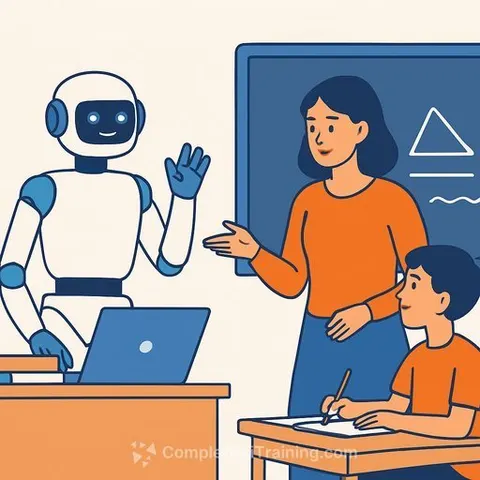
South Korea to Build AI Classrooms at 118 Schools
South Korea's Education Ministry will invest 16.7 billion won to construct "AI Convergence Education Rooms" at 118 schools this year, moving beyond teaching AI concepts to embedding the technology into subject-specific problem-solving.
The ministry announced the selection of schools Wednesday and began supporting their construction on October 29. The rooms are designed as activity-centered spaces where students tackle real problems using data analysis, design tools, and collaborative projects rather than sitting through lectures.
What Schools Will Build
The 118 selected schools break down as 35 elementary, 32 middle, 47 high, and 4 special schools. Seoul leads with 19 schools, followed by Gyeonggi Province with 18. Construction finishes in the second half of 2026.
Each room will support classes that connect science, mathematics, and information science. Students might design robotic systems for firefighting in dangerous spaces or build environmental monitoring devices to protect vulnerable populations during extreme weather.
Selection Criteria
The ministry evaluated schools on curriculum alignment, specificity of space plans, operational capacity, sustainability of the program, and potential to spread results to other schools.
What This Means for Educators
Teachers will need to shift from delivering content to facilitating student-led inquiry. These spaces require different instructional approaches-less lecturing, more guiding students through data analysis and design cycles. The rooms support project-based classes where students discover problems and develop solutions.
This initiative connects to the broader "AI for Education" movement and directly affects how teachers work. Educators implementing these rooms should consider training in AI for Teachers to design effective problem-solving activities.
The Education Ministry said the project aims to develop students' creative problem-solving abilities in preparation for work in an AI-driven economy.