
AI news ·
South Korea phases out HWP file format in government systems to improve AI compatibility
South Korea's government will stop accepting HWP files in key public systems starting May, replacing the proprietary format with open-standard HWPX. The switch aims to make government documents easier for AI tools to read and process.
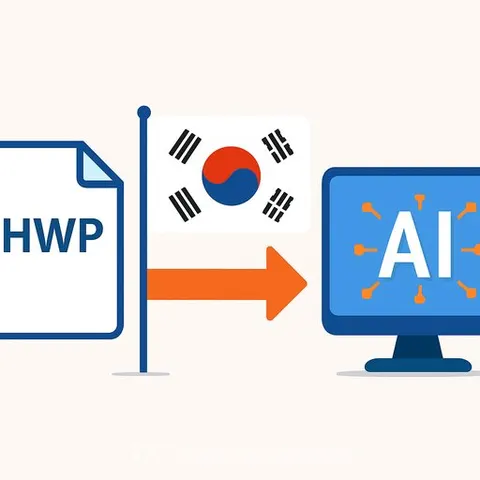
South Korea phases out HWP format in government systems for AI compatibility
South Korea's government will stop accepting Hangul Word Processor (HWP) files across key public document systems starting May, replacing the proprietary format with an open-standard alternative designed to work better with artificial intelligence tools.
The Presidential Council on National Artificial Intelligence Strategy, working with the Interior and Culture ministries, will begin the transition across three major government platforms. The On-Nara System, used by public officials to draft and distribute documents, will switch to HWPX on May 18 and extend the change to local governments. On-Mail, the internal email service for civil servants, follows in October. The Integrated Government Mail service, which handles official external communications, will fully restrict HWP attachments by October after a grace period starting in early May.
HWP, developed by Hancom in the late 1980s, became dominant in Korean government institutions because it offered superior Korean-language support when global alternatives like Microsoft Word were less accessible. The format remained largely proprietary and closed, making it difficult for AI systems to access and process the data inside.
HWPX, the open-format version, has a transparent structure that works better with AI-based data processing. The Interior Ministry is coordinating with Hancom to enable automatic conversion of existing HWP documents to HWPX during editing or saving, reducing disruption for users.
The policy targets the file format, not the Hangul application itself. Recent versions of the software already support HWPX, so users can continue working in Hangul as before.
President Lee Jae Myung flagged the limitations of the HWP-centered system during a government briefing in December 2025. "Government documents are valuable data assets, but their structure often makes them difficult for machines to read," Lee said, emphasizing the need to improve how public data works with AI systems.
Im Moon-young, Vice Chairman of the Presidential Council on National Artificial Intelligence Strategy, said the initiative represents the start of broader data modernization across the public sector. "Starting with this measure, we will push forward small but significant and fast-paced changes for public-sector data innovation in the AI era through close inter-ministerial cooperation," Im said.
For government workers, the change means learning to work with HWPX files instead of HWP. Most of the transition will happen automatically through the software's conversion features, but document workflows and storage systems will shift during the implementation period.
Learn more about Office Tools and AI for Government.