
AI news ·
South Korea seeks providers for universal basic AI chatbot
South Korea offers 256 Nvidia B200 GPUs to build a free national AI chatbot and agent. The 2031 contracts require domestic models for sovereign control.
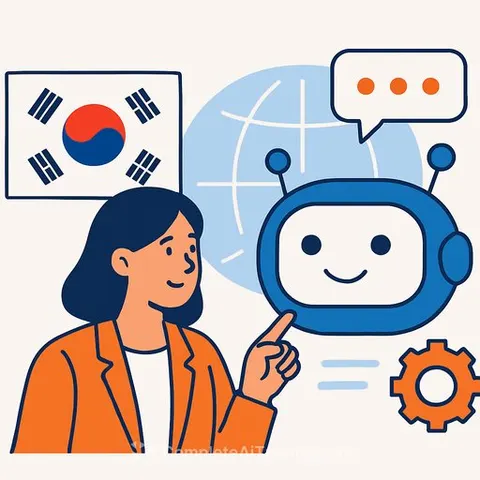
South Korea's government has posted a tender seeking suppliers to build a free universal AI chatbot and an AI agent for government services, with Seoul offering up to 256 Nvidia B200 GPUs to winning bidders. The "AI for everyone" initiative aims to ensure every resident can access a quality AI tool without reliance on overseas providers, and contracts will run through 2031.
The tender also calls for an agentic system that lets citizens interact with government services directly, a direction that mirrors the increasing global interest in AI for Government applications. Winners must match the government's funding commitment and use locally developed AI models as the foundation, so the service reflects local culture and remains under domestic control.
Tender scope and local players
Bid documents specify that private entities will create and operate the systems under the contract. South Korean media reports name Kakao, Naver, SK Telecom, and LG as likely participants. Proposals are due by August 11.
The government's decision to supply GPUs and require matching funds signals a serious push to build sovereign AI infrastructure. The chatbot and agent are not experiments but permanent services designed to be available to every resident, free of charge.
Sovereign AI gains urgency
The tender landed weeks after the US government compelled Anthropic to prohibit all foreign nationals from accessing its Mythos 5 and Fable 5 models. Anthropic, unable to verify the passports of its US-based users, took both models offline. The incident exposed how policy decisions abroad can abruptly cut off access to AI services, fueling demand for nationally controlled alternatives.
South Korea's lawmakers are clearly aware of that risk. The country already has a cohort of tech companies that can deliver: Kakao's messaging service is an equivalent to WhatsApp, and Naver functions as a domestic Google analogue. Past restrictions on Google's mapping service on national security grounds left Naver and Kakao's mapping apps vastly superior, making their broader ecosystems more attractive to users.
Why this matters for government professionals
For public-sector leaders, South Korea's approach offers a concrete model for how to fund and deploy citizen-facing AI without relying on foreign giants. The requirement for locally developed models and homegrown infrastructure reduces exposure to external policy shocks. And by tying the chatbot to an agent that handles government services, the tender directly links AI investment to improved service delivery-a metric that matters in any administration. The 2031 timeline and matching-funds structure also show how governments can use public-private partnerships to build lasting digital infrastructure, not just one-off pilots.