
AI news ·
South Korea's defense research agency launches in-house generative AI system to prevent military secret leaks
South Korea's defense agency launched Add+i, an AI system built in three months for its classified network, letting researchers use AI without exposing secrets.
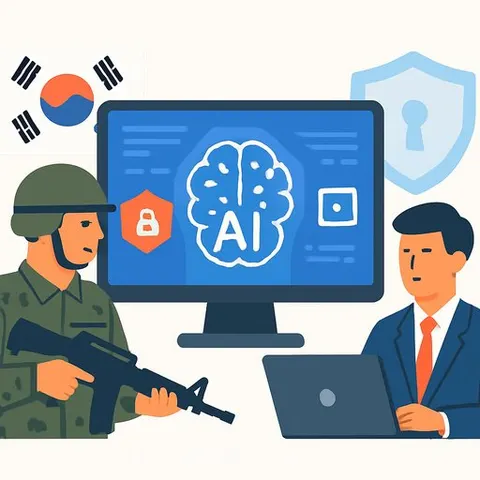
South Korea's Agency for Defense Development launched an in-house generative AI system called Add+i on July 6, making it available to all employees on the agency's closed internal network. The move tackles a problem that has kept defense organizations locked out of the generative AI wave: the risk of exposing classified information through public services.
The system runs entirely on a classified network, sidestepping the strict security requirements that have barred defense researchers from using commercial tools like ChatGPT or Claude for their daily work. The agency said it completed the build over three months starting in December, using open AI models, with all planning, development, deployment, and operations handled by its Defense Artificial Intelligence Technology Research Institute.
An internal contest produced the name Add+i, which stands for both "ADD intelligence" and "Advanced defense development intelligence." The agency formed an AI task force in May 2025 before committing to direct development rather than adapting an outside product.
What Add+i can do now
The system goes beyond simple chatbot interactions. It searches internal regulations, summarizes documents, and translates text across languages. For the research workflow, it supplies an AI development agent that fits the constraints of a closed-network environment - no internet access, no cloud APIs, no external model calls.
One feature that will matter to developers is support for vibe coding, a method where researchers describe software ideas in natural language and work with the AI to generate, refine, and test code. The agency said researchers can use Add+i to write program code, analyze errors, and generate test cases, cutting down the time spent on repetitive tasks and letting them verify ideas faster.
The agency has already put the system to practical use. Add+i helped build a geospatial information management system that integrates spatial data from the research institute. Natural-language search functions reduced time spent on simple information retrieval and administrative work.
Add+i 2.0 and the shift toward agent-based architecture
Work on a next-generation version is already underway. Add+i 2.0, targeted for release within the year, will move from a tool you query to an agent-based platform that understands a user's goal, connects with necessary systems, and carries out work more independently.
The upgraded system will support MCP, the Model Context Protocol that has become a global standard for connecting AI agents to external tools and data sources. It will also include a skill-based standard connection system, with the goal of linking the agency's internal systems and data to AI agents in a more integrated way. The long-term vision is a participatory AI ecosystem where researchers build functions for their own needs and connect them to Add+i 2.0 in real time.
Lee Geon-wan, president of the Agency for Defense Development, said Add+i is the agency's first major effort to help employees use generative AI in actual work. "Through this, we will connect the valuable data accumulated by the institute and the knowledge of our employees into an artificial intelligence ecosystem and continue expanding our research and development capabilities," Lee said. He added that the agency will work closely with the military to strengthen practical AI capabilities.
Why this matters for IT and development
Add+i is a worked example of AI deployment in a zero-trust, air-gapped environment - a constraint many developers in government, finance, and healthcare recognize. The three-month timeline from start to production, using open models and internal talent, shows what's possible without vendor lock-in. The upcoming MCP support in version 2.0 also signals that even the most restricted networks are converging on the same interoperability standards as the broader AI ecosystem, which means skills in agent-based architectures and protocol-driven AI integration will apply across both classified and commercial projects.