AI Chatbots vs. Human Agents: Striking the Right Balance in Customer Care
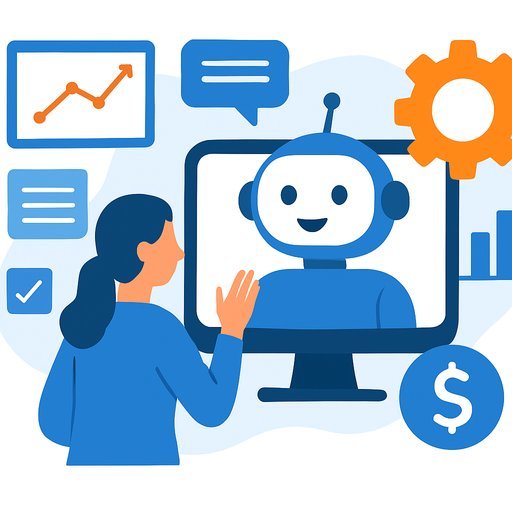
Customer expectations moved faster than most support teams. People want instant answers, continuity across channels, and the option to talk to a real person when the issue gets tricky. That's why automation is everywhere-yet the goal is not bot-only support. It's a smart blend.
Here's how to build a support model that keeps speed, saves cost, and still feels human.
Why Chatbots Became the Front Line
Modern chatbots do more than follow scripts. With NLP, sentiment cues, and machine learning, they can resolve routine requests like order status, password resets, and refunds in seconds. They don't sleep, don't queue, and they scale.
Retail, finance, healthcare, and travel teams use bots to absorb high-volume, repeatable work so agents can focus on tougher cases.
Where Chatbots Work Best
- 24/7 coverage: Help is available at all hours.
- Speed and accuracy: Near-instant retrieval of known answers with fewer manual errors.
- Scalability: Handles spikes and seasonal peaks without wait times.
- Cost efficiency: Automates repetitive tasks and reduces handle time on simple contacts.
Use bots to resolve "how do I…?" questions and data lookups. Free your agents for judgment calls, exceptions, and empathy-heavy moments.
The Human Element Still Matters
Empathy, active listening, and nuanced problem solving are hard to simulate. Billing disputes, health-related questions, and emotionally charged issues need a person who can read the room and adjust on the fly.
Humans also handle the unknowns-edge cases, conflicting data, policy gray areas. That's where trust is built and loyalty sticks.
Where Automation Falls Short
- Limited context: Multi-step or ambiguous questions can confuse a bot.
- Low emotional sensitivity: Scripted replies can feel cold in sensitive moments.
- Over-automation: Forcing bot loops frustrates customers who want a person.
Treat automation as a force multiplier for agents-not a replacement.
Build a Hybrid Model That Just Works
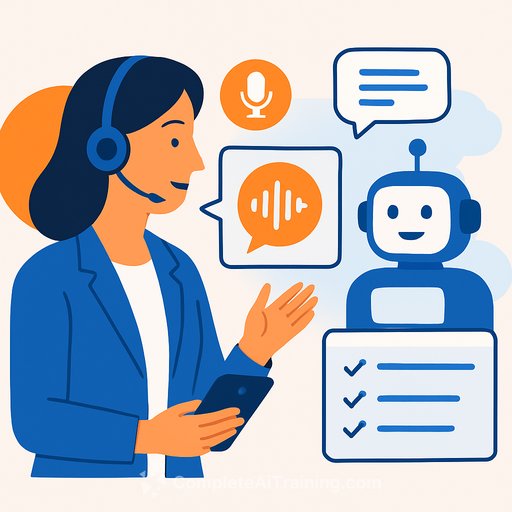
The best systems mix speed with empathy. Let bots handle the intake and known answers. Escalate cleanly to people for depth and care.
A Simple Hybrid Workflow
- Bot first-touch: Authenticate the user, capture intent, and answer common questions.
- Smart routing: If signals show complexity or emotion, hand off to an agent.
- Context handoff: Pass the history, sentiment, and data so customers don't repeat themselves.
- Learning loop: Feed resolved tickets back into training to improve bot coverage and quality.
For trends and benchmarks across channels, see the Zendesk Customer Experience Trends.
Best Practices That Keep Customers Happy
- Define clear scope: List intents the bot owns, what it deflects, and what it routes.
- Write like a human: Short replies, customer language, and precise next steps.
- Design graceful exits: Offer "Talk to an agent" within 1-2 failed turns or on request.
- Unify data: Connect CRM, order history, billing, and identity so agents see the full picture.
- Guardrails: Set escalation triggers for sentiment spikes, repeated misunderstandings, or high-risk topics.
- Ethics and risk: Follow frameworks like the NIST AI Risk Management Framework for safety and accountability.
What to Measure Weekly
- Bot containment rate: % of contacts fully resolved by the bot.
- Escalation rate: % of bot chats routed to humans (watch for unwanted loops).
- First response time (FRT): Time to first touch across channels.
- Time to resolution (TTR): End-to-end time for bot-only, human-only, and hybrid tickets.
- First contact resolution (FCR): Resolved without follow-up.
- CSAT/NPS by path: Compare bot-only vs. escalated vs. agent-only.
- Transfer friction: Did customers repeat information after escalation?
- Quality scores: QA on both bot flows and agent interactions.
Rollout Plan: 30 / 60 / 90 Days
- Days 0-30: Audit top intents and macros, choose the first 10 bot use cases, write concise flows, define escalation rules, and set up analytics.
- Days 31-60: Integrate CRM/identity, add order/billing lookups, launch in one channel, run A/B on scripts, and train agents on new workflows.
- Days 61-90: Expand to more intents and channels, add proactive triggers (status, delays), refine based on QA and CSAT, and publish a playbook.
The Future Is Collaboration
AI will keep taking routine tasks off your queue. Humans will keep owning nuance, edge cases, and relationships. The mix is the strategy.
Build systems where automation does the heavy lifting and agents do the high-value work-calm the situation, solve the exception, and keep the customer.
Next Steps for Your Team
- Pick 10 repeatable intents and automate those first.
- Add a clear "Talk to an agent" path in every bot flow.
- Route with context: identity, last actions, sentiment, and history.
- Review 20 random conversations weekly-half bot-only, half escalated.
- Upskill your team on AI-assisted support and prompts. Explore curated options by role at Complete AI Training and deepen bot-writing skills with prompt engineering resources.
Conclusion
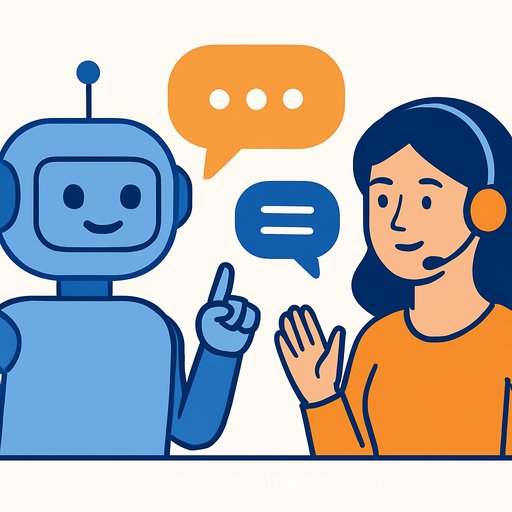
The choice isn't bots or humans. It's both-used where each is strongest. Let automation handle speed and scale. Let people provide judgment and care. Do that well, and you reduce costs, raise CSAT, and keep customers coming back.
Your membership also unlocks: