
AI news ·
Standard Chartered plans to cut 7,800 back-office roles by 2030 as it expands automation
Standard Chartered will cut 7,800 back-office jobs by 2030 - over 15% of its support workforce - as it automates HR, risk, and compliance functions. CEO Bill Winters announced the plan at an investor day in Hong Kong on 19 May 2026.
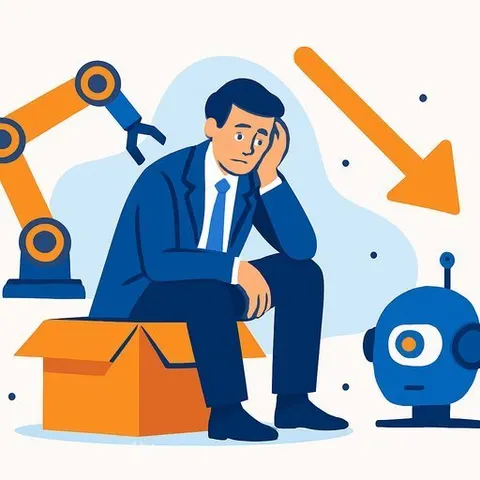
Standard Chartered Plans to Cut 7,800 Roles by 2030 as Banks Automate Back-Office Work
Standard Chartered will eliminate more than 15% of its back-office positions by 2030 - roughly 7,800 jobs - as the bank accelerates automation across corporate functions including human resources, risk, and compliance.
Chief executive Bill Winters announced the plan at an investor day in Hong Kong on 19 May 2026. The bank's support-services workforce numbered approximately 51,000 as of mid-2025, making the cuts a significant restructuring at one of the world's most geographically dispersed financial institutions.
Winters framed the reductions not as cost-cutting but as capital reallocation. "It's not cost cutting: it's replacing, in some cases, lower-value human capital with the financial capital and investment capital we're putting in," he said.
Standard Chartered said it would attempt to redeploy some affected workers into other parts of the business, though it offered no specific commitments on numbers. The bank cited plans to scale "practical uses of automation, advanced analytics and artificial intelligence to streamline processes, improve decision-making and enhance both client service and internal efficiency."
The HR Function Under Scrutiny
The announcement raises a direct challenge for HR leaders: what is the human resources function's role in managing AI-driven workforce transformation when HR itself is among the functions being automated?
Standard Chartered's approach - framing AI displacement as workforce evolution rather than redundancy - depends on the quality of reskilling investment and workforce planning that backs it up. Banks across the industry increasingly use this language, but execution varies widely.
For HR executives building workforce transformation plans, the question is no longer whether AI will reshape their organisations, but how prepared they are to lead that process. That preparation requires understanding both the technology and the human dimensions of large-scale workforce transitions.
Learn more about leading AI-driven workforce transformation in your organisation with AI for CHROs (Chief Human Resources Officers) or AI for HR Managers.