
AI news ·
Stanford study finds AI recruitment tools systematically reject more Black and Asian job applicants
Stanford researchers found AI screening tools reject Black and Asian candidates at higher rates than human review would. The study of 4M applications links the bias to 90% of U.S. employers using the same few platforms.
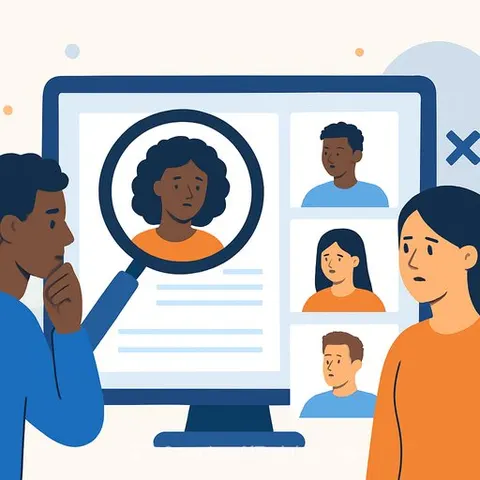
Stanford Study Finds Racial Bias in AI Recruitment Screening
Artificial intelligence screening tools used by US employers are systematically rejecting Black and Asian job candidates at higher rates than would occur if applications were reviewed independently, according to research from Stanford University examining 4 million job applications across 156 employers.
The disparity stems partly from concentrated tool adoption. More than 90% of US employers use AI screening software, and 60% of Fortune 500 companies rely on the same platform, HireVue, the researchers found.
The concentration creates a compounding problem. When applicants applied to multiple companies using the same AI tool, their rejection rates exceeded what random independent decisions would predict. The researchers calculated that 29,000 more Asian candidates would have received interviews without AI screening in place.
What This Means for Management
The findings expose a critical vulnerability in recruitment infrastructure. "AI screening tools bring together three properties that should not co-exist in high-stakes decision-making: They are pervasively adopted, highly consequential, and opaque to the public," the researchers said.
IT managers and hiring leaders face a practical problem: relying on these tools may narrow the candidate pool in ways that aren't visible in hiring metrics. The resulting workforce lacks diversity, which research consistently shows affects innovation and decision-making quality.
Managers should examine which screening tools their organizations use and how those tools make decisions. Understanding the vendor, the training data, and the validation process matters more than assuming the tool works fairly because it's widely deployed.
Learn more about AI for Human Resources or explore the AI Learning Path for CHROs to understand how to evaluate recruitment systems in your organization.