
AI news ·
Starbucks pulls AI inventory system after nine months over stocking failures and staff complaints
Starbucks pulled its AI inventory system from North American stores after nine months, citing item misidentification and stocking errors that frustrated employees. The company is reverting to manual counts while it reworks its supply chain approach.
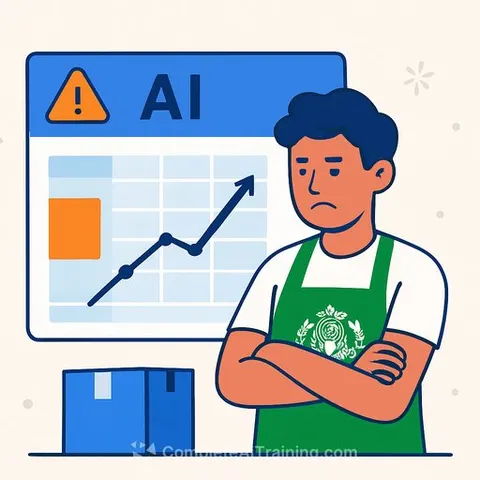
Starbucks Pulls AI Inventory System After Nine Months, Signaling Execution Risk
Starbucks has shut down its AI-powered inventory management system across North American stores after the tool misidentified items, created stocking problems, and frustrated employees. The company rolled out the "Automated Counting" system only months ago as part of CEO Brian Niccol's turnaround plan.
The decision to pull the tool raises questions about how large restaurant chains can safely introduce automation into store-level operations. For Starbucks, where drink customization and frequent menu changes are standard, inventory accuracy directly affects product availability, waste, and customer satisfaction.
Why This Matters for Operations Teams
The inventory system was designed to reduce manual stock counts and improve product availability. Instead, it increased operational friction. Store employees reported that misidentified items and stocking errors made the system unreliable for daily use.
This failure illustrates a common challenge in deploying AI across distributed networks: what works in a pilot may break down when scaled to thousands of locations with varying conditions, staffing levels, and workflows. Starbucks operates more than 11,000 stores globally, making large-scale rollouts inherently risky.
The company is reverting to manual inventory processes while pursuing more frequent replenishments and supply chain improvements. Management's willingness to reverse course after nine months suggests a prioritization of operational stability over experimental tools-a practical stance for a chain focused on service speed and reliability.
What Competitors Are Doing
McDonald's and Chipotle are also testing AI tools in ordering, labor planning, and supply chains. Their mixed results suggest the restaurant industry is still early in figuring out where automation adds value and where it creates problems.
This episode offers a data point for how far front-line automation can go before disrupting day-to-day performance. Investors and operations leaders should watch how Starbucks explains its broader technology roadmap on future earnings calls, particularly commentary on inventory accuracy, waste levels, and store employee feedback.
The Execution Risk Question
Pulling back an AI system after only nine months highlights a real constraint for large operators: change management at scale is hard. Training, feedback loops, and testing matter more than the technology itself.
For operations professionals managing similar rollouts, the Starbucks case underscores that technology only creates value when it reliably supports workflows. A tool that requires workarounds or creates extra steps for employees will fail, regardless of its technical sophistication.
Starbucks is pursuing $2 billion in cost savings and restructuring its support organization. Lessons from this AI retreat could inform which technology investments actually support throughput, labor productivity, and customer experience-and which ones don't.
Learn more about AI for Operations and explore an AI Learning Path for Operations Managers to understand how to assess and implement automation responsibly.