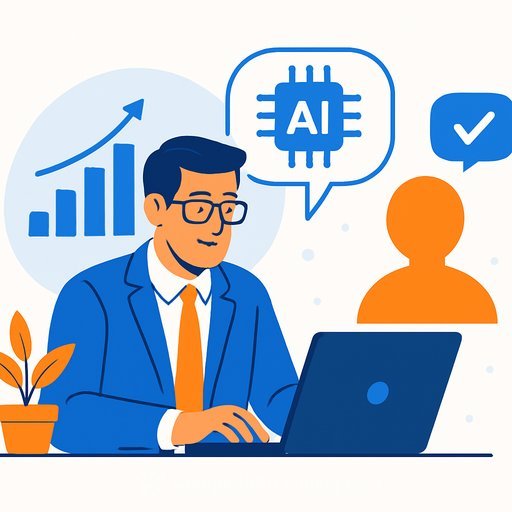
AI Advantage for Project Managers: A Field Guide for Leaders Under Pressure
AI is already baked into planning, scheduling, forecasting, reporting, and risk. The question for executives isn't "if," it's "how." AI Advantage for Project Managers offers a clear, practical answer-showing project leaders how to apply intelligent tools with discipline, governance, and real business impact.
Written by technology executive and AI practitioner Steven Corey, the book rejects hype and focuses on what works right now. It's geared to leaders who need results, not theories.
Why this matters to executives
Projects are the operating system of strategy. When AI improves estimation, highlights hidden risks, and strips out administrative drag, delivery accelerates and variance drops. That compounds across portfolios-fewer surprises, tighter budgets, and better stakeholder trust.
Author background
Steven Corey brings more than 34 years across information technology, enterprise systems, and project leadership. As CTO and Co-founder of BabyFlix Inc., and in prior roles with Oracle, MySQL, and Accenture, he has spent over a decade implementing AI-driven systems in production settings. That hands-on experience anchors the guidance in this book.
What the book covers
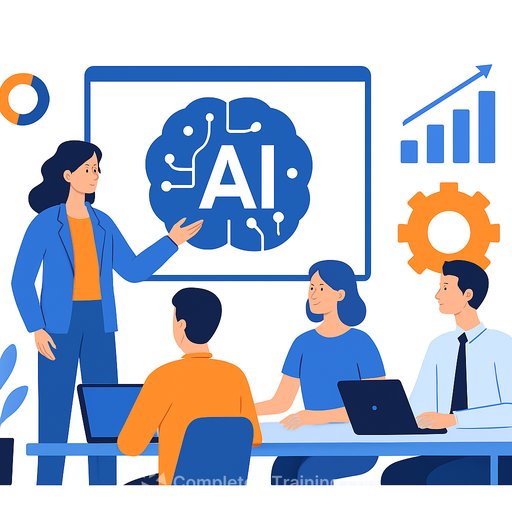
The guide follows the full project lifecycle-from initiation and scope to execution, governance, and closure. It shows how AI augments human judgment by automating routine tasks, surfacing patterns buried in data, and flagging issues before they escalate.
Expect practical plays: predictive analytics that sharpen schedules and budgets, intelligent automation that reduces administrative overhead, and decision support that improves calls under pressure. The emphasis stays on outcomes, not buzzwords.
A human-centered stance
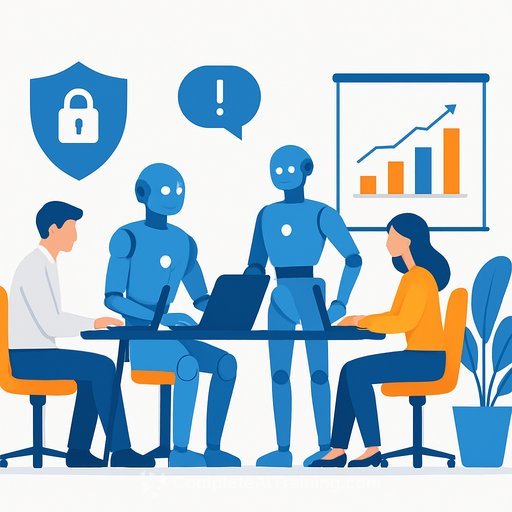
The message is direct: AI is a partner, not a replacement. Leadership, empathy, and strategic judgment remain non-negotiable. With machines handling repeatable work, project leaders can focus on aligning stakeholders, resolving conflict, guiding teams through uncertainty, and delivering measurable value.
Risk, ethics, and governance
The book addresses what many quietly worry about: bias in data, transparency in AI-generated insights, and over-reliance on automation. It pushes for responsible adoption, clear guardrails, and auditable decisions. For a helpful external framing, see the NIST AI Risk Management Framework.
Who should read this
IT project managers, PMO leaders, program managers, and executives who fund or govern delivery. No data science background required. The language is plain, the guidance is actionable, and the examples come from the real world.
Fast actions for executive sponsors and PMO leaders
- Set policy first: define acceptable use, data security, and human-in-the-loop checkpoints for AI-assisted decisions.
- Target high-friction workflows: status reporting, risk logs, change requests, meeting notes, and variance analysis.
- Pilot with measurable baselines: cycle time, forecast accuracy, cost variance, and stakeholder satisfaction.
- Invest in data quality: clean inputs multiply returns from predictive models; sloppy data creates expensive noise.
- Protect judgment calls: automation supports, people decide-especially on scope, risk response, and trade-offs.
- Stand up lightweight governance: model transparency, audit trails, and escalation paths when AI signals conflict.
Go deeper
For structured, hands-on upskilling aligned to this topic, explore the AI Learning Path for Project Managers. Executives shaping portfolio strategy may also find value in AI for Executives & Strategy.
Availability and contact
AI Advantage for Project Managers is available now. For more information, visit Apex Project Intelligence.
Media Contact
Organization: Apex Project Intelligence
Contact: Steven Corey
Email: Send Email
Phone: +1 770-289-8608
Country: United States
Release ID: 41677
Your membership also unlocks: