AI Didn't Break Ecommerce Support - Bad Customer Data Did
AI can cut response times and costs. That only happens when the data it works with is clean, complete, and unified.
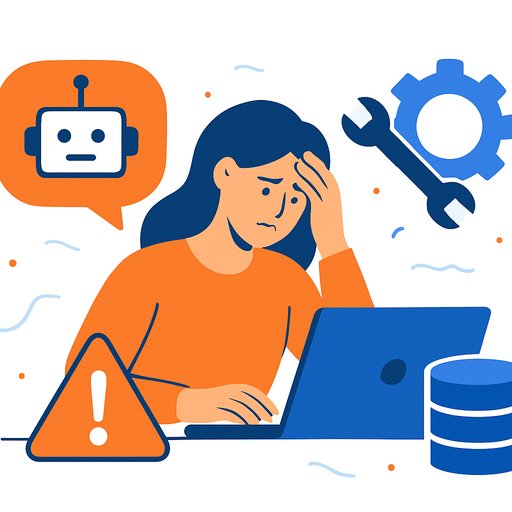
If your metrics stalled after the AI pilot, the model isn't the culprit. Your customer data is.
The State of AI in Ecommerce (By The Numbers)
AI in ecommerce is big and growing. Estimates peg the market at $8.6B in 2025 and $22.6B by 2032, with steady year-over-year gains (source).
Adoption is widespread and the results look good on paper: higher conversion, faster resolutions, and double-digit bumps in CSAT and NPS for hybrid human+AI teams. But those wins don't survive messy data.
The Bottleneck: Fragmented Customer Data
When AI fails in support, it's rarely because the model is "bad." It's because the inputs are. Data leaders rank data quality and completeness above model accuracy and compute as the biggest obstacle.
Customer information is scattered across disconnected systems that rarely agree:
- Ecommerce platforms (Shopify, Magento, BigCommerce) for orders and browsing.
- OMS and inventory for stock, locations, and shipment events.
- Marketing tools (Klaviyo, Braze, Attentive) for emails, SMS, campaign and loyalty data.
- Help desks for tickets, macros, and interaction history.
Layer multiple AI tools on top and the gaps widen. The bot reads the knowledge base, agent assist reads tickets, order lookup hits the OMS - each with a partial view, each on a different refresh cycle.
How It Shows Up In Support (You've Seen This)
- Agents juggle three screens to confirm order, return, and subscription status.
- Chatbots tell logged-in customers to "check your account" while lacking access to that account data.
- Customers repeat email, order number, and the issue when moving from chat to phone.
Metrics reflect the chaos: longer handle times, more transfers, and inconsistent answers across channels. Nearly 60% of customers say they'll leave a brand after struggling to get an issue resolved.
Why Fragmentation Cuts AI Impact
Weak personalization and irrelevant replies. AI needs complete profiles: orders, preferences, opt-ins, past issues, and returns. Without that, it defaults to generic scripts, repeats advice the customer already tried, or suggests items already purchased.
Conflicting answers across channels. Email reads one dataset, chat another, phone a third. The bot quotes the original renewal date; the email team quotes the modified one; the agent sees both and can't tell which is current. No single source of truth means customers stop trusting automation and escalate.
Slower resolutions and painful debugging. Missing fields trigger extra verification. Stale records create wrong turns. Teams with strong data integration see far higher ROI from AI than those without it. And when a bot gives a bad answer, tracing it back through five systems eats weeks.
Business Fallout
Revenue Leaks
Upsells trigger while a return is in progress. Cross-sells push out-of-stock items. A customer waiting on a delayed order gets a promo for expedited shipping - and churns. Cart abandonment rises when live chat can't answer pre-purchase questions without a transfer.
Operational Drag and AI ROI Risk
Contact volume per issue climbs. Escalations rise. Rework piles up as each channel "half resolves" an issue. Leadership sees strong pilot results on clean data, then watches production underperform because real data is duplicated, missing, and out of sync.
Build The Data Foundation First
Start with a customer 360, not another bot. Unify identities, deduplicate records, and standardize core entities (customers, orders, products, interactions). Near real-time matters, or your AI will always be a step behind.
Without unified IDs, your bot can't follow a customer from email to chat. Without standardized product data, recommendations break when SKUs differ by system. Without synchronized interaction logs, any sentiment or intent model misses context.
AI reads data literally. Buying a CDP doesn't finish the job. You still need data mapping, governance, shared definitions, and ongoing processes to keep records clean as they move.
Data Quality, Governance, and Real-Time Signals
- Automate quality checks at ingestion. Examples: flag orders without tracking numbers, route profiles missing communication preferences, pause flows if inventory hasn't updated in 24 hours.
- Align definitions. "Active subscriber" should mean the same thing in marketing, billing, and support.
- Balance access and privacy. Give AI the fields it needs without exposing what it doesn't.
- Prioritize live signals. Cart contents, current inventory, carrier events, and open tickets matter more than what happened two years ago.
Practical Steps To Defragment Support Data
Map Use Cases To Data Requirements
- Order status bot
- Needs: real-time shipping events, carrier tracking, warehouse updates.
- Common blocker: tracking lives in the OMS; the bot only sees order placement.
- WISMO deflection
- Needs: order details, tracking status, ETA, issue history.
- Common blocker: data split across ecommerce platform, 3PL, and tickets.
- Returns automation
- Needs: purchase history, policy by product category, current inventory.
- Common blocker: policy logic separated from transaction data.
- Proactive delay notifications
- Needs: carrier exceptions, inventory shortages, communication preferences.
- Common blocker: no connection between fulfillment alerts and messaging tools.
- Agent assist recommendations
- Needs: full ticket history, order context, previous resolutions, product details.
- Common blocker: each channel creates its own ticket; no cross-channel view.
Integration Patterns That Work
- CDPs unify profiles and interactions so support tools can query a single record. Best when profiles are the main gap and operational data changes too fast to copy.
- AI middleware sits between support tools and back-end systems, normalizing requests and responses on the fly. Great when you're tied to legacy systems.
- Unified support platforms consolidate point tools for tighter, direct data access. Works if you're ready to reduce vendors for deeper integration.
Key principle: don't create new silos. Access data where it lives. For example, have the bot pull order status directly from the OMS API instead of relying on a stale copy.
Looking Ahead: Unified Data Is The Moat
Every brand can buy similar chatbots, agent-assist tools, and recommenders. What they can't buy off the shelf is your clean, unified customer data.
The best model on fragmented data will lose to a decent model with unified context. Treat data unification as a strategic investment. Fix the foundation and your AI gets smarter every month. Ignore it and you'll plateau while better-organized competitors pass you.
Next Steps
- Pick your top three support use cases by volume or CSAT impact.
- List required fields, source systems, and freshness needs for each.
- Stand up a lightweight ID resolution layer (CDP or middleware) and dedupe records.
- Pipe real-time tracking from OMS/3PL into chat and the agent desktop.
- Add ingestion checks and weekly data reviews with support, ops, and engineering.
If your team wants to level up skills for AI-assisted support, browse curated options by role at Complete AI Training.
Your membership also unlocks: