Stop Paying for AI You're Not Using: Move From Microtasks to Real Teammates
Companies are spending millions on AI, yet most employees are using it like a nicer spellcheck. That mismatch explains why leaders aren't seeing real productivity gains. It's not the model. It's the interaction mode.
At a recent Fortune Brainstorm AI session, Allie K. Miller made the case that AI has four distinct ways to work with people: microtasker, companion, delegate, and teammate. Her point was blunt-most teams never get past the first step.
The four modes of AI (and where you're stuck)
- Microtasker: Answering simple questions, rewording emails, summarizing a page. Useful, but shallow.
- Companion: Think-through partner. Brainstorms, drafts options, critiques your plan.
- Delegate: Handles bounded work end-to-end (e.g., triage an inbox, prep a recruiting shortlist, draft a project brief).
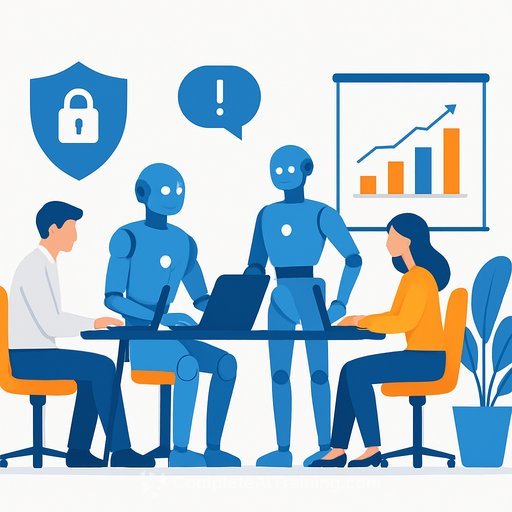
- Teammate: Embedded in your systems. Joins meetings, fields questions, takes actions, and improves the team's output-continuously.
Most employees stay in microtasks and call it progress. That's why the ROI feels thin.
Why teams stall
People still treat AI like old software: give exact steps, get exact results. But modern models can reason and adapt. If you force them into step-by-step instructions, you're paying for a race car and driving it in first gear.
There's also a training problem. A recent study found the majority of workers use AI, but fewer than half have been trained well. Your budget bleeds out through basic use.
Shift to Minimum Viable Autonomy
Miller recommends a switch: stop writing 18-page prompts and start giving AI goal-oriented briefs. Call it Minimum Viable Autonomy (MVA). You define the outcome, the boundaries, and the rules. The system figures out the steps.
- MVA brief template:
- Goal: "Produce a shortlist of 10 qualified candidates for the Sales Manager role by Friday."
- Boundaries: "Use our ATS and LinkedIn only. Do not contact candidates."
- Rules: "Follow our diversity guidelines. No external data exports."
- Resources: "Job description, competency model, interview rubric."
- Definition of done: "Spreadsheet with scores, notes, and source links."
Set agent protocols before you scale
Autonomy needs guardrails. Group tasks into three buckets so employees and systems know what's safe.
- Always do: Summarize meetings, draft job descriptions, prep training outlines, clean spreadsheets.
- Please ask first: Publish intranet posts, update CRM fields, schedule or cancel interviews, adjust budget tags.
- Never do: Make hiring/firing decisions, send offers, change compensation, move funds, share PII externally.
Spread risk like a portfolio: 70% low-risk routine tasks, 20% cross-team workflows, 10% strategic bets that reshape how you operate. Review and rebalance monthly.
From delegate to teammate
Delegate mode is a smarter assistant. Teammate mode changes your infrastructure. The system sits in Slack or your meeting tool, answers live questions, posts updates, and takes actions inside approved tools. Engineers are already treating internal agents this way.
Expect two shifts soon: agents that can work for eight hours straight without intervention, and teams running hundreds of simulations before a launch because cost per run keeps dropping. That flips planning from "guess and ship" to "test at scale, then decide."
30-day rollout for managers and HR
- Week 1: Audit usage - Pull a quick survey and system logs. Who's using AI, for what, and how often?
- Week 2: Pick three processes - Examples: candidate sourcing, onboarding checklist, quarterly policy updates.
- Week 2: Write MVA briefs - One brief per process with goal, boundaries, rules, resources, and done criteria.
- Week 3: Implement protocols - Publish your "always / ask first / never" list and get legal/privacy sign-off.
- Week 3: Safe sandboxes - Route agent actions through a staging environment; keep audit logs on by default.
- Week 4: Train and measure - 60-minute live session per team. Track cycle time, error rate, and satisfaction.
- Week 4: Budget reset - Shift spend from seats to outcomes. Fund agents tied to KPIs, not licenses tied to headcount.
If your teams need structured upskilling, browse role-based programs here: AI Learning Path for Project Managers.
Governance that won't slow you down
Adopt a light, repeatable framework: data access by role, human-in-the-loop for "ask first," red-teaming for the 10% strategic bets, and a monthly review board to retire bad automations. Keep humans accountable for outcomes, always. Leaders designing oversight can follow the AI Learning Path for CIOs for practical governance guidance.
For a solid reference, see the NIST AI Risk Management Framework. It's practical enough to apply without building a bureaucracy.
The leadership test for the next decade
Evaluating whether AI is "good or not" is now a core product requirement, even if you don't ship software. If you keep treating AI like a tool you poke once in a while, you'll miss what it can do for the whole system.
Move your org past microtasks. Set goals, add guardrails, and let AI act like a teammate. That's where the productivity gains are hiding - and you can get started by exploring approaches to Productivity with AI Tools.
Your membership also unlocks: