
AI news ·
Students who use AI reading tools in digital textbooks are three times more likely to engage actively with course material, study finds
College students using AI tools in Pearson eTextbooks were three times more likely to read actively, per analysis of 80 million interactions. In instructor-led platforms, that figure jumped to 20 times more likely.
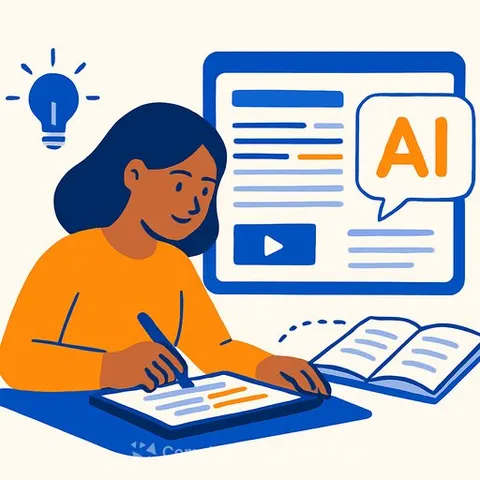
AI Study Tools Triple Active Reading Among College Students, New Data Shows
College students who used AI-powered study tools built into their digital textbooks were three times more likely to engage in active reading than those who didn't use them, according to analysis of nearly 80 million student interactions across Pearson eTextbooks over two semesters.
When those same AI tools were embedded within instructor-led platforms that included assessment features and interactive elements, students were over 20 times more likely to be classified as active readers compared to non-users.
Active reading-testing understanding, highlighting key ideas, asking questions, taking notes, and revisiting difficult concepts-remains one of the strongest predictors of college success. Yet fewer than two-thirds of incoming students are prepared for college-level reading, according to the National Assessment of Educational Progress.
The Problem With Passive Learning Tools
Many digital learning environments and AI tools encourage the opposite of active reading. They promote skimming, outsourced thinking, and letting machines handle synthesis and interpretation work that students should be doing themselves.
The distinction matters. General-purpose consumer AI tools excel at generating answers quickly. They are indifferent to whether learning actually occurs. Without trusted content or pedagogical design, speed becomes the goal and depth becomes collateral damage.
How Responsible AI Design Changes Outcomes
Effective learning AI differs fundamentally in its purpose. These tools offer struggling readers accessible summaries to aid comprehension, clarify confusing concepts, and create opportunities for students to practice retrieving information from memory-a practice proven to support long-term retention.
Responsible AI in education is transparent. It is trained and evaluated against expert-vetted content. It is embedded within high-quality, trusted materials that instructors and institutions already use.
When designed this way, AI augments human learning instead of replacing it. It pulls students back into reading rather than away from it.
What Educators Should Look For
The challenge in higher education is not access to content. It is engagement with content. Faculty report growing struggles with close reading and analysis among students.
For more on AI for Education and how generative AI and LLM tools are being deployed in learning environments, see our full coverage.
The future of education will be shaped by AI. The measure of success is whether technology helps students do the hard, essential work of learning more effectively. If AI can turn passive consumption into active engagement, it will change what students understand and what they achieve.