
AI news ·
Study finds AI chatbots give misleading medical advice half the time
AI chatbots give inaccurate or misleading medical advice in roughly half of their responses, a study released in April 2026 found. Researchers say the tools often contradict clinical guidelines or skip warnings about when patients need a doctor.
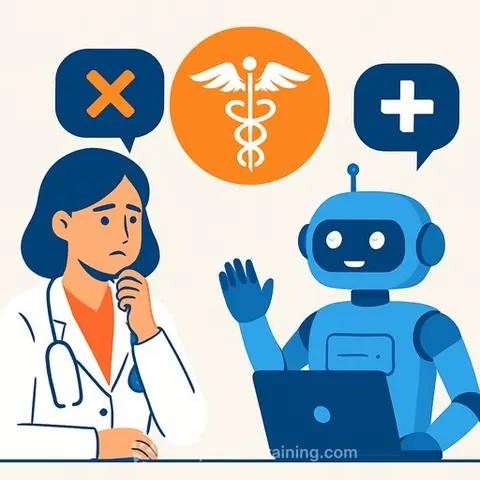
AI chatbots give misleading medical advice 50% of the time, study finds
Artificial intelligence chatbots provide inaccurate or misleading medical guidance in roughly half of their responses, according to research released in April 2026. The finding raises questions about the safety of using these tools for health information without professional oversight.
The study examined how major AI chatbots handle common medical questions. Researchers found the systems frequently offered advice that contradicted established clinical guidelines or omitted critical caveats about when patients should seek professional care.
For healthcare workers, the implications are direct. Patients increasingly turn to ChatGPT and similar tools before or instead of consulting doctors. When those tools provide flawed guidance, patients may delay necessary treatment or follow harmful recommendations.
The error rate matters more in medicine than in other fields. A chatbot's mistake about movie recommendations carries no consequence. A mistake about medication interactions or symptom severity can affect health outcomes.
Healthcare organizations should consider how their staff and patients interact with these tools. Some institutions are developing policies around chatbot use. Others are training clinicians to recognize common failure modes in AI-generated medical advice.
The research doesn't suggest AI chatbots have no value in healthcare. Rather, it establishes that current systems require human verification before any medical application. Clinicians reviewing AI output should treat it as a draft requiring fact-checking, not as reliable guidance.
For professionals working in healthcare settings, understanding AI for Healthcare capabilities and limitations is becoming part of standard practice. The gap between what these tools can do and what they should be trusted to do remains significant.